




















































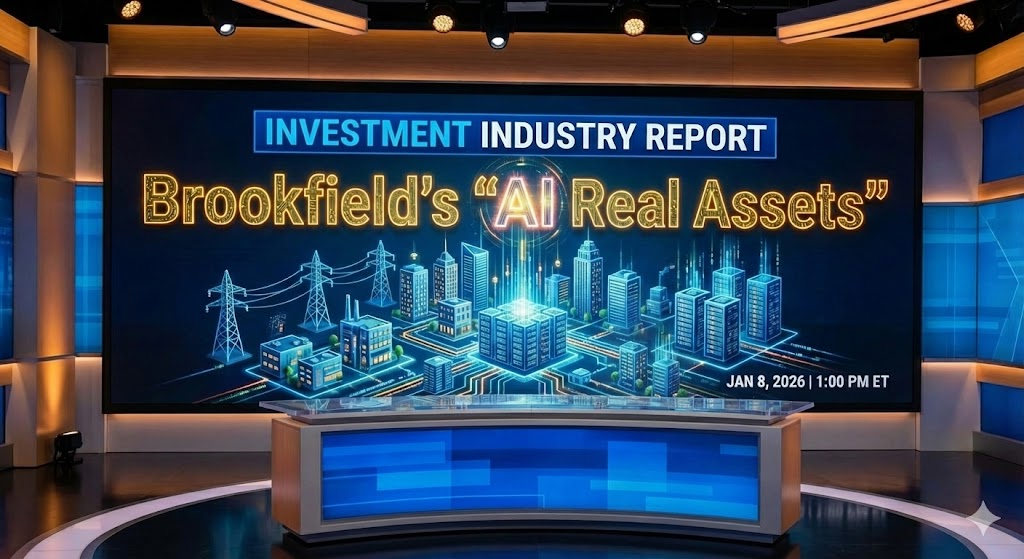
(HedgeCo.Net) As 2026 approaches, the spotlight on artificial intelligence (AI) is shifting towards the foundational elements that power it. Investors are beginning to focus on the infrastructure needed to support the AI boom—specifically in areas such as power, cooling, fiber, logistics, and long-duration infrastructure. Notably, Brookfield Asset Management announced plans to host its fourth-quarter and full-year 2025 results call on February 4, 2026, further underscoring its central role in institutional infrastructure capital alongside its counterpart, Brookfield Infrastructure Partners.
This evolving landscape suggests a paradigm shift where infrastructure is increasingly viewed not merely as a defensive yield allocation but rather as a growth sector. The continued demand for AI capacities is driving a confluence of compute requirements, which in turn necessitates significant investments in power and data center infrastructure. This cycle illustrates a clear framework: AI fuels compute demand, compute demand drives the need for infrastructure development, and such development prompts a surge in infrastructure financing and operational platforms.
The implications for institutional allocators in 2026 are significant, leading to essential questions regarding investment strategy. Key considerations include the quality of contracts—specifically their duration, counterparties, and inflation linkages. Furthermore, an assessment of capital expenditure (capex) plans is crucial, with investors needing to evaluate how much new infrastructure is being developed and at what expected return thresholds. Lastly, the sensitivity of these investments to interest rates remains a critical factor, as infrastructure endeavors often rely on long-duration cash flows that can be heavily impacted by changing rate regimes.
Brookfield’s positioning highlights a central narrative for 2026: the ongoing AI expansion is catalyzing capital flows into tangible real assets. The largest platforms in this sector are actively engaged in constructing and financing the operational ecosystems necessary to capitalize on the burgeoning demand for AI-driven infrastructure. As the focus broadens from merely discussing AI to underwriting the substantial resources it requires, institutional investors are poised to rethink their strategies in this transformative market.
This trend not only reflects the immediate needs of the AI sector but also indicates a longer-term shift in investment philosophy. As AI continues to integrate into various aspects of business and society, the infrastructure that supports it will become increasingly vital, ensuring that investors are not only protecting their capital but also positioning themselves for future growth.
See also AI Revolutionizes Job Market: 70% of Companies Deploy AI Beyond Pilot Stage
 India Partners with Nvidia to Develop Sovereign GPUs for Local AI Infrastructure
 Meta Secures Record Nuclear Energy Contracts to Power AI Infrastructure, Exceeds 6 GW Capacity
 Oklo Achieves 1.2 GW Deal with Meta, Driving 36% Stock Surge and Nuclear-AI Revolution
 Scale Computing Unveils AI-Ready Edge Solutions at NRF ’26 for Enhanced Retail Operations