
















































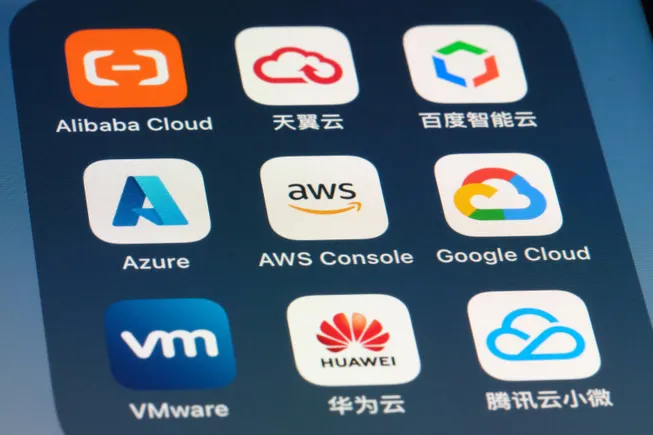
Capital expenditures by cloud service providers are projected to surge nearly 40% by 2026, reaching almost $600 billion, according to a recent report from S&P Global. This follows a striking increase in spending by major players such as Microsoft, Amazon, Google, Meta, and Oracle, which collectively invested $437 billion last year—an impressive rise of 68% year-over-year. As demand for cloud services continues to escalate, these hyperscalers are intensifying their focus on artificial intelligence (AI), which is becoming a pivotal driver of infrastructure spending.
AI-related expenditures now account for approximately one-quarter of all IT spending, with a global increase of 9% anticipated in 2026, spurred by what S&P describes as an “insatiable AI infrastructure buildout.” The report indicates that hyperscalers will maintain cloud revenue growth above 20% throughout this year, although enterprise IT budgets may face constraints based on the returns companies see from their AI investments. This creates a complex landscape where ongoing spending is necessary to foster growth, yet immediate returns are not guaranteed.
Enterprises are likely to have raised their IT budgets in 2025 to support their AI initiatives, as AI features have increasingly become integral to various applications and tools. However, the report notes that “AI-related gains are still nascent.” A significant 80% of executives surveyed believe that AI will not substantially contribute to enterprise revenue until 2030. Nonetheless, the technology is expected to catalyze growth over the next four years, suggesting that businesses are betting on its long-term potential despite the current slow return on investment.
Despite the latter concerns, enterprise spending on AI shows no signs of waning. According to an Accenture report, a majority of executives plan to increase their AI investments, with over two-thirds indicating they utilize AI tools on a daily basis. This commitment underscores a growing recognition of AI’s transformative capabilities, even as many enterprises grapple with the challenge of realizing tangible returns in the near term.
Globally, IT spending is projected to exceed $6 trillion by 2026, a figure largely driven by demand for infrastructure and AI devices, as outlined in Gartner forecasts. John-David Lovelock, a research vice president at Gartner, highlighted the rising costs associated with software and its functionalities due to advancements in generative AI, stating, “The cost of software is going up and both the cost of features and functionality is going up as well thanks to GenAI.” This points to a broader trend where increased investment in AI is not just a tactical response but is reshaping the financial landscape of IT as a whole.
As the landscape evolves, the interplay between investment in AI and the anticipated returns will be crucial for enterprises seeking to navigate this transformative era. Companies are poised to continue their AI spending, even as they adjust their expectations regarding immediate financial gains. This dual approach highlights a strategic pivot toward long-term growth, as businesses work to harness the full potential of AI technologies.
See also Tesseract Launches Site Manager and PRISM Vision Badge for Job Site Clarity
 Affordable Android Smartwatches That Offer Great Value and Features
 Russia”s AIDOL Robot Stumbles During Debut in Moscow
 AI Technology Revolutionizes Meat Processing at Cargill Slaughterhouse
 Seagate Unveils Exos 4U100: 3.2PB AI-Ready Storage with Advanced HAMR Tech