
















































Archbald, a small town in northeastern Pennsylvania once reliant on coal, is now facing a new wave of development: a series of proposed data centers. With a population of about 7,000, residents like Kayleigh Cornell, a teacher, and Sarah Gabriel, an ICU nurse, have taken a stand through their neighborhood association, expressing both love for their community and concern over the potential impacts of these massive structures. “It is a really nice small town,” Gabriel remarked. “It feels like home.”
However, both women, along with other residents, are alarmed about the environmental consequences, rising electric bills, and the alteration of the town’s character. “It’s gonna just completely change the landscape. Anywhere there’s trees, there’s probably not going to be any any longer,” Gabriel stated. Cornell added, “We’ll stop it if we could help it.”
The challenge of halting this development is steep. As the demand for data centers surges—driven by tech companies eyeing the AI revolution—developers are keen to establish operations in Archbald, which offers abundant land, water, and power. Yet, the debate rages on regarding the extent of jobs and revenue these centers will generate and the burden they may place on local utility bills.
At a March 10 borough meeting, resistance was palpable. Many residents displayed signs reading “No data centers” and shouted at representatives of the proposed facilities. “We made up our minds: go home!” one woman exclaimed. A significant project, involving the construction of 18 data centers, has faced significant obstacles amidst the growing backlash.
Gabriel shared her concerns about the lack of regulation in the industry, stating, “We’re not against AI data centers. But because the industry is so new and unregulated, it is concerning that if we just keep moving forward, we’re gonna get to, like, a point of no return.” This sentiment echoes across the country, where more than 4,000 data centers are already operational, with many more in development.
In Loudoun County, Virginia, known as “Data Center Alley,” massive, sci-fi-like buildings have become commonplace. One facility spans over one million square feet, enough space to park two aircraft carriers. Andy Power, president and CEO of Digital Realty, which manages numerous data centers worldwide, emphasizes the industry’s potential benefits. “The data center sector is valued at hundreds of billions of dollars, and represents breakthroughs that cure new diseases and improve quality of life,” he said.
When approached about community resistance, Power responded, “I completely understand it. Let me tell you why this location makes the most sense for the data centers. And this infrastructure’s gonna help change the world you’re living in today and for years to come.”
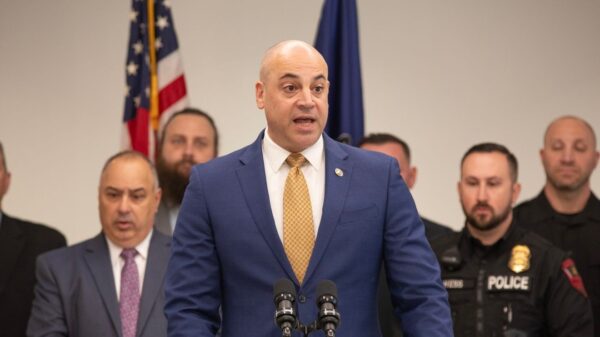
In Washington, calls for a halt to data center development are intensifying, particularly until more stringent AI regulations are put in place. Recently, Vermont Senator Bernie Sanders and New York Representative Alexandria Ocasio-Cortez introduced the Artificial Intelligence (AI) Data Center Moratorium Act, highlighting concerns about Congress’s preparedness for rapid changes in the industry. Yet, many Republicans, including former President Trump, advocate for data centers as essential to the future economy. Senator Dave McCormick, a Pennsylvania Republican, argues that fostering data center investments is critical for the state. “I think the net benefit for Pennsylvania is enormous,” he asserted.
McCormick also believes collaboration between data center developers and local communities is vital. “There’s got to be a covenant,” he remarked, stressing the need for commitments on job creation, environmental protection, and energy costs. “When a community looks at the totality of the jobs, the tax revenue, the new roads, the libraries, the schools, the opportunity of jobs for their kids, I think these are pretty compelling.”
As Archbald navigates this contentious landscape, Cornell and Gabriel remain steadfast in their commitment to preserving their community. “People live here ’cause of the quality of life,” Cornell said. “Yes, obviously you need jobs. But, again, this would be intrinsically changing the character of Archbald Borough.” When asked about their chances to stop the data centers, Gabriel replied confidently, “Yeah, absolutely.” Cornell added, “I mean, it’s our home. We have to fight.”
See also Tesseract Launches Site Manager and PRISM Vision Badge for Job Site Clarity
 Affordable Android Smartwatches That Offer Great Value and Features
 Russia”s AIDOL Robot Stumbles During Debut in Moscow
 AI Technology Revolutionizes Meat Processing at Cargill Slaughterhouse
 Seagate Unveils Exos 4U100: 3.2PB AI-Ready Storage with Advanced HAMR Tech