








































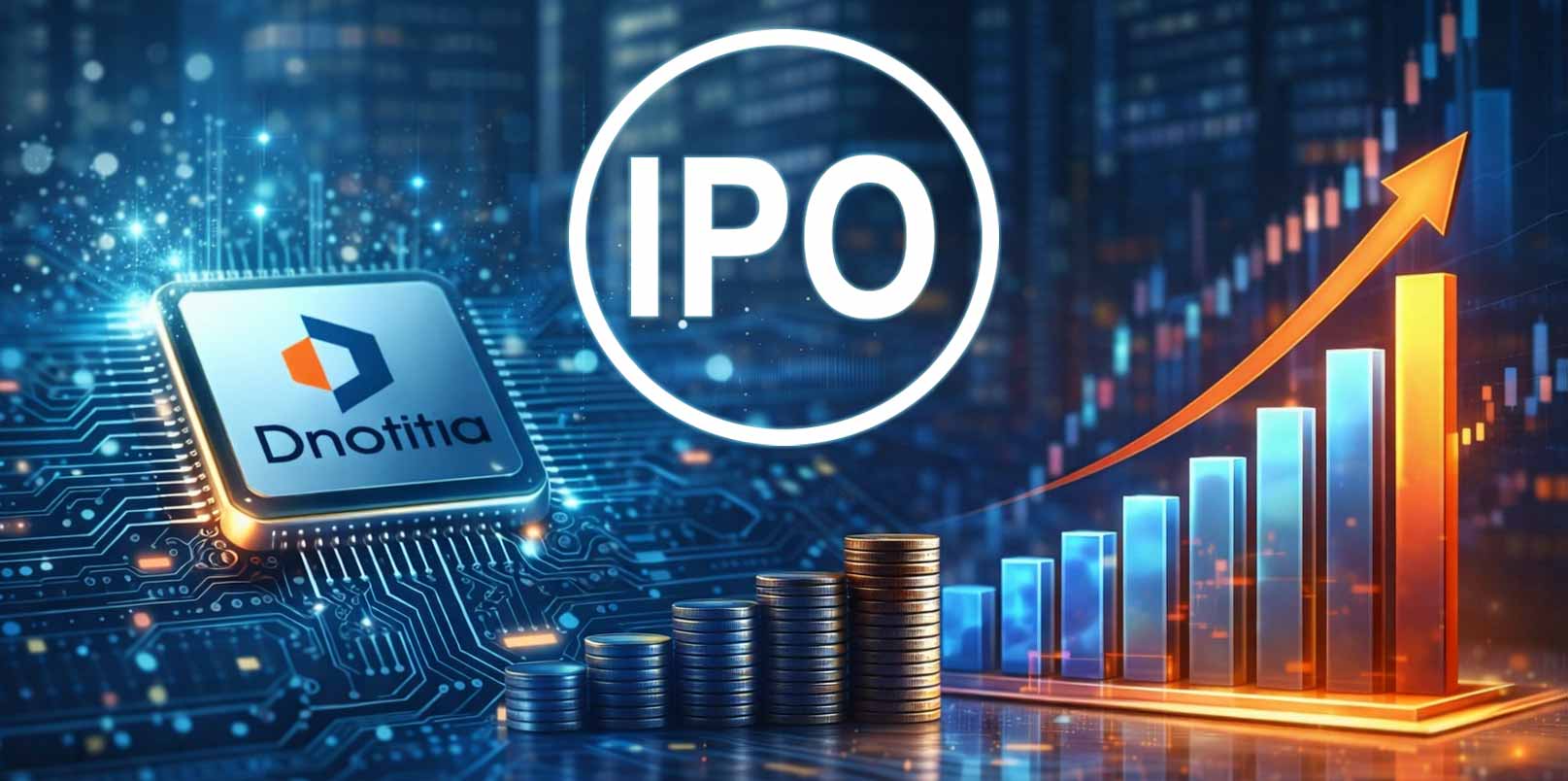
Korea’s AI semiconductor landscape is poised for a significant shift as Dnotitia, a burgeoning deep-tech startup, gears up for its initial public offering (IPO) after achieving a groundbreaking milestone in merging software with semiconductor design into a unified “AI memory infrastructure” model. This development may signal a new trajectory for Korea’s next generation of deep-tech companies, moving beyond the constraints of traditional large language models.
Dnotitia has appointed Korea Investment & Securities and Shinhan Investment Corp. as joint lead underwriters for its anticipated KOSDAQ listing. This partnership marks a crucial transition from a research-centric startup to a commercialization-ready entity in the deep-tech sector.
The company is the developer of Seahorse, an AI agent capable of efficiently remembering and retrieving contextual data, and VDPU (Vector Data Processing Unit), a proprietary semiconductor designed to accelerate vector database operations. Following the design and tape-out of the VDPU in December, Dnotitia aims to secure its first silicon chips by June 2026, with full commercialization planned for early 2027. Despite being a fabless company, it has already begun generating revenue from its AI software, establishing a sustainable model prior to hardware production.
Dnotitia’s ascent can be attributed to its focus on overcoming one of the most significant challenges in modern AI: memory bottlenecks. Traditional large language models often face difficulties retaining long-term context, which hampers efficiency in retrieval-augmented generation (RAG) workflows. The company’s VDPU IP, introduced at the D&R IP & SoC Day, integrates seamlessly into system-on-chip (SoC) architectures to facilitate ultra-efficient vector data processing. Company data indicates that its proprietary system is capable of delivering search speeds that are up to 10x faster and can reduce total ownership costs (TCO) by up to 80% compared to CPU-based software frameworks.
By blending hardware acceleration (VDPU) with software orchestration (Seahorse), Dnotitia positions itself among the first AI infrastructure companies in Korea to offer a comprehensive memory solution.
However, Dnotitia’s path has not been devoid of challenges. In 2025, the company and its CEO Jung Moo-kyung faced legal scrutiny over alleged technology leakage linked to former employer Sapeon. Although prosecutors clarified that while referenced materials were leaked, they were not utilized in developing competing AI semiconductors, the legal proceedings remain under review. Despite these hurdles, investor confidence has not wavered. The startup attracted KRW 100 billion in Series A funding under a KRW 300 billion valuation, reflecting continued support from early backers who believe in the company’s technical foundation.
In January 2026, Dnotitia was recognized among Korea’s Top 100 Emerging AI+X companies by the Korea AI Industry Association, acknowledging its innovative semiconductor-software integration. Moreover, its Seahorse solution received TTA’s GS Grade 1 certification, paving the way for entry into public sector procurement channels.
CEO Jung Moo-kyung emphasized the company’s vision, stating, “Over the past two years since our founding, we have steadily built our technology and business foundation under the vision of becoming a ‘Data System Leader in the AI Era.’ 2026 marks the inflection point where our long-prepared technologies and business will begin delivering tangible results. We will continue evolving as a core AI infrastructure company while preparing our IPO in line with this growth trajectory.” Jung also introduced Dnotitia’s Mnemos platform at CES 2026, a compact on-device AI agent designed to combine local data use with low-latency reasoning, serving as an early showcase of its memory-first approach.
Dnotitia plans to further enhance its offerings by integrating Mnemos with VDPU and partner NPUs to create an advanced RAG-based agent ecosystem.
While the recent focus of AI IPOs has been on generative model developers such as Upstage, Rebellions, and DeepX, Dnotitia distinguishes itself by targeting a different segment of Korea’s deep-tech expansion. Its emphasis on AI memory acceleration rather than model training positions it as a vital component of the infrastructure underlying RAG systems and scalable inference. This unique focus makes Dnotitia a critical player in Korea’s broader AI transformation (AX) agenda, which aims to foster synergy between semiconductor innovation and enterprise AI deployment.
Industry experts suggest that startups like Dnotitia could fortify Korea’s AI sovereignty by securing local intellectual property in vector processing, a sector currently dominated by U.S. and Chinese chipmakers. The upcoming IPO will serve as a litmus test for investor confidence in AI infrastructure startups, bridging Korea’s strengths in semiconductor engineering and AI software.
If Dnotitia’s IPO proceeds as planned, it would represent one of Korea’s first listings of a company situated at the intersection of AI memory, semiconductors, and software infrastructure. The startup’s journey—from navigating legal challenges and intensive R&D to achieving public-market readiness—underscores the emergence of Korea’s second-generation deep-tech ventures, which prioritize the computing systems that sustain AI algorithms.
For both policymakers and investors, the success of Dnotitia will be a crucial indicator of how Korea’s capital markets respond to innovation in AI infrastructure, extending beyond the conventional focus on model-building.
See also Enterprises Adopt Context Engineering to Enhance AI Onboarding Success
 AAEON Launches BOXER-8653AI-PLUS with NVIDIA Jetson Orin NX for Multi-Camera AI Applications
 Multiverse Computing Achieves 1,000 Citations for Quantum Finance Paper, Advancing AI Innovations
 Wall Street Edges Up as Eli Lilly Surges 7% Amid Tech Earnings Uncertainty
 New Three-Layer Framework Proposed to Navigate Global AI Governance Challenges