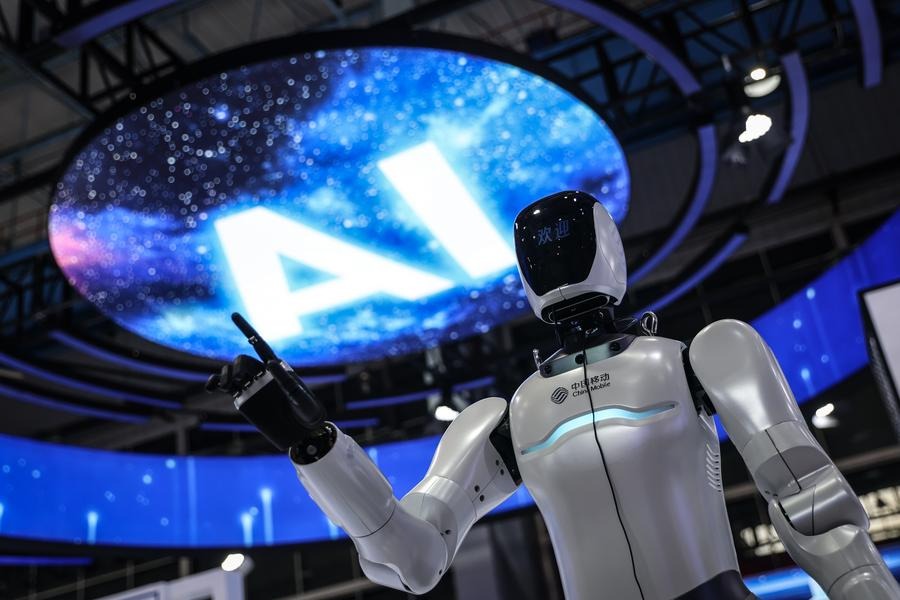
The 2025 Global Industrial Internet Conference, held in Shenyang, China, highlighted a pressing global challenge: how to ensure that artificial intelligence (AI) enhances human well-being rather than exacerbating risks and inequalities. Various nations are formulating frameworks to balance AI innovation with responsibility. Notable examples include Singapore’s AI governance frameworks, the European Union’s AI Act, and China’s Interim Measures for the Management of Generative AI Services, which emphasize transparency and accountability. Meanwhile, Dubai’s Ethical AI Toolkit focuses on integrating AI into governance, indicating that, with the right guidance, AI can indeed serve as a force for social good.
Distinct Pathways to Responsible AI
China and Dubai offer contrasting yet complementary approaches to AI governance. China leverages its vast scale and research leadership, while Dubai employs agile, citizen-focused strategies. Dubai’s commitment is evident in its assertion that the AI journey begins with human values—trust, inclusion, fairness, and transparency—before technology is developed to meet those needs.
In Europe, the embedding of human rights principles directly into AI legislation is becoming standard, while in the United States, leading tech companies have signed voluntary AI safety commitments. Dubai’s focus, however, lies in operationalizing these values at the city level, demonstrating how policies affect everyday experiences. A practical illustration of this approach occurred when a Dubai resident had their driver’s license renewed seamlessly through an AI-powered assistant that proactively managed the renewal process.
AI Applications Driving Economic Growth
The Dubai State of AI Report 2025 outlines over 100 instances of AI application across various sectors, including healthcare, mobility, and energy. These applications are projected to contribute $64 billion to Dubai’s economy by 2030. In healthcare, AI is instrumental in early detection of conditions like breast cancer and diabetes, while predictive algorithms enhance hospital auditing systems. In the energy sector, AI-driven smart grids optimize electricity management to reduce costs and environmental impact. Moreover, predictive platforms are transforming governance by enabling anticipatory service delivery.
This trend is part of a broader global movement. Countries are increasingly concerned with avoiding issues such as bias, privacy violations, and accountability in AI systems. Dubai has proactively addressed these challenges since the launch of its ethical AI toolkit in 2019, which provides developers with open-source standards for fairness, transparency, and accountability. Every AI project within government entities in Dubai is now required to undergo an ethical review throughout its lifecycle.
Collaboration and Global Standards for AI
To foster safe innovation, Dubai has established regulatory sandboxes where startups can test their solutions in real-world conditions. A dedicated AI Board oversees these initiatives, allowing the city to scale innovation rapidly while preserving public trust. Additionally, the city prioritizes workforce transitions for employees affected by automation, reskilling them for higher-value roles in AI oversight and service design.
On an international level, Dubai shares its frameworks through the Global Initiative on Virtual Worlds and AI, co-led with the International Telecommunication Union and the United Nations International Computing Centre. This initiative emphasizes the necessity of inclusivity in emerging AI ecosystems, further demonstrated through the UN Citiverse Challenge, which aims to co-create AI tools for public services and sustainability.
As showcased at GITEX Global 2025, Dubai continues to lead in AI governance and ethical innovation. New systems, like CODAI, provide comprehensive insights into city performance, showcasing Dubai’s commitment to transparency, accessibility, and inclusivity.
China’s Regulatory Landscape and Global Collaboration
China’s advances in AI governance are marked by the establishment of its Interim Measures for the Management of Generative AI Services, effective August 15, 2023, and the formation of a national AI standardization group. By 2024, China had filed over 188,000 AI patents, accounting for nearly three-quarters of global generative AI patents and contributing over 41% of global citations in AI research.
The Global AI Governance Initiative, introduced by China in 2023, aims to foster international cooperation in AI capacity building, aligning with Dubai’s multilateral stewardship approach. Envisioned collaborations may include co-developing synthetic data frameworks that prioritize privacy while fostering innovation.
The global discourse around AI is shifting from “if” it will transform our lives to “how” it will do so. Cities like Dubai exemplify the practical benefits of AI in daily governance, while China’s frameworks underscore the significance of scale and standardization. Learning from each other’s successes and challenges will be crucial in ensuring that AI enriches lives across diverse geographies and cultures.
Ultimately, the question before us is not whether AI will change our lives—it already has—but rather how we will shape its evolution through our values. As Dubai and Beijing demonstrate, innovation guided by ethical principles can enhance human welfare, safeguard trust, and promote a future where AI serves humanity’s highest ideals.
 Anthropic Reveals Agentic AI’s Role in Major Cyber-Espionage Campaign Against 30 Firms
 Nvidia Faces Earnings Pressure as AI Stocks Dip; Analysts Predict Year-End Rally
 Nvidia Reveals 80% of Top Supercomputers Now Use GPUs, Transforming Scientific Computing
 Brands Double AI Adoption, Explore Generative Tools and GEO Strategies at AI Commerce Town Hall
 Anthropic Expands Data Center by $50B as U.S. Education Dept Launches $167M Tech Plan