
















































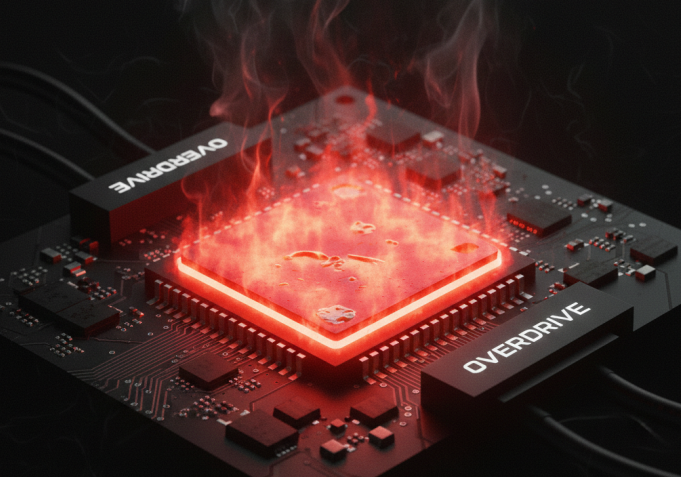
Nvidia Corp. has maintained a leading position in the artificial intelligence chip market for years, but emerging competitors are gaining momentum with significant financial backing. AI chip startup Etched.ai Inc. announced today that it has completed a substantial $500 million funding round, elevating its valuation to over $5 billion. In a parallel development, Cerebras Systems Inc., a more established rival, is reportedly seeking to raise twice that amount while preparing for an initial public offering later this year.
While Etched.ai may be lesser-known, today’s funding round—led by Stripes and including participation from entrepreneur Peter Thiel—brings its total funding to nearly $1 billion. This is a notable achievement for a startup founded just two years ago, as it develops a specialized chip optimized for running “Transformer” models, the backbone of OpenAI Group PBC‘s ChatGPT and Google LLC‘s Gemini chatbots.
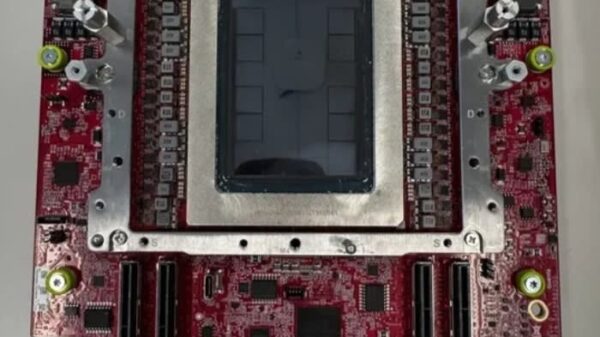
The chip, named Sohu, is a type of application-specific integrated circuit designed to maximize efficiency in power consumption, performance, and cost for specific workloads. Built with Taiwan Semiconductor Manufacturing Corp.‘s advanced four-nanometer process, Sohu is claimed to surpass Nvidia’s graphics processing units (GPUs) in inferencing performance while consuming less energy.
In a 2024 interview, Etched.ai Chief Executive Gavin Uberti asserted that Sohu would be “an order of magnitude faster and cheaper” for tasks involving transformer-based text, image, and video generation when compared to Nvidia’s most powerful Blackwell GB200 GPUs. “One Sohu server replaces 160 H100 GPUs,” he claimed, positioning Sohu as a more affordable and efficient option for business leaders seeking specialized chips.
Cerebras Systems, a recognizable entity in the sector, is reportedly in talks to raise $1 billion, which would increase its valuation to over $22 billion. The company has gained attention for its unusually large silicon chips, described as dinner-plate-sized, which are touted to be significantly more powerful than Nvidia’s GPUs. Its flagship chip, the Cerebras WSE-3 processor, made its debut in March 2024 and features 1.4 trillion transistors along with over 900,000 compute cores—more than 50 times the number found in a single Nvidia H100 GPU.
Additionally, the WSE-3 is equipped with 44 gigabytes of onboard static random-access memory, addressing one of the critical bandwidth limitations associated with Nvidia’s offerings. In May, Cerebras updated its cloud-based AI inference service, claiming it as the fastest in the world, capable of processing the most powerful large language models at speeds exceeding 2,000 tokens per second—substantially faster than Nvidia’s GPU-based services.
The potential funding discussions are not expected to interfere with Cerebras’ IPO ambitions, as the company has been transparent about its plans to become publicly traded. After filing for an IPO in September 2024, it retracted the listing amid investigations into one of its primary investors, the United Arab Emirates-based conglomerate G42, which faced scrutiny from U.S. authorities regarding national security concerns. G42, both an investor and customer of Cerebras, has since been cleared by the Committee on Foreign Investment in the United States, allowing Cerebras to renew its IPO aspirations. Observers anticipate that the company will file again within the next few months.
Despite these advancements, both Etched.ai and Cerebras have a considerable journey ahead to pose a serious threat to Nvidia’s dominance in the AI chip market. Even Google LLC has yet to match Nvidia’s leading position with its tensor processing units. During a keynote at CES 2026 earlier this month, Nvidia CEO Jensen Huang noted that demand for the company’s chips continues to grow, projecting more than $500 billion in sales for fiscal 2026.
See also DeepSeek Remains Silent on V4 Release Amid Technical Advances in AI Infrastructure
 Chinese AI Firms Set for Fundraising Surge as Stock Valuations Soar 40% Over Nasdaq
 AI Transforms Design with ‘Vibe Coding,’ Bridging Gap Between Designers and Engineers
 MIT Achieves Energy-Efficient AI Chips with Stacked Memory Transistors, Reducing Consumption by 130%
 AI in Politics Panel to Explore Technology’s Role in Elections on January 27 in Texas