



























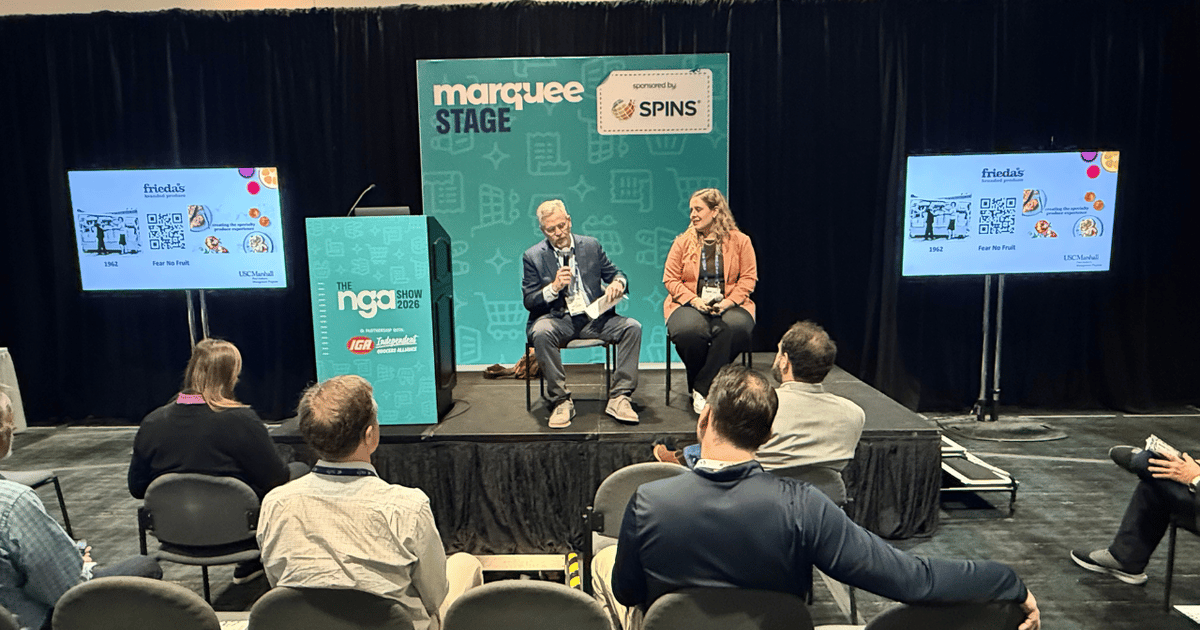
At the National Grocers Association’s Show 2026 in Las Vegas, Alex Jackson, vice president of sales and procurement at Frieda’s Branded Produce, introduced a groundbreaking concept: using quantum computing in the grocery industry. Jackson, whose grandmother, Dr. Frieda Rapoport Caplan, famously brought the kiwi to the U.S. in 1962, emphasized that this advanced technology could soon become as commonplace in grocery chains as the fruit itself.
During her presentation, Jackson highlighted the substantial financial losses the grocery sector incurs each year due to unpreparedness for viral food trends. She cited the recent surge in demand for Good Culture’s protein-rich cottage cheese as a prime example, noting it took months for supply chains to stabilize after the product went viral. “It took months to get that supply chain in order after it went viral,” she remarked.
Jackson, a participant in the University of Southern California’s Food Industry Management Program, led a team focused on leveraging quantum computing to help retailers navigate and capitalize on emerging food trends. She explained the technology using a maze analogy: while traditional computing assesses one path at a time, quantum computing evaluates all possible routes simultaneously, dramatically speeding up problem-solving capabilities.
Comparing quantum computing to ChatGPT, Jackson noted that the technology can solve complex issues faster when guided by precise prompts. Notably, some retailers are already on board with quantum computing; for instance, Save-On-Foods in Canada has employed this technology for over four years to optimize routes and manage labor hours, while Whole Foods utilizes it for line scheduling and product portfolio management. Nestlé applies quantum computing to enhance supply chain operations and accelerate innovation.
“Any problem where you are using data to assess what the right solution could be is where quantum computing can help you,” Jackson stated. She explained that while quantum computing cannot predict viral food trends, it can help retailers identify when a product starts gaining traction. The technology can alert grocers before shelves run empty, triggering supply chain responses in real-time based on trend velocity.
As demand for quantum computing in the grocery sector grows, third-party providers like IBM Q are becoming increasingly prominent. The industry is expected to reach a market size of $26 billion by 2030. Jackson indicated that the average cost for grocery retailers to access these services is approximately $5,000 monthly, plus $1 for every minute of quantum computing usage, totaling around $60,000 annually. However, the potential return on investment is significant, offering benefits such as optimized routes, reduced fuel expenses, lower overtime pay, and improved forecasting.
“Is this going to be another thing we let go by, and then we’re waiting until Amazon or Instacart figure it out before us?” Jackson questioned. “Then we’re sitting here saying, ‘Oh, now we just have to play catch-up.’” As the grocery industry grapples with the fast-paced evolution of consumer preferences and technological capabilities, the adoption of quantum computing could be essential for retailers aiming to stay competitive and responsive in a rapidly changing market.
See also OpenAI Reaffirms Support for Nvidia Chips Amid Reports of Supplier Searches
 Teradyne Forms Joint Venture with MultiLane to Enhance AI Data Center Test Solutions
 Dnotitia Sets KOSDAQ IPO Plans as It Aims for AI Memory Chip Commercialization by 2027
 Enterprises Adopt Context Engineering to Enhance AI Onboarding Success
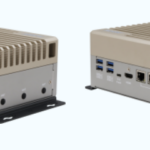 AAEON Launches BOXER-8653AI-PLUS with NVIDIA Jetson Orin NX for Multi-Camera AI Applications