




































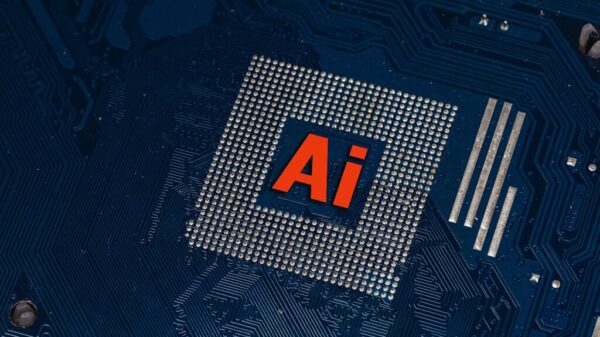






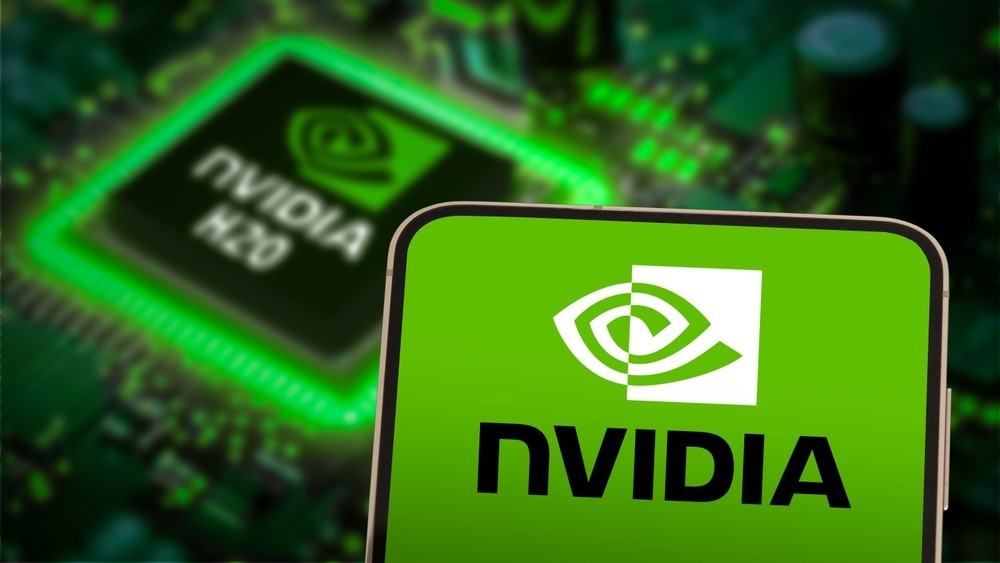
Google is intensifying its competition with Nvidia, the leading AI chipmaker, as discussions reportedly advance between the tech giant and Meta regarding a multi-billion-dollar deal for Google’s tensor processing units (TPUs). Nvidia, which rose to prominence for its gaming hardware, claimed the title of the world’s most valuable company last year by successfully adapting its graphics processing units (GPUs) for the burgeoning AI market.
While Nvidia continues to dominate the AI chip sector, Google has been steadily enhancing its AI-dedicated TPUs, making them available for rent through its Google Cloud platform. Recently, Google has sought to entice high-profile clients, including Meta, with the option to utilize TPUs in their own data centers. Reports indicate that Meta is weighing the proposal and has entered discussions to potentially implement Google TPUs by 2027, while considering renting them through Google Cloud as early as next year.
The specifics of the potential deal remain undisclosed, but projections suggest it could be worth billions of dollars. Currently, Meta relies on Nvidia’s GPUs to support its AI initiatives, and the shift toward Google’s offerings may reflect a broader trend as companies look to reduce expenses and improve efficiency.
With Nvidia holding a near-monopoly on the AI chip market, Google’s strategic pricing of TPUs—reported to be priced between one-half and one-tenth of comparable Nvidia chips—offers a compelling incentive for cost-conscious companies like Meta to consider alternatives. However, it remains unclear whether Meta intends to use Google’s TPUs for resource-intensive AI model training or for less demanding tasks such as AI inference, the latter requiring significantly less computational power and cost.
Google’s negotiations with Meta come shortly after its announcement of Ironwood, a new TPU designed to efficiently handle both training and inference tasks, which the company claims is four times faster than its predecessor. This development is further highlighted by a substantial deal with AI startup Anthropic, which plans to utilize up to one million Ironwood TPUs for its Claude model.
In response to the ongoing discussions between Meta and Google, Nvidia issued a statement on social media platform X, expressing its support for Google’s advancements in AI while reiterating its competitive edge. “We’re delighted by Google’s success — they’ve made great advances in AI and we continue to supply to Google,” Nvidia stated. The company emphasized that its platform is a “generation ahead” of the industry, capable of running every AI model across various computing environments, and pointed out greater performance and versatility compared to application-specific integrated circuits (ASICs) like TPUs.
Industry experts suggest that Google’s ascendance in the market was inevitable, given Nvidia’s dominance in AI training accelerators. Markus Wagner, an Associate Professor at Monash University’s Department of Data Science and AI, noted that the ongoing negotiations between Google and Meta signify a shift in bargaining power rather than a direct challenge to Nvidia in the short term. “Once hyperscalers like Meta can credibly move large workloads onto Google’s chips, Nvidia loses some pricing leverage and is forced to compete more directly on cost and energy efficiency,” Wagner explained.
This potential deal could also have ramifications for other AI vendors, including OpenAI, as shifting to in-house solutions for AI computations may create pressure on independent foundation-model providers facing rising infrastructure costs while competing against platforms that supply their chips. Google confirmed it continues to support Nvidia GPUs in Google Cloud, citing an accelerating demand for both its custom TPUs and Nvidia’s offerings.
As the landscape of AI technology continues to evolve, the outcomes of these discussions may not only redefine competitive dynamics between Google and Nvidia but could also reshape the broader market for AI infrastructure, impacting both established players and emerging startups. The growing interest in more cost-effective AI solutions indicates a significant shift in how major tech companies may approach their AI strategies in the future.
See also Quantum Computing Market to Reach $97B by 2025, AI Set to Surpass Trillions
 Africa’s AI Revolution: $10B Investment Needed in Connectivity, Compute, and Talent
 AI Computing in Space to Be 50% Cheaper Than Earth by 2030, Analysts Predict
 Foxconn Invests $569 Million in Wisconsin to Expand AI Hardware Operations, Adding 1,300 Jobs
 AI Hardware Market Grows 30% in 2025, Driven by Generative AI and Edge Computing Demand