




































Huawei has launched its new Atlas 350 AI accelerator, powered by the Ascend 950PR processor, which the company claims delivers a significant edge over Nvidia’s offerings in the Chinese market. Announced during the “Huawei China Partner Conference 2026,” the Atlas 350 reportedly achieves 1.56 petaflops in FP4 performance, nearly 2.87 times that of Nvidia’s H20 chip, which is currently the most advanced model the company can legally sell in China due to U.S. export restrictions.
This unveiling comes shortly after Nvidia CEO Jensen Huang disclosed that the company had resumed production of its H200 processors for Chinese customers, amid a backdrop of growing competition in the AI semiconductor sector. Nvidia’s H200, while more powerful than the H20, occupies a middle tier and is part of a potential $30 billion opportunity as analysts estimate demand for approximately 1.5 million units within this year.
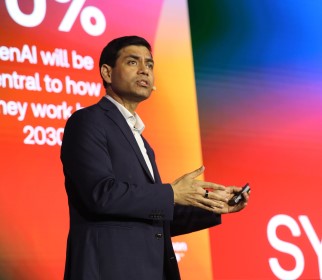
During the conference, Huawei Vice President Ma Haixu presented the Atlas 350, emphasizing its design for AI inference workloads, which includes applications such as search engine recommendations and conversational AI. Zhang Dixuan, head of Huawei’s Ascend computing division, highlighted the significance of the accelerator’s performance metrics, indicating a competitive thrust against Nvidia’s dominance.
Nvidia’s strategic interest in China remains evident, as Huang has previously described the region as a $50 billion annual market for AI computing infrastructure, expected to grow at a staggering 50% rate. However, despite a 1.6% increase during premarket trading on Monday, Nvidia shares closed down 3.28% by the end of the session, reflecting ongoing volatility in investor sentiment.
The competitive landscape for AI processors is complex, influenced by numerous factors such as system configurations and varying workloads. Critics have noted that previous Huawei implementations were sometimes marked by higher power consumption relative to Nvidia’s systems. Nonetheless, the emergence of a domestic alternative is strategically significant for Chinese enterprises, which may prefer a locally produced option to mitigate risks associated with U.S. export policies.
Huawei’s development trajectory underscores its commitment to advancing its AI semiconductor capabilities independent of U.S. technology, particularly in light of recent sanctions. The Ascend 950PR processor, introduced in September 2025, aligns with the company’s three-year strategic roadmap aimed at building a robust AI infrastructure.
In parallel, Huawei is also enhancing its storage solutions, with upgrades to the OceanStor Dorado and Pacific 9926 platforms expected later this year, alongside the introduction of the FusionCube A1000 cabinet tailored for small and medium-sized enterprises. Huawei’s data storage division president, Yuan Yuan, articulated a shift in focus from sheer computational power to improved data management and utilization as the AI landscape evolves.
As Nvidia navigates its own challenges with stock performance and regulatory hurdles, the resumption of H200 chip production and the headway represented by KeyBanc’s projections signal the high stakes involved in this burgeoning market. The competition between Huawei and Nvidia not only exemplifies technological rivalry but also highlights the broader implications for global supply chains and the future of AI computing infrastructure.
See also Tesseract Launches Site Manager and PRISM Vision Badge for Job Site Clarity
 Affordable Android Smartwatches That Offer Great Value and Features
 Russia”s AIDOL Robot Stumbles During Debut in Moscow
 AI Technology Revolutionizes Meat Processing at Cargill Slaughterhouse
 Seagate Unveils Exos 4U100: 3.2PB AI-Ready Storage with Advanced HAMR Tech