











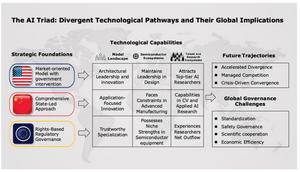








































At the India AI Impact Summit held in New Delhi on February 20, 2026, India’s government unveiled plans to enhance national compute capacity, signaling a strategic shift in its approach to artificial intelligence (AI). The summit highlighted a growing recognition among Indian policymakers that AI is not merely a downstream technology but a vital strategic capability. This change aligns with a global trend referred to as the “sovereign AI agenda,” where countries are reevaluating control over the underlying technologies—including chips, cloud infrastructure, data, and applications—that increasingly influence public policy and economic development.
However, the ambition for AI sovereignty presents challenges; namely, the question of how much control is realistically feasible. For many emerging economies, aiming for complete autonomy over the AI stack is economically and institutionally daunting. Attempts to develop self-sufficient systems can incur exorbitant costs and may result in delayed advancements, as countries reinvent technologies already available. A recent study of 775 non-U.S. data center projects found that U.S. companies operated 18% of these facilities, accounting for nearly half of total data center investments and a significant portion of AI investments. Even nations striving for “sovereign” operations often rely on American technology giants like AWS, Microsoft Azure, or Google Cloud, thus maintaining U.S. dominance in global AI capacity.
To navigate this complex landscape, a more nuanced understanding of sovereign AI is emerging. Rather than pursuing blanket sovereignty, countries are beginning to ask which parts of the AI supply chain they need to own or control and which aspects can be safely outsourced or shared. The strategic challenge for 2026 lies in accurately identifying these layers. Notably, the concept of sovereign AI is not binary; it encompasses a spectrum of decisions where some vulnerabilities are deemed intolerable while others are manageable.
The most extreme end of the spectrum is full-stack sovereignty, where a nation seeks to control every aspect of the AI infrastructure. This approach, while politically appealing, requires significant investment and carries risks due to the concentration of value at the semiconductor and hyperscaler levels. A more pragmatic stance focuses on compute sovereignty, where nations secure control over critical AI infrastructure for sensitive tasks while leveraging global foundational models. Application sovereignty further narrows the focus; it enables governments to adapt existing models to their specific legal, linguistic, and service needs, thereby closing contextual gaps rather than aiming to match global leaders.
A novel approach, termed sovereign AI as a service, offers localized cloud regions and isolated compute through established global providers. This lowers entry barriers for developing nations but raises critical questions about operational control when core elements remain externally governed. Most nations are likely to adopt a hybrid model, blending elements from various approaches as they seek a balance between independence and partnership.
Several major economies are already experimenting with these strategies. The European Union has made a substantial commitment with its AI Continent Action Plan, which allocates approximately €200 billion to bolster local AI infrastructure and support domestic industry. However, challenges persist, as many European data centers are still under U.S. control, revealing the complexities of achieving true sovereignty while making substantial investments. In contrast, Canada employs a targeted national AI strategy that differentiates between what must be sovereign and what can be sourced commercially, ensuring governance over sensitive workloads while still utilizing global models.
India’s approach emphasizes application-led sovereignty, focusing on local needs through initiatives such as multilingual foundation models and AI-enabled services. By embedding AI within its Digital Public Infrastructure, India asserts its sovereignty at the citizen-state interface rather than competing at the forefront level. For smaller nations, the concept of application sovereignty offers a pathway for development, adapting global models to local contexts instead of attempting to replicate advanced systems.
As countries grapple with these strategic trade-offs, the normalization of sovereign AI as a viable pathway across various national contexts is apparent. Sovereignty in AI is not a definitive endpoint but a complex allocation problem that intertwines fiscal capacity, institutional depth, and risk tolerance. For some nations, control over compute is essential; for others, application-level adaptation brings more public value. The crucial consideration is not the elimination of dependence but the management of strategic dependencies.
Ultimately, sovereign AI is about governance capacity. It necessitates an understanding of where power resides within the AI stack, how public investment can shift that power, and which partnerships create sustainable dependencies. As AI continues to gain foundational significance, a nation’s sovereignty will increasingly be defined not by its possession of advanced technologies but by its institutional capacity to influence the terms of engagement, manage risk, and maintain strategic flexibility in a rapidly evolving landscape.