
















































The Institute of Science and Technology Austria (ISTA) has received a substantial donation of €5 million from Uber co-founder Garrett Camp, aimed at advancing research in trustworthy artificial intelligence. This contribution marks Camp’s inaugural philanthropic engagement with a European research institution and underscores ISTA’s growing prominence in the global research community, particularly in the realm of responsible AI development. ISTA plans to utilize these funds to enhance foundational AI research, leveraging its expertise across computer science, mathematics, and natural sciences. “With this generous gift, ISTA can further build upon fundamental research in artificial intelligence,” stated ISTA President Martin Hetzer, emphasizing the institute’s commitment to creating robust and beneficial AI systems for science and society.
Camp’s philanthropic endeavors, conducted through Camp.org, consistently focus on responsible AI development. The interdisciplinary approach adopted by ISTA—integrating computer science, mathematics, and natural sciences—plays a vital role in this initiative, enabling researchers to tackle AI’s limitations and devise more reliable systems. The donation will also support work on causal AI, led by researcher Francesco Locatello, which aims to enhance systems’ understanding of cause-and-effect relationships and their ability to adapt to evolving data. “Global solutions demand global perspectives and collaboration,” Camp remarked, stressing the importance of gathering international expertise. Established in 2009, ISTA currently hosts approximately 90 research groups, with ambitions to expand to 150 within the next decade, solidifying its position as a hub for AI research.
Researchers Christoph Lampert and Dan Alistarh are at the forefront of developing AI reliability and sustainability. Lampert’s team is focused on creating principled AI solutions that prioritize data privacy, moving beyond simple fixes to proactively engineer safer systems. This strategy reflects a shift toward building genuinely trustworthy AI rather than merely resolving issues as they emerge. Alistarh’s work at ISTA centers on fostering the sustainability of AI, aiming to develop models that are both resource-efficient and widely accessible—an essential step towards democratizing the technology.
Complementing these efforts is Francesco Locatello’s research in causal AI, which explores how AI systems can recognize not only correlations but also the fundamental relationships between cause and effect. “It helps us pursue AI research within a broad, interdisciplinary scientific context,” Hetzer explained, highlighting the institute’s holistic approach. In addition to these core areas, ISTA researchers, including Alex Bronstein and Monika Henzinger, are integrating AI with diverse fields such as protein structure prediction and privacy-preserving language models, reflecting the institute’s vision of interdisciplinary collaboration.
Bronstein, in collaboration with Paul Schanda, has developed a method to effectively guide the AlphaFold3 AI model, ensuring its predictions are informed by concrete experimental data. This advancement marks a significant transition from purely computational prediction to AI systems that incorporate empirical observations, thereby enhancing structural predictions’ reliability and accuracy. Concurrently, Henzinger is leading initiatives focused on privacy-preserving training methods for large language models, striving to create AI that can learn from extensive datasets while safeguarding individual data security. These efforts are crucial as AI technology becomes increasingly integrated into various sectors.
Alistarh’s team continues to work on developing sustainable AI solutions, ensuring that models are resource-efficient and accessible to a broader array of researchers and applications. The interdisciplinary approach at ISTA extends into causal AI, where Locatello’s team investigates how AI systems can better understand cause-and-effect relationships, thus improving their predictive capabilities and adaptability. Other researchers, including Krishnendu Chatterjee, Thomas Henzinger, and Matthew Robinson, are also contributing to advancements that emphasize the importance of producing AI that is both scientifically rigorous and socially responsible. This commitment to interdisciplinary collaboration and innovation positions ISTA to play a pivotal role in the future of AI research and development.
See also Billionaire Investors Increase Nvidia Holdings Despite 1,100% Stock Surge
 Northeastern’s London Hub Launches to Enhance AI-Driven Wireless Communication Research
 Nvidia Achieves $57B Revenue, Positioned as Top AI Growth Stock at Value Price
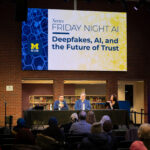 UMich AI Lab Hosts Deepfake Panel: Impacts on Trust and Ethics Explored