MSI has recently embraced AMD technology with the launch of its new Cubi Z AI 8M mini PC, which features a selection of AMD’s 8000-series CPUs alongside its own line of products. This compact device can be discreetly mounted behind a monitor, offering a substantial performance boost capable of handling both productivity tasks and casual gaming. Retailing from £476, the Cubi Z AI 8M showcases MSI’s commitment to versatile computing solutions in an increasingly competitive market.
At the heart of the Cubi Z AI 8M is the AMD Ryzen 7 8845HS chip, which provides eight Zen 4 cores and integrated Radeon 780M graphics. This combination not only ensures solid CPU performance but also enables the device to run basic games with reasonable frame rates. The mini PC can be configured with up to 64GB of DDR5 RAM and a 1TB M.2 NVMe SSD, providing users with flexible options for memory and storage.
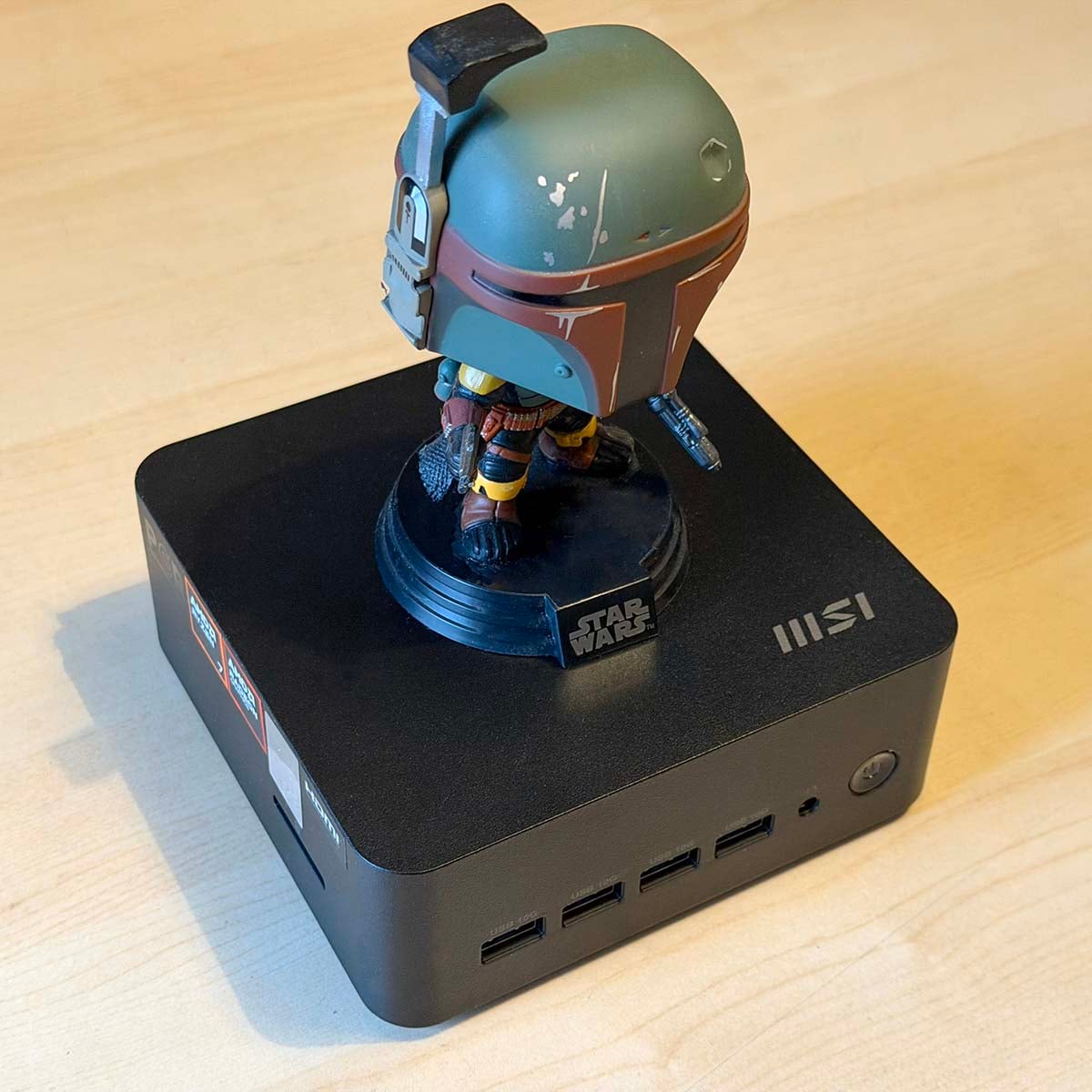
MSI has equipped the Cubi Z AI 8M with a variety of connectivity options, including multiple USB ports, dual HDMI outputs, and Ethernet sockets. The front of the device features four USB-A ports supporting speeds of up to 10Gbps, while the rear includes two USB-C ports with DisplayPort 1.4 capabilities. This extensive array of ports makes it suitable for a range of use cases, from office environments to home entertainment setups.
Despite its compact size, measuring just 136 x 132 x 50mm and weighing 790g, the Cubi Z AI 8M provides impressive performance metrics. In benchmarking tests, it achieved a Cinebench R24 multi-core score of 846, outperforming its closest competitor, the Sapphire Edge AI 340, which scored 670. This level of performance is particularly noticeable in multi-threaded tasks, making the Cubi Z AI 8M an appealing choice for users requiring substantial processing power in a small form factor.
However, the device does come with some limitations. It has a comparatively tall design and lacks aesthetic appeal, being primarily a matte black plastic box. Additionally, the BIOS interface is basic and does not offer the user-friendly experience seen in more modern systems. The single M.2 slot for storage may also raise concerns among users looking for extensive upgrade options, especially as SSD prices fluctuate. While it supports PCIe Gen 4 speeds, the lack of multiple slots may limit future expansion.
Heat management is another aspect where the Cubi Z AI 8M excels. During stress tests, it maintained a peak CPU temperature of 85°C under load, which is within safe operational limits. Notably, the fan noise remains unobtrusive even during demanding tasks, ensuring a quiet working environment. Users can expect the device to draw an average of 12.1 watts at idle, which is highly efficient for the level of performance it delivers.
In gaming scenarios, the Cubi Z AI 8M performed admirably, achieving playable frame rates in titles like “Cyberpunk 2077” and “Forza Horizon 5.” The Radeon 780M outperforms the Radeon 840M found in competing models, enabling users to enjoy a gaming experience that is more than just a novelty. While MSI does not specifically market this device as a gaming PC, its capabilities in this area are a significant selling point.
As MSI continues to expand its offerings in the mini PC market, the Cubi Z AI 8M stands out for its blend of performance and compactness. It’s a suitable choice for users who prioritize space efficiency without compromising on processing power. However, potential buyers should consider the limitations regarding storage expansion and the straightforward design. Overall, the Cubi Z AI 8M represents a solid addition to MSI’s portfolio, appealing to both productivity-focused users and casual gamers alike.
See also AI’s Rise Threatens Creative Jobs, Urges Stronger Arts Education Support
 Governance Gaps in Healthcare AI Adoption Risk Operational Efficiency and Data Security
 Nvidia Stock Expected to Maintain Growth Amid AI Hardware Challenges Through 2026
 Strata Expanse Launches AI Data Center in Lawrence County, Ohio, to Boost Local Economy
 AI Transforms Healthcare: GE’s Digital Twins Enhance Hospital Operations and ROI