














































At the opening day of the 2026 CES in Las Vegas, industry leaders confirmed that artificial intelligence is evolving beyond a mere tool, positioning itself as the “underlying operating system” of human life. NVIDIA’s CEO, Jensen Huang, emphasized this shift during a 90-minute keynote, suggesting that “the ‘ChatGPT moment’ of physical AI is approaching,” highlighting the transition of AI from virtual applications to tangible real-world scenarios.
The CES showcased a clear trend: AI is being increasingly integrated into various aspects of daily life, from home automation to industrial applications. Just hours after Huang’s speech, AMD CEO Lisa Su presented a contrasting view, declaring that humanity is on the brink of entering the “yottabyte computing era,” predicting a thousandfold increase in AI chip performance over the next four years.
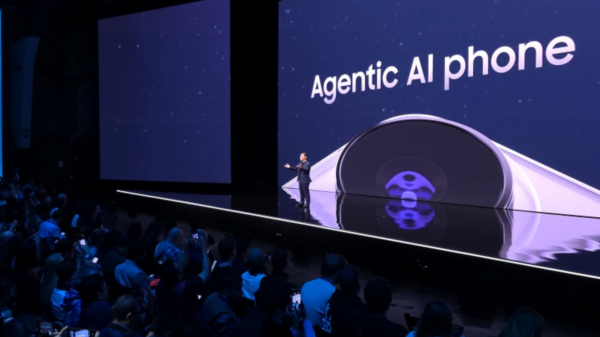
Observations from 36Kr at CES noted that AI technology is now pervasive. The event spotlighted a pivotal change in how people interact with information, as the surge in smart glasses continues. Some brands are even questioning the traditional role of smartphones, coining the slogan, “Why does the next phone have to be a phone?” More than 50 AI and AR glasses manufacturers showcased their innovations, including Rokid’s new AI smart glasses, Rokid Style, which claim to be the lightest full-function AI glasses available.
As AI permeates everyday life, home environments are also poised for transformation. Elon Musk announced the mass production of brain-computer interfaces, making the concept of cyborg life seem increasingly feasible. Chinese neurotechnology brand LumiMind debuted at CES with its innovative LumiSleep, a real-time brain-wave sleep regulator, which has garnered multiple international accolades. Additionally, Teeni.AI introduced a portable robot to aid teenage growth, while Kekeyi Technology unveiled a desktop assistant robot designed to serve as a dedicated work aide.
AI’s integration into daily life has never been more pronounced. Companies like Yunjing and Ecovacs introduced high-profile new products aimed at enhancing home cleaning experiences, marking a shift towards what they term “embodied intelligence.” BroadLink’s technology also addresses the issue of “ecological islands” in smart homes, enhancing the intelligence of household appliances.
Beyond personal conveniences, AI’s influence extends to automotive travel and industrial manufacturing. For instance, Autel Robotics is employing AI to advance automated charging solutions and robot inspections, while Black Sesame Intelligence has made significant strides in assisted-driving chip technologies. The year 2026 marks a significant leap in AI integration, transitioning from “capability” to “embedded productivity,” with manufacturers focusing on specific scenarios to seamlessly incorporate AI into the physical world.
Smart Glasses: A New Era in Information Interaction
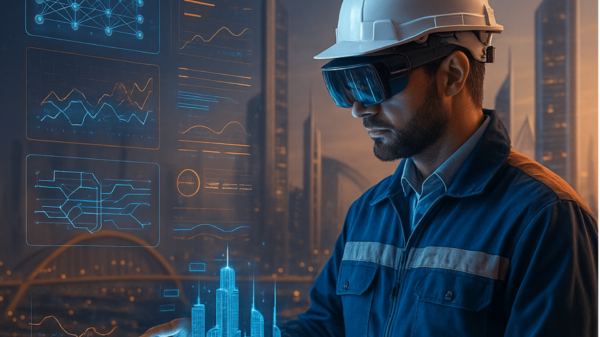
The traditional concept of “phones as the information gateway” appears to be under threat at CES 2026, with smart glasses emerging as a contender for this role. Over 50 AI/AR glasses manufacturers made their presence felt, with a consensus on lightweight designs, all-day wearability, and multimodal interaction. According to IDC, the global smart glasses market experienced explosive growth in 2025, with 2026 poised to be a pivotal year, particularly as China becomes a key innovation and consumer market.
Chinese firms, such as Xreal and Vuzix, showcased lighter new models with real-time subtitle display capabilities. Notably, Xreal announced a strategic partnership with Google to launch the smart glasses Project Aura, a move that signals Google’s renewed commitment to competing in the smart glasses space.
Rokid’s booth attracted significant attention with the launch of its Rokid AI glasses, weighing only 49 grams and featuring capabilities like translating 89 languages and real-time navigation. This product aims to redefine user interaction with advanced AI functionalities. Rokid also introduced the Rokid Ai Glasses Style, targeting international markets with a weight of just 38.5 grams.
INMO Technology made its mark with the INMO GO3 and INMO AIR3 smart glasses. The INMO AIR3, mass-produced with 1080P capabilities, integrates AI semantic interaction and spatial computing, while the INMO GO3 boasts industry-first real-time translation supporting 261 languages with a translation accuracy rate of 98%. These advancements signal a shift towards more sophisticated, differentiated products in the smart glasses industry.
As the smart glasses market matures, manufacturers face the challenge of overcoming product homogenization, which has characterized the industry so far. With 2026 marking a potential turning point, the smart glasses sector is expected to progress towards more customized and innovative offerings.
The overarching theme of CES 2026 is AI’s comprehensive integration into everyday life, stepping beyond traditional screens into a variety of applications. Companies showcased cutting-edge cleaning appliances like Ecovacs’ advanced sweeping robots, which not only perform basic tasks but also adapt intelligently to various household environments, enhancing user experiences.
New entrants like Teeni.AI aim to redefine children’s interaction with AI through the Mooni Pro, a portable robot designed to assist teenagers in their growth journey. It encourages children to engage with their surroundings rather than merely consume content through screens, embodying a more interactive form of AI. In another significant development, LumiMind’s LumiSleep aims to address sleep disorders, a pressing issue affecting millions.
As the CES 2026 wraps up, the innovations presented signal not only a shift in consumer technology but also a transformation in how AI will shape daily life, hinting at an era where intelligent systems enhance various facets of human existence.
See also Saudi Aramco Boosts Efficiency with AI, Aiming for $110B in Annual Savings by 2035
 Agentic AI Revolutionizes Advertising as Yahoo DSP Launches Autonomous Campaign Management
 Alibaba Stock Rises 4.8% Following China’s Approval of Nvidia H200 AI Chips
 ON Semiconductor Drives EV Revolution with Advanced SiC Tech and Image Sensors