












































Key Advisors Wealth Management co-founder Eddie Ghabour recently expressed his belief that the U.S. economy is on the brink of a powerful bull market, despite the mixed signals currently emanating from Wall Street. His remarks came during an appearance on ‘Varney & Co.’, where he discussed the broader economic landscape.
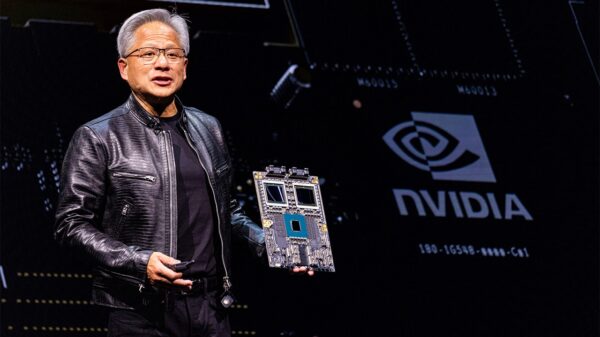
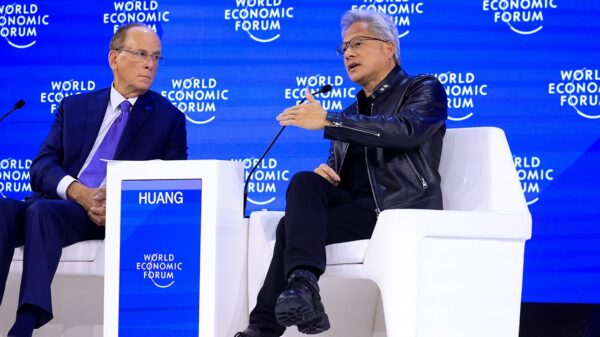
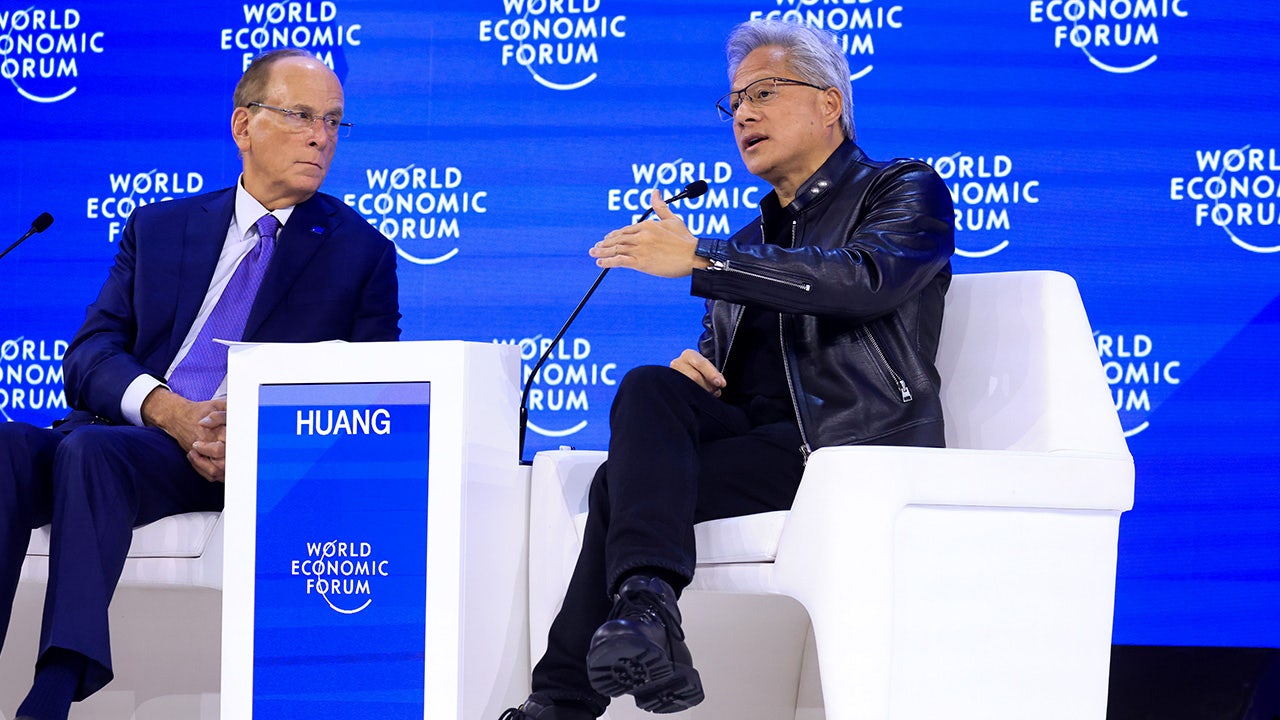
Concurrently, Nvidia CEO Jensen Huang emphasized the burgeoning infrastructure demands driven by the artificial intelligence (AI) technology boom, which he noted is significantly increasing salaries for construction trade workers involved in these projects. Huang shared his insights during a session at the World Economic Forum in Davos, Switzerland, where he conversed with BlackRock CEO Larry Fink, who serves as the WEF interim co-chair.
“First of all, this is the largest infrastructure build-out in human history. That’s going to create a lot of jobs,” Huang stated, highlighting that the upsurge in AI-related construction is not only generating employment but also enhancing wages in the sector. He detailed that the salaries for workers engaged in building chip factories and AI facilities have nearly doubled, reaching six-figure salaries for many positions.
The Nvidia co-founder elaborated on the different layers that constitute AI infrastructure. He likened this structure to a “five-layer cake,” starting with energy at the base, followed by chips and cloud services. Above these foundational layers are AI models and, at the pinnacle, the application layer where AI is utilized for productive purposes, ultimately generating economic benefits.
Huang noted, “We’re seeing quite a significant boom in this area.” He highlighted a growing shortage of skilled workers in the construction trades, affirming his optimism about the industry’s future. “Everybody should be able to make a great living. You don’t need to have a PhD in computer science to do so,” he added, signaling a shift in how employment opportunities are evolving alongside technological advancements.
During his discussion with Fink, Huang further elaborated on the interdependence of various AI infrastructure components, emphasizing the critical need for energy to support real-time processing and intelligence generation. “The important thing, though, because this computing platform requires all of the layers underneath it, it has started – and everybody is seeing it right now – it has started the largest infrastructure build-out in human history,” he remarked.
Huang’s comments come at a time when the tech sector is experiencing transformative changes, driven largely by AI. He pointed out that this trajectory necessitates “trillions of dollars of infrastructure that needs to be built out,” emphasizing that the investments are grounded in the necessity to process complex contexts to enable effective AI applications.
As the conversation around AI and its implications for employment and economic growth continues, Huang’s insights underline the significant role that infrastructure development plays. With the labor market evolving to meet these new demands, the construction sector is poised for substantial growth, heralding opportunities for skilled workers across various trades.
In parallel, broader economic indicators will continue to shape discussions about the future, as experts like Ghabour predict a bull market emerging despite current uncertainties. As these narratives unfold, the economic landscape remains intertwined with the rapid advancement of AI technology, setting the stage for a transformative era across multiple sectors.