













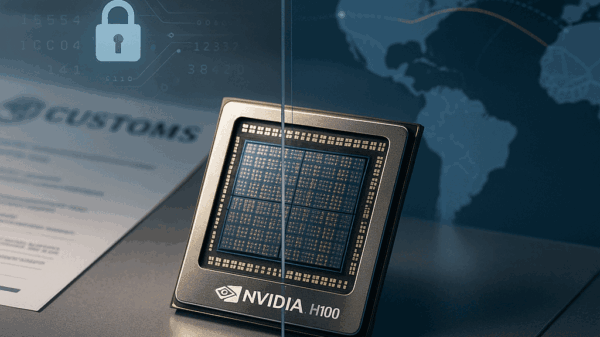


































Nvidia is reportedly developing a specialized version of its recently licensed Groq AI chips tailored for the Chinese market, diverging from previous models like the H20 and H200. According to a report from Reuters, these new chips will not be diluted versions intended for export controls but will be fully functional units adapted for existing infrastructure in China. This move comes in light of Nvidia’s $17 billion licensing agreement with AI chip startup Groq, which was announced during its annual developer conference this week in San Jose.
The Nvidia H200 and the Groq-based chips are designed for distinctly different functions within the AI framework. The H200 processors focus primarily on AI training, a resource-intensive process that involves building and refining AI models from the ground up. In contrast, the Groq chips are optimized for AI inference, the phase where trained models are applied to real-time tasks such as data analysis, question answering, and code generation. The inference sector presents a competitive landscape for Nvidia, which has faced increasing pressure from rivals in this domain.
During the conference, Nvidia outlined plans to integrate its upcoming Vera Rubin chips with the Groq inference chips, signaling an investment in enhancing its product offerings. The anticipated Groq chips for the Chinese market are projected to be available by May. Importantly, these chips will not be subject to downgrading or special modifications for export compliance but will retain their full performance capabilities.
This strategic re-entry into the Chinese market could mark a pivotal moment for Nvidia, particularly following a period of regulatory hurdles that inhibited its operations. CEO Jensen Huang confirmed at a recent press conference that Nvidia has secured approvals from both the US and Chinese governments to resume sales of the H200 chips. He noted that the company has already received purchase orders from “many customers in China,” and emphasized that “our supply chain is getting fired up.”
Nvidia’s dual approach of launching competitive inference chips while also resuming H200 sales indicates a calculated effort to regain market share lost due to previous restrictions. The firm’s return to selling H200 chips to Chinese customers suggests a cautious optimism in navigating the complex geopolitical landscape that has characterized US-China tech relations.
The introduction of Groq chips into the Chinese market reflects not only Nvidia’s strategic maneuvers but also the broader implications for the global AI chip industry. As demand for AI solutions continues to rise, the competition in the inference segment is expected to intensify, challenging Nvidia to enhance its offerings further.
In this rapidly evolving field, Nvidia’s ability to adapt to market needs while complying with regulatory requirements will be closely monitored. The firm’s initiatives could serve as a bellwether for other technology companies seeking to balance innovation with geopolitical realities. As the AI landscape becomes increasingly competitive, the implications of Nvidia’s strategic decisions will likely shape the future of AI technology both in China and worldwide.
See also Tesseract Launches Site Manager and PRISM Vision Badge for Job Site Clarity
 Affordable Android Smartwatches That Offer Great Value and Features
 Russia”s AIDOL Robot Stumbles During Debut in Moscow
 AI Technology Revolutionizes Meat Processing at Cargill Slaughterhouse
 Seagate Unveils Exos 4U100: 3.2PB AI-Ready Storage with Advanced HAMR Tech