














































The U.S. military’s capture of Venezuela President Nicolás Maduro on January 3 has prompted a significant rally in drone stocks as markets opened on Monday, highlighting the intersection of geopolitical events and market dynamics. The development comes amid ongoing scrutiny of drone technology’s role in modern warfare, a sector that has increasingly gained investor interest.
In a separate political landscape, a super Political Action Committee (PAC) aligned with President Donald Trump has disclosed that it has raised over $304 million. This substantial war chest could substantially influence the upcoming midterm elections, with implications for both party dynamics and key policy decisions.
Internationally, Britain has taken a bold step by mandating that technology companies proactively block unsolicited sexual images. This represents a significant escalation in how governments are holding online platforms accountable for abuse, especially as artificial intelligence capabilities evolve and proliferate.
Meanwhile, Iran is experiencing its 12th consecutive night of widespread anti-government protests, which have been exacerbated by a nationwide internet shutdown imposed by authorities. The situation has drawn international attention, with criticism from exiled opposition figure Reza Pahlavi, underscoring the global ramifications of domestic unrest.
Applied Digital Corp. (NASDAQ:APLD) reported second-quarter earnings of zero cents per share, beating the analyst consensus estimate of a loss of 10 cents. The firm also announced quarterly revenues of $126.59 million, well above the Street’s expectation of $89.76 million, indicating strong operational performance in a challenging market.
In the software and semiconductor sectors, the U.S. Department of Commerce has approved a license for Taiwan Semiconductor Manufacturing Co. (NYSE:TSM) to operate its Nanjing fabrication plant without case-by-case approvals for U.S.-controlled tools. The company reported about 1.05 trillion New Taiwanese dollars ($33.1 billion) in revenue for the last quarter, growing 20.5% year-over-year and surpassing estimates. In a strategic collaboration, NXP Semiconductors N.V. (NASDAQ:NXPI) has teamed up with GE HealthCare Technologies Inc. (NASDAQ:GEHC) to innovate in medical technology powered by edge artificial intelligence.
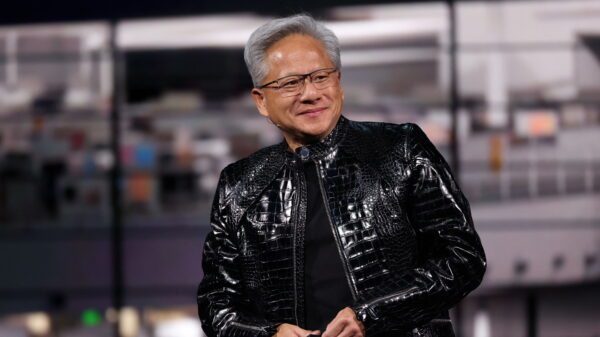
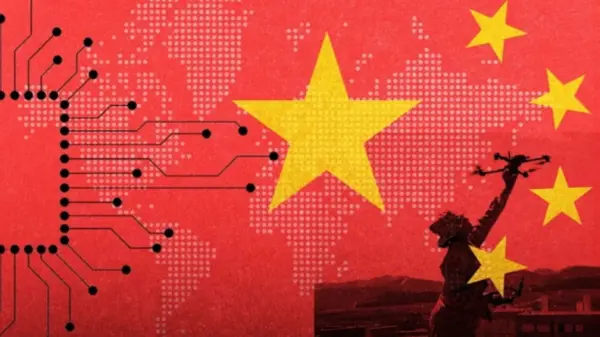
Infosys Limited (NYSE:INFY) has disclosed a collaboration with Amazon Web Services (AWS) to accelerate enterprise adoption of generative AI. The innovation landscape continues to shift, as Nvidia Corp (NASDAQ:NVDA) CEO Jensen Huang is expected to visit Taiwan this month, possibly announcing plans for a new Taipei headquarters amid surging AI chip demand, particularly from China.
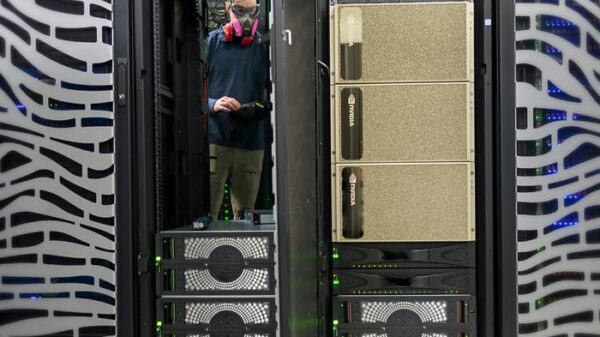
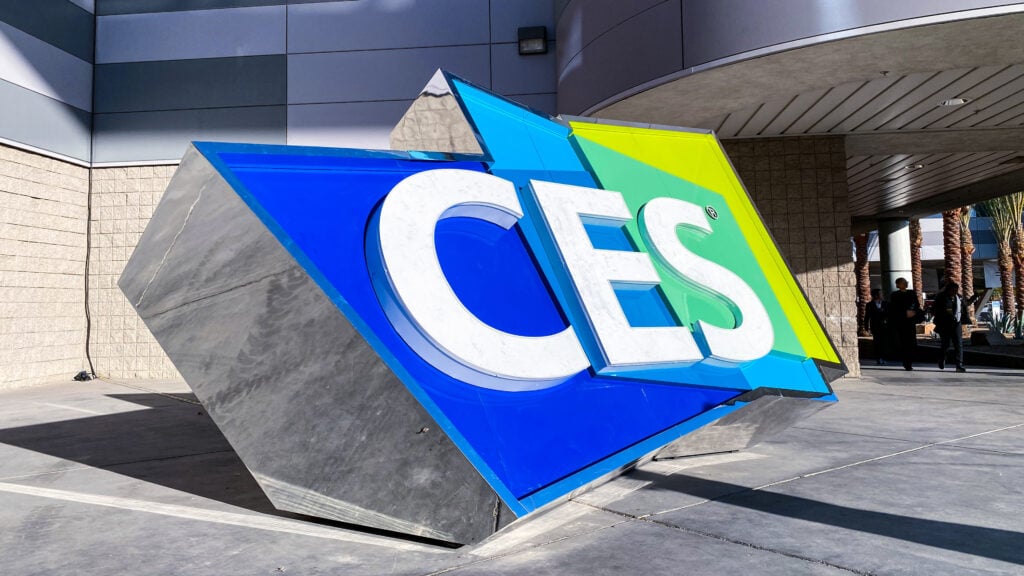
Nvidia is tightening its terms for selling its H200 artificial intelligence chips to China, navigating a complex regulatory environment. At CES 2026, the company unveiled a shift in autonomous vehicle development with the open-source Alpamayo family and confirmed that its next-generation Vera Rubin platform is already in full production.
Mobileye Global Inc. (NASDAQ:MBLY) announced that a U.S.-based automaker has selected the Mobileye EyeQ6H to enable advanced driver assistance systems featuring hands-free driving capabilities. Meanwhile, Intel Corp (NASDAQ:INTC) showcased its new Panther Lake AI laptop processor at CES 2026, marking a milestone in its 18A manufacturing capabilities.
In the automotive sector, General Motors Co. (NYSE:GM) has taken a $7.1 billion charge related to electric vehicles as it pivots away from its previous EV ambitions. This announcement follows another charge of $1.6 billion, indicating heightened scrutiny of EV investments across the industry.
On a different front, Elon Musk-owned Starlink has pledged to provide free satellite internet service across Venezuela for a limited time, aiming to maintain connectivity amid political upheaval following a U.S. military operation targeting the country’s leadership. Musk has also set ambitious production targets for the company’s Starship rocket.
The landscape of artificial intelligence is rapidly evolving, with startups like Invisible Technologies emphasizing the ongoing necessity of human involvement in AI training. Despite a market saturated with AI investments, experts, including CNBC host Jim Cramer, suggest that physical and financial constraints will naturally limit the excessive spending by tech giants.
As companies continue to innovate, Baidu Inc. (NASDAQ:BIDU) is preparing to take its AI chip unit public, potentially raising up to $2 billion. Meanwhile, Microsoft Corp (NASDAQ:MSFT) aims to automate retail tasks through its new suite of “agentic AI” tools, indicating a shift toward enhancing operational efficiency in traditional sectors.
The ongoing developments across these various sectors highlight the interconnected nature of technology, politics, and market trends, signaling a future where advancements in AI and semiconductor technology will play a crucial role in shaping global industries and economies.
See also Five Undervalued AI Stocks in 2026: Micron, TSMC, Qualcomm Forecast 40% Upside
 Nebius, SoundHound AI, and IonQ: 2026 Stocks Poised for Explosive Growth
 UGREEN Unveils AI-Powered NASync Storage, SynCare Security, and Nexode Charger at CES 2026
 Zepo Intelligence Secures $15M to Combat AI-Driven Social Engineering Attacks