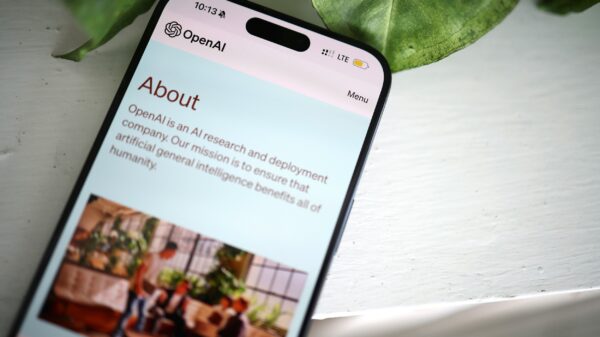

































OpenAI, once celebrated for its rapid growth and groundbreaking products, has shifted to a more precarious stance as it faces increasing competition. This December, CEO Sam Altman issued a stark memo to employees, describing the company’s current state as a “code red” and alerting them to “rough vibes” amid economic challenges and heightened rivalry, particularly from Google’s generative AI efforts.
Just last year, OpenAI was riding high on the success of its “12 days of Shipmas,” unveiling innovative products and raising $6.6 billion in funding. Yet, one year later, the focus is on internal restructuring as the company delays several initiatives aimed at achieving its goal of breaking even by 2030. The postponed projects include key revenue sources such as advertising and expanded e-commerce offerings. While the company remains stable—ChatGPT continues to lead as the most downloaded app in the U.S. and a recent partnership with Disney promises substantial investment—the memo reveals OpenAI’s vulnerability in the rapidly evolving AI sector.
Data underscores the urgency of OpenAI’s situation. ChatGPT maintains a substantial user base with over 800 million weekly users, but Google’s Gemini has made significant gains, boasting 650 million monthly active users as of Q3 2025. Recent metrics showed Gemini generating 1.351 billion website visits, while ChatGPT saw a decline below 6 billion visits, marking its second consecutive month of decreased traffic. The competitive landscape is further complicated by the enterprise market, where OpenAI’s share has reportedly dropped to 27%, while Google’s Gemini and Anthropic now command 21% and 40%, respectively. OpenAI contests these figures, highlighting its growing customer base of over 1 million businesses.
The internal alarm has drawn attention to a stark reality within OpenAI. A former researcher characterized Altman’s transparency regarding the competition from Google as remarkable, suggesting that if Google outperforms OpenAI, it could severely undermine OpenAI’s API business. The memo’s call to arms reflects a pressure to regain competitive ground amid industry titans like Google, Microsoft, and Meta, all of which are backed by substantial financial reserves and extensive product ecosystems.
In response to these competitive pressures, OpenAI initiated a counteroffensive with the launch of GPT-5.2, code-named Garlic, which aims to reclaim its standing in performance benchmarks. Additionally, the company revealed a new image generation model, demonstrating its capability to match Google’s innovative offerings. Altman has described the competitive landscape as a “pandemic” that must be addressed decisively before rivals gain too much traction.
Market Positioning
The code red will span eight weeks, during which OpenAI plans to concentrate on enhancing its core products, particularly ChatGPT. This period is seen as crucial for reallocating resources and prioritizing initiatives that align with the company’s strategic goals. Employees report a focused atmosphere as the company narrows its attention back to its flagship models, with many expressing confidence in their product’s standing despite concerns over Google’s advances.
OpenAI’s competitive challenges are compounded by the potential public perception shifts surrounding its rivals. Google, previously viewed as a dominant force, is now being framed as an underdog in the eyes of some consumers, a narrative shift that OpenAI must navigate carefully. Altman’s ambitious vision includes developing new hardware devices that could redefine how users interact with AI, aiming to replace smartphones with innovative gadgets. This initiative, spearheaded with the help of former Apple designer Jony Ive, is still in its early stages, with expectations for market-ready products within two years.
As OpenAI seeks to secure its position in an increasingly competitive market, the decisions made in the coming weeks will be pivotal. The company’s future hinges not just on technological advancements but also on how effectively it can maintain consumer trust and adapt to evolving market dynamics. The stakes are high in what some have dubbed the most transformative technology since electricity, making it clear that the battle for dominance in AI is far from over.
See also TeraWulf Announces $9.5B AI Pivot Amid 12% Stock Drop and Market Fears
 AI’s Integration with IoT and Blockchain Drives 2026 Trends for Enterprise Resilience
 NIST Publishes Draft AI Cybersecurity Framework Open for Review Until January 30
 Yu-Han Tsai Transforms AI Diagnostics, Promising Rapid Oncology Treatments in Under 48 Hours
 Tiiny AI Inc Launches World’s Smallest Mini PC, Running 120 Billion Parameter Model On-Device