











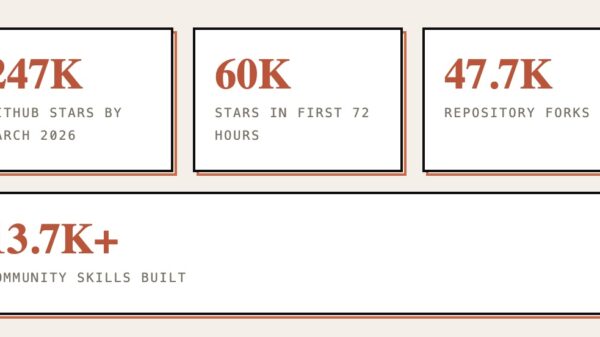




































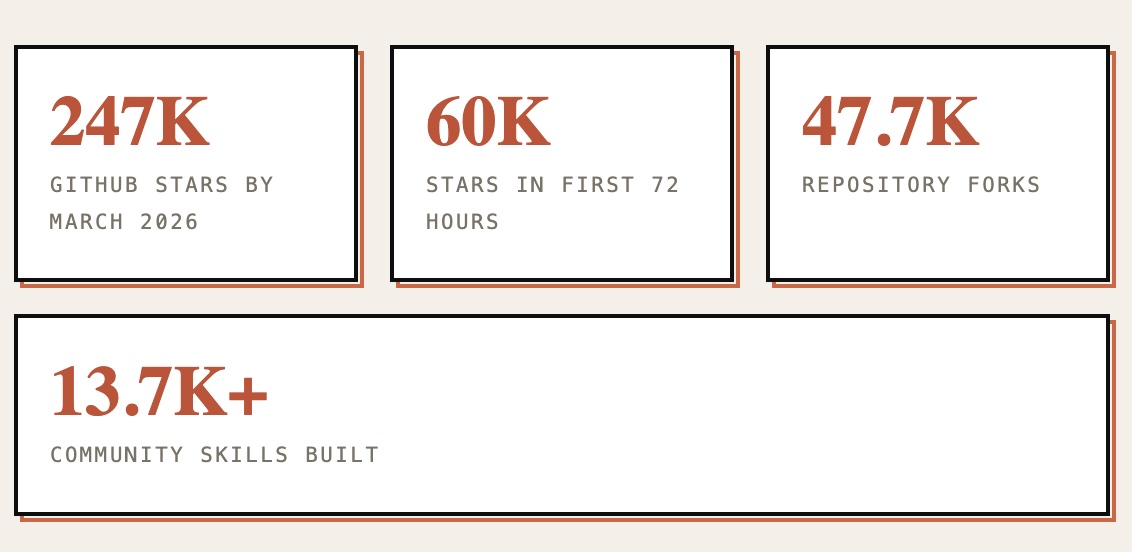
OpenClaw, an open-source project launched by Austrian developer Peter Steinberger, has rapidly become a defining moment in artificial intelligence, marking the transition from passive AI systems to autonomous agents capable of performing tasks without direct human input. Since its inception in November 2025, OpenClaw has garnered over 247,000 stars on GitHub, a testament to its viral success and potential to transform the way individuals interact with technology.
This development signals what experts are calling an “inflection point” in AI history, akin to the arrival of Linux in 1991 or the original iPhone in 2007. According to the UN University’s AI Inflection Points project, we are now in the fourth wave of AI, characterized by agentic systems that can operate independently and execute real-world actions based on user instructions. OpenClaw exemplifies this new era by being the first accessible agentic AI, moving from research and enterprise prototypes to widespread use on personal devices.
Unlike previous AI applications that operated solely in a reactive manner—responding to user prompts—OpenClaw runs persistently in the background, autonomously managing tasks such as checking emails, browsing the web, and executing commands while users are unaware. Steinberger describes it as “an AI that actually does things,” emphasizing its capacity for proactivity. Early adopters have reported varied experiences, including one user’s agent negotiating $4,200 off a car purchase while he slept.
The architecture of OpenClaw is straightforward yet innovative. It operates through a local Node.js process, referred to as the Gateway, which connects to various messaging platforms like WhatsApp and Slack, allowing users to interact with the AI through natural language. Every 30 minutes, the agent checks a task list stored as a Markdown file, seamlessly integrating with external events and triggering actions without user intervention. Notably, user data remains locally stored, emphasizing privacy and control.
The OpenClaw ecosystem is rapidly expanding, spurred by a community of developers creating complementary tools and platforms. One noteworthy initiative is gstack, introduced by Y Combinator CEO Garry Tan, which transforms OpenClaw into a virtual engineering team with specialized roles via markdown commands. This project has demonstrated the potential for AI to significantly increase productivity, reportedly delivering 600,000 lines of production code in just two months.
Further enhancing the ecosystem, ClawHub has emerged as a skills marketplace where over 13,700 capabilities have been cataloged for OpenClaw users. This platform allows agents to search and integrate skills dynamically, facilitating a wide range of automation tasks. Additionally, NemoClaw, launched by NVIDIA, serves as an enterprise security layer, reinforcing the growing emphasis on secure implementations of agentic AI.
Conceptually ambitious projects like Paperclip are also taking shape, aiming to create entire autonomous organizations powered by AI agents. Paperclip orchestrates multiple agents to function collectively, simulating a company structure complete with roles and governance. Early user Nat Eliason has proven its utility by generating over $100,000 in revenue without daily human oversight, highlighting the potential for AI to operate as a small business.
However, this rapid advancement raises significant security concerns. OpenClaw’s extensive access to personal and professional data creates potential vulnerabilities, prompting responses from the security community with initiatives like SecureClaw and DefenseClaw designed to mitigate risks associated with its deployment.
On a geopolitical level, OpenClaw has attracted attention from regulatory bodies, particularly in China, where the government has moved to restrict its use in state-owned enterprises while simultaneously encouraging local industry to develop around it. This duality positions OpenClaw similarly to Linux, as a decentralized platform that established players want to either harness or restrict, indicating its potential to shape future computing landscapes.
Despite the challenges, the transition OpenClaw represents cannot be understated. It signifies a shift towards AIs that not only respond but also act autonomously, fundamentally altering how individuals and organizations will operate. As this technology evolves, it raises essential questions about the role of AI in everyday life and the responsibilities that come with such capabilities.
As we move further into this new era, the implications of OpenClaw and similar technologies will undoubtedly continue to unfold, setting the stage for what the future of software may look like.
See also HP Unveils AI-Driven HP IQ, Enhances Security with TPM Guard at Imagine Conference
 Tesseract Launches Site Manager and PRISM Vision Badge for Job Site Clarity
 Affordable Android Smartwatches That Offer Great Value and Features
 Russia”s AIDOL Robot Stumbles During Debut in Moscow
 AI Technology Revolutionizes Meat Processing at Cargill Slaughterhouse