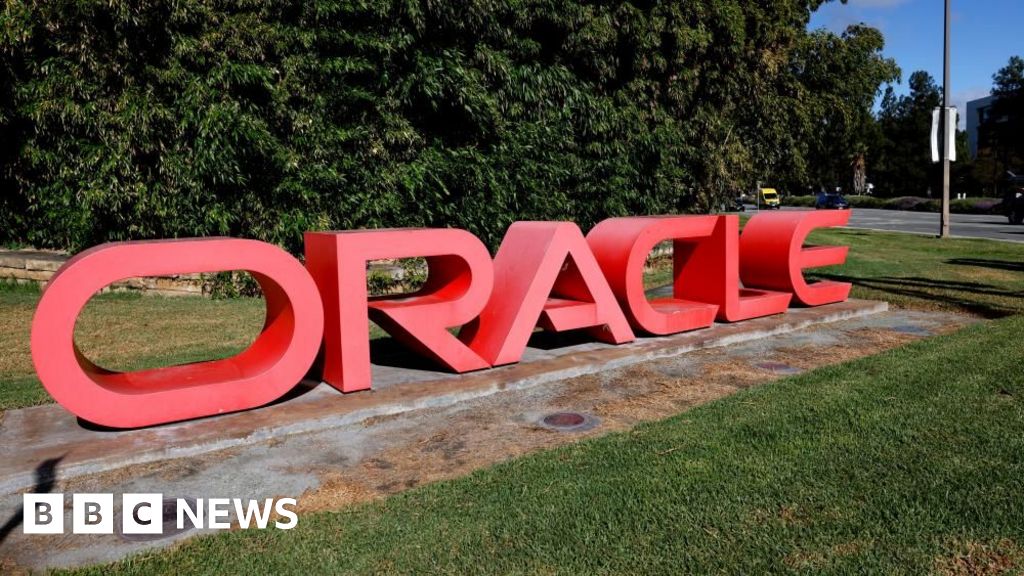
Shares of cloud computing giant Oracle plunged more than 10% in after-hours trading on Wednesday after the company’s revenues fell short of Wall Street expectations. The company reported revenue of $16.06 billion (£11.99 billion) for the three months ending in November, compared to the $16.21 billion projected by analysts.
Despite a revenue growth of 14% and a remarkable 68% surge in sales at its AI division, Oracle Cloud Infrastructure (OCI), the results raised concerns among investors. OCI services key AI technology developers, whose reliance on Oracle’s infrastructure previously helped lift the company’s shares to new highs this fall. However, the latest performance failed to alleviate fears regarding a potential AI bubble.
In September, Oracle secured a pivotal contract with ChatGPT-maker OpenAI, which is set to purchase $300 billion in computing power over five years. This announcement briefly catapulted Oracle chairman and chief technology officer Larry Ellison to the status of the world’s richest man. However, Oracle shares have since lost 40% of their value from their peak three months ago, although they remain up by more than a third since the start of the year.
In a statement issued on Wednesday, Ellison adopted a cautious tone regarding the evolving AI landscape. “There are going to be a lot of changes in AI technology over the next few years, and we must remain agile in response to those changes,” he stated. He also hinted at maintaining a diversified chip strategy, asserting that Oracle would acquire chips from any manufacturer to meet client needs, coining this approach as “chip neutrality.”
Oracle’s involvement in multiple AI infrastructure agreements has raised concerns about potential ‘circular financing’ arrangements, where companies finance the acquisition of their own products and services. Following the release of the quarterly report, Emarketer analyst Jacob Bourne commented that Oracle’s earnings come as investors consider whether its massive OpenAI partnership indicates overexposure to a customer that is currently under scrutiny for profitability issues. Bourne also noted the growing scrutiny over Oracle’s increased debt, accumulated to fund data center construction.
Despite the negative market reaction, some analysts argue the sell-off was unwarranted. “This was nothing but a great quarter for Oracle,” said Cory Johnson, Chief Market Strategist at Epistrophy Capital Research. He pointed out that a 14% revenue growth represents acceleration, and noted that Oracle has secured $385 billion in contracts over the past six months, with new clients including tech giants like Meta and Nvidia.
However, Johnson acknowledged that prevailing sentiment around AI is dampened, affecting perceptions of Oracle’s prospects negatively. Oracle raised a record $18 billion through a bond sale in September, marking one of the largest debt issuances in the tech sector’s history. Analysts like Bourne expressed concerns that while Oracle’s shares benefitted from the September surge, this revenue miss is likely to heighten anxiety among already cautious investors regarding its OpenAI deal and aggressive investments in AI.
In addition to its cloud computing ventures, the Ellison family, known supporters of former President Donald Trump, has made moves in Hollywood, recently acquiring Paramount and spearheading a bid for Warner Brothers Discovery. As investors digest the implications of Oracle’s latest financials and strategic decisions, the company’s ability to navigate a rapidly changing AI landscape — amid increasing scrutiny and competition — will be pivotal for its future performance.
See also DeepSeek Accused of Smuggling Nvidia’s Banned Blackwell Chips to Advance AI Models
 Autonomous AI Agents Set to Transform Platform Engineering with Self-Governance by 2026
 LG Launches AI Cabin Platform at CES 2026, Redefining In-Vehicle Experiences with Generative AI
 White House Announces Approval for Nvidia’s H200 AI Chips Export to China with 25% Fee
 NED University Achieves Milestone with Pakistan’s First AI-Powered Driverless Car Test