










































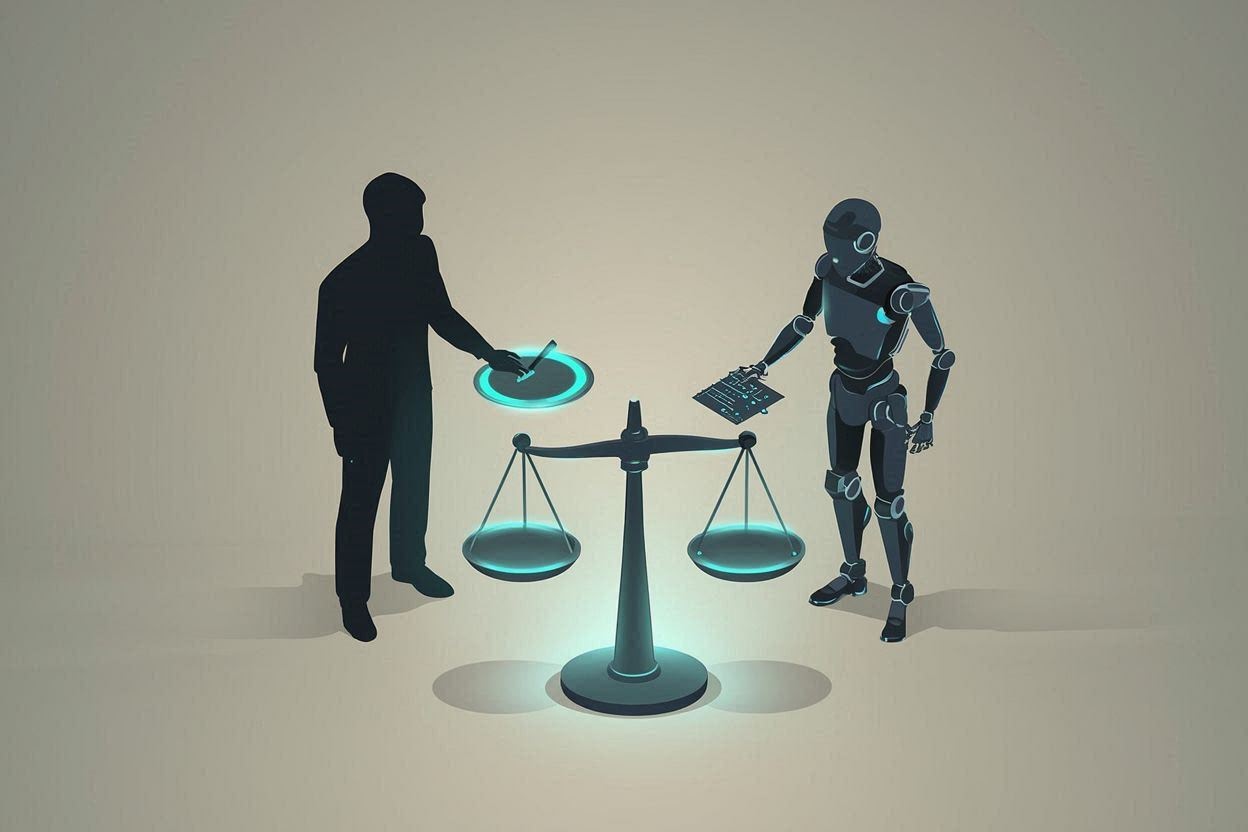
Researchers at Pusan National University have delved into the complex issue of responsibility in cases where artificial intelligence (AI) systems cause harm. This research addresses a longstanding problem in AI ethics, wherein traditional moral frameworks, often reliant on human mental characteristics such as intention and awareness, struggle to pinpoint accountability when autonomous systems contribute to detrimental outcomes. The study highlights that the intricate behavior of AI systems, which can learn and adapt in ways that are often opaque even to their developers, complicates the assignment of responsibility.
The researchers note that as AI systems become more complex and semi-autonomous, it becomes increasingly challenging for both developers and users to foresee every possible consequence of their actions. This unpredictability creates what scholars refer to as a responsibility gap, complicating the identification of accountable agents in the event of harmful incidents.
Integrating findings from experimental philosophy, the study explores how individuals perceive agency and assign responsibility in scenarios involving AI systems. Results reveal that participants often consider both humans and AI as players in morally relevant actions, even when they recognize that AI lacks consciousness or independent control. The research uses these insights to examine how public perception relates to non-anthropocentric theories, contributing to ongoing discussions about ethical responsibility in AI.
The authors analyze the existing responsibility gap while also reviewing alternative approaches that move beyond human-centered criteria. These frameworks conceptualize agency based on how an entity interacts within a technological network, rather than being tied to mental states. In this perspective, AI systems are seen as participating in morally significant actions due to their ability to respond to inputs, adhere to internal rules, adapt to feedback, and generate outcomes affecting others.
The research proposes a model that distributes responsibility among the entire network of contributors involved in the design, deployment, and operation of AI systems. This network includes programmers, manufacturers, users, and the AI system itself. Importantly, the framework does not treat the network as a collective agent but assigns roles based on each participant’s functional contributions. This reimagined distribution of responsibility aims to focus on preventing future harm rather than merely assigning blame.
As the study outlines, the proposed model emphasizes corrective measures, such as monitoring system behavior, refining error-prone models, or removing malfunctioning systems from operation. It also acknowledges that human contributions can be morally neutral, even when part of a chain leading to an undesirable outcome, thereby shifting responsibility towards a more proactive corrective duty.
By comparing their findings with insights from experimental philosophy, the researchers illustrate that individuals frequently regard AI systems as actors in morally significant contexts. Participants often assign responsibility not solely to human stakeholders but also to AI systems themselves, emphasizing prevention of future mistakes over punishment. This aligns with a growing trend in which responsibility is viewed as a shared obligation among all players in a socio-technical network.
The analysis concludes that the enduring responsibility gap is rooted in assumptions tied to human psychology, rather than reflecting the realities of AI systems. It advocates for a paradigm shift in understanding responsibility as a distributed function across technological networks. The researchers call for further attention to practical challenges, including how to effectively assign and ensure the fulfillment of duties within these complex systems.
This research contributes significantly to the discourse surrounding AI ethics, suggesting a need for a nuanced understanding of accountability that reflects the interplay of human and machine interactions. As AI technology continues to evolve, addressing these ethical implications will be critical in guiding its development and implementation.
See also 2026 Sees AI Agents Transform Industries, Quantum Threats Challenge Cybersecurity Resilience
 HUMAIN Launches Qualcomm AI Engineering Center in Riyadh, Boosting 200 MW Data Capacity
 Dell Raises FY26 Revenue Outlook to $111.7B, Driven by $12.3B AI Server Orders
 IREN Partners with Microsoft for $9.7B AI Transformation, Aiming for 140,000 GPUs by 2026
 Nvidia CEO Jensen Huang Predicts Robotics Breakthrough, Boosting AI Crypto Markets