




































Researchers are increasingly viewing quantum computing and artificial intelligence (AI) as complementary technologies rather than adversaries, signaling a paradigm shift in how these fields are being developed and integrated. In a landscape where AI is rapidly evolving, scientists across academia, national laboratories, and industry are advocating for hybrid systems that combine classical computing with AI and quantum hardware. This approach aims to harness the strengths of each technology, with AI providing essential support for the usability of quantum computers, while quantum computing seeks to enhance specific computational tasks within AI workflows.
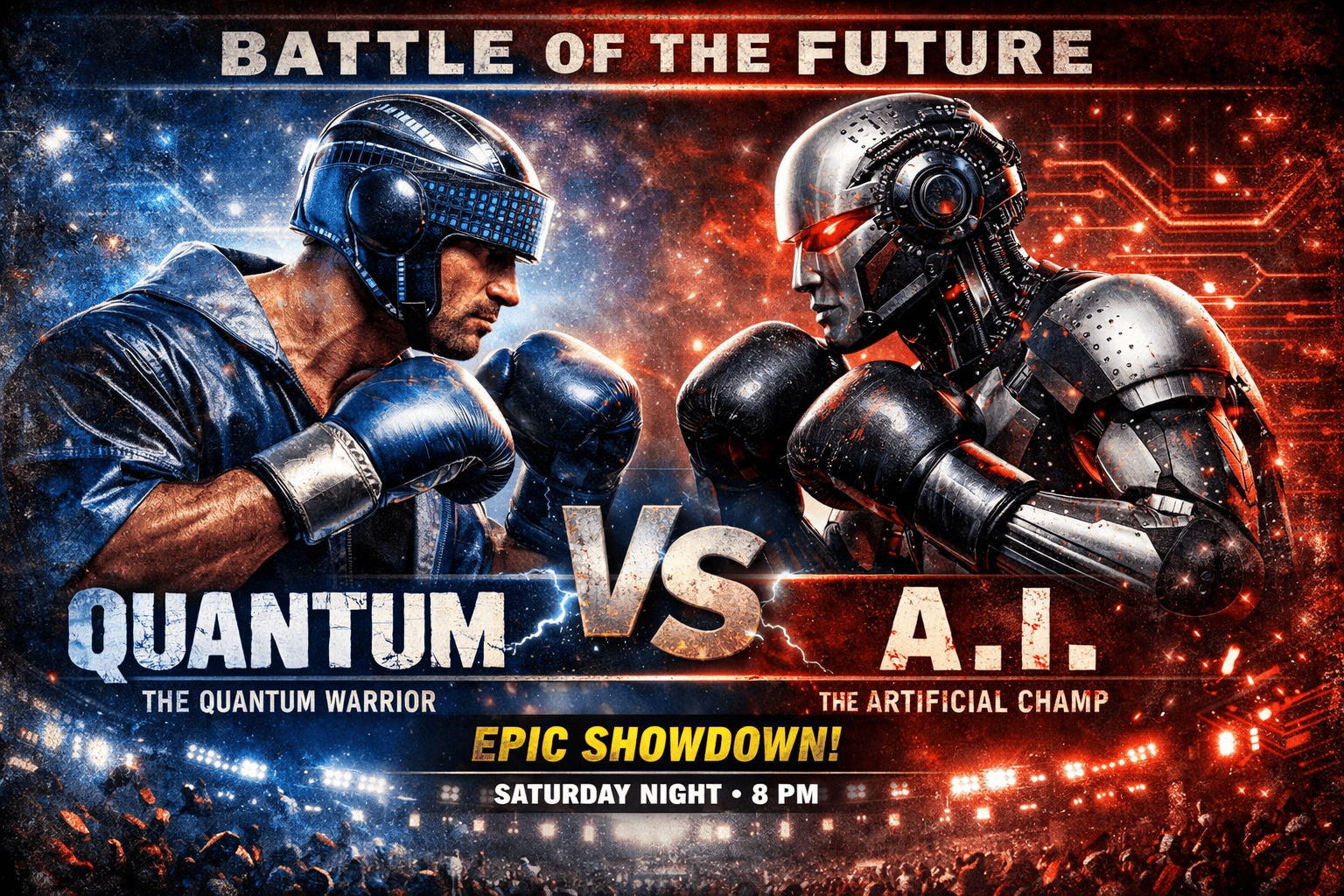
For years, discussions around quantum computing have often framed it as the potential successor to AI—an alluring narrative that suggests that the energy-intensive and latency-laden operations of traditional machine learning could be outpaced by quantum technologies. However, many experts argue that this dichotomy oversimplifies the complex interplay between these two domains. Instead of aiming to replace existing AI systems, quantum computing is being explored for its ability to accelerate specific tasks such as optimization, sampling, and reinforcement learning, which currently pose challenges for classical computation.
The prevailing sentiment among researchers is that the future of computing lies not in a competition between quantum technologies and AI, but rather in their convergence. German researchers have articulated this vision, suggesting that “Quantum Artificial Intelligence (QAI, Quantum AI) is the intersection of both technologies,” emphasizing the feasibility of leveraging quantum computing for AI tasks and vice versa. As classical computing remains the backbone for most applications, AI is seen as key to managing the complexities of quantum systems, which are still in their infancy.
Much of the misunderstanding surrounding the relationship between quantum computing and AI stems from the terminology used. The term “quantum AI” can imply a new form of intelligence rather than a focused research area. In reality, it often refers to the use of quantum computing to tackle specific challenges in AI, as well as employing AI methodologies to enhance quantum computing capabilities. The economic pressures associated with AI’s rapid growth have underscored its limitations, prompting some to look towards quantum solutions as a possible remedy.
While AI systems have excelled in approximating complex datasets and have transformed various fields such as natural language processing and computer vision, they are not without challenges. Training leading-edge AI models demands significant computational resources and energy, leading some to investigate quantum computing’s potential as a solution for certain computational bottlenecks. However, experts caution that quantum systems do not inherently offer advantages for all AI workloads. Instead, they provide a distinct computational toolkit that operates best in specific scenarios.
The current state of quantum computing, primarily characterized by noisy intermediate-scale quantum (NISQ) devices, limits its use to specialized applications. These quantum systems can effectively address problems framed as optimization landscapes or probabilistic sampling tasks, but they are not general accelerators for all types of computations. As such, practical applications in AI contexts rely on hybrid workflows, where quantum processors assist within a classical pipeline rather than replacing it entirely.
AI’s role in enabling quantum systems has become increasingly prominent. The intricate nature of building and operating quantum computers necessitates ongoing calibration, control, and error mitigation, areas in which AI has proven invaluable. Machine learning techniques are now integral to designing quantum experiments and optimizing control parameters, demonstrating that AI is not merely an adjunct but a foundational element of quantum computing’s operational framework.
Conversely, the prospect of quantum computing enhancing AI remains tentative but promising. Research is focusing on addressing computational hurdles faced by AI, such as combinatorial optimization and reinforcement learning in expansive state spaces. Industries like logistics and pharmaceuticals are exploring hybrid quantum-classical optimization strategies to efficiently manage complex planning challenges. These approaches aim to yield incremental benefits in cost and efficiency, reinforcing the notion that rather than a wholesale replacement, quantum computing may serve as a targeted aid for specific AI functions.
The narrative framing quantum and AI as competing technologies is increasingly recognized as a mischaracterization. The term “quantum AI” often lacks a standardized technical definition, leading to confusion about its applications. Most so-called quantum AI frameworks tend to be either simulations or hybrid models, rather than a distinct new form of intelligence. As research progresses, it is becoming evident that the future will likely involve a hybrid architecture where classical computing remains the dominant framework, and quantum processors act as specialized resources for particular tasks.
This emerging structure suggests a cautious approach for businesses looking to integrate these advanced technologies. While quantum computing is not expected to disrupt AI in the near term, it holds the potential to reshape operational costs and capabilities in industries such as finance, energy, and materials science. Thus, companies must remain vigilant to the evolving landscape and consider the implications of adopting these technologies. For researchers and policymakers alike, the emphasis on integration becomes paramount, ensuring that advancements in AI and quantum computing occur in tandem rather than isolation.
Ultimately, the trajectory of computing appears to be heading towards a future defined not by competition but by collaboration, where AI and quantum computing coexist to address the complexities of modern computational challenges. As researchers continue to explore this integration, the promise of enhanced capabilities through a hybrid approach becomes increasingly tangible, setting the stage for breakthroughs that could redefine the boundaries of what is computationally possible.
See also Quantum Computing and AI Collaborate to Enhance Computational Efficiency in Hybrid Systems
 Razer Launches Forge AI Dev Workstation with Purpose-built Hardware for Developers
 Nestlé’s CIO Highlights AI’s Value Beyond Efficiency, Focusing on Enhanced Fulfillment
 Big 7 AI Companies Propel Edge Computing Innovations with 2026 Market Insights
 AMD’s Lisa Su Reveals AI Will Require 10 Yottaflops, Transforming Industry Standards