

















































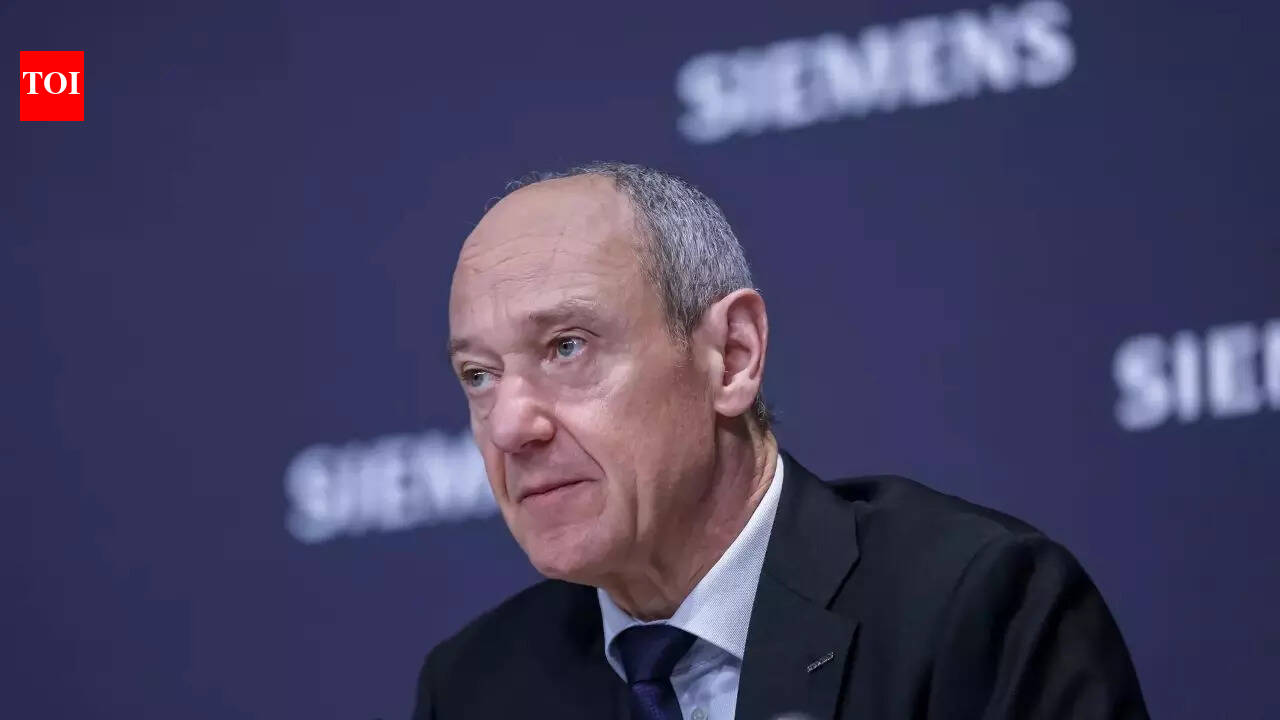
Siemens CEO Roland Busch has issued a stark warning regarding the European Commission’s approach to artificial intelligence (AI), cautioning that prioritizing local systems over existing American technology could stifle innovation across Europe. In an interview with the Financial Times, Busch emphasized that as discussions continue within the EU about reducing reliance on U.S. technology providers, the region risked falling behind in AI development. “It would be a disaster,” he stated, if Europe held back progress in innovation while awaiting the establishment of its own AI infrastructure.
Busch’s remarks come as the European Commission prepares to present a “tech sovereignty package” aimed at bolstering cloud infrastructure and nurturing the domestic AI sector. He underscored the sentiment shared by several European businesses that a hasty withdrawal from U.S. tech could lead to increased costs and a slowdown in investment. “You should not throttle your innovation speed for the sake of creating sovereignty,” he added, highlighting the potential negative impact of overly stringent regulations on AI deployment.
The CEO’s comments coincide with ongoing efforts to implement EU AI regulations introduced last year, which have been met with criticism from major technology firms, the U.S. government, and some businesses within Europe. Critics argue that the existing rules could hinder the adoption of AI technologies at a time when rapid advancements are crucial. Busch characterized Europe’s approach as “completely miscalibrated” compared to the U.S. model, which he described as a “fast-flowing river” of innovation, contrasting it with Europe’s “standing water” ecosystem.
Busch further noted that the current regulatory framework fails to effectively distinguish between private and business uses of AI, raising questions about the necessity of regulating data-sharing agreements between companies. “If you have two companies and they make a contract on how to share data, why would I need to regulate the way companies are sharing that data?” he asked, indicating a need for a more nuanced regulatory approach.
Despite these concerns, Siemens is making significant strides in AI development, with plans to invest €1 billion in creating its own AI tools, which include innovations like a virtual shop floor manager. However, Busch indicated that the company is primarily focusing its investment efforts in the U.S. and China, treating Germany as a secondary priority. “We do invest also in Germany, but in a second wave,” he explained, referencing Chancellor Friedrich Merz’s initiatives to attract more investment to the region.
Busch remains optimistic about Europe’s potential in industrial AI, citing access to large datasets as a competitive advantage. Yet, he acknowledged that many companies are hesitant to leverage this data due to regulatory burdens. The ongoing dialogue around AI regulation and technology sovereignty continues to evolve, with many stakeholders advocating for a balanced approach that fosters innovation while addressing security concerns.
As the European Commission moves forward with its regulatory framework and tech sovereignty initiatives, the conversation around AI adoption and innovation in Europe is set to intensify. The stakes are high, and the outcome of these discussions could significantly shape the future landscape for AI in the region, potentially determining whether Europe can keep pace with its global counterparts in this rapidly evolving field.
See also Tesseract Launches Site Manager and PRISM Vision Badge for Job Site Clarity
 Affordable Android Smartwatches That Offer Great Value and Features
 Russia”s AIDOL Robot Stumbles During Debut in Moscow
 AI Technology Revolutionizes Meat Processing at Cargill Slaughterhouse
 Seagate Unveils Exos 4U100: 3.2PB AI-Ready Storage with Advanced HAMR Tech