

































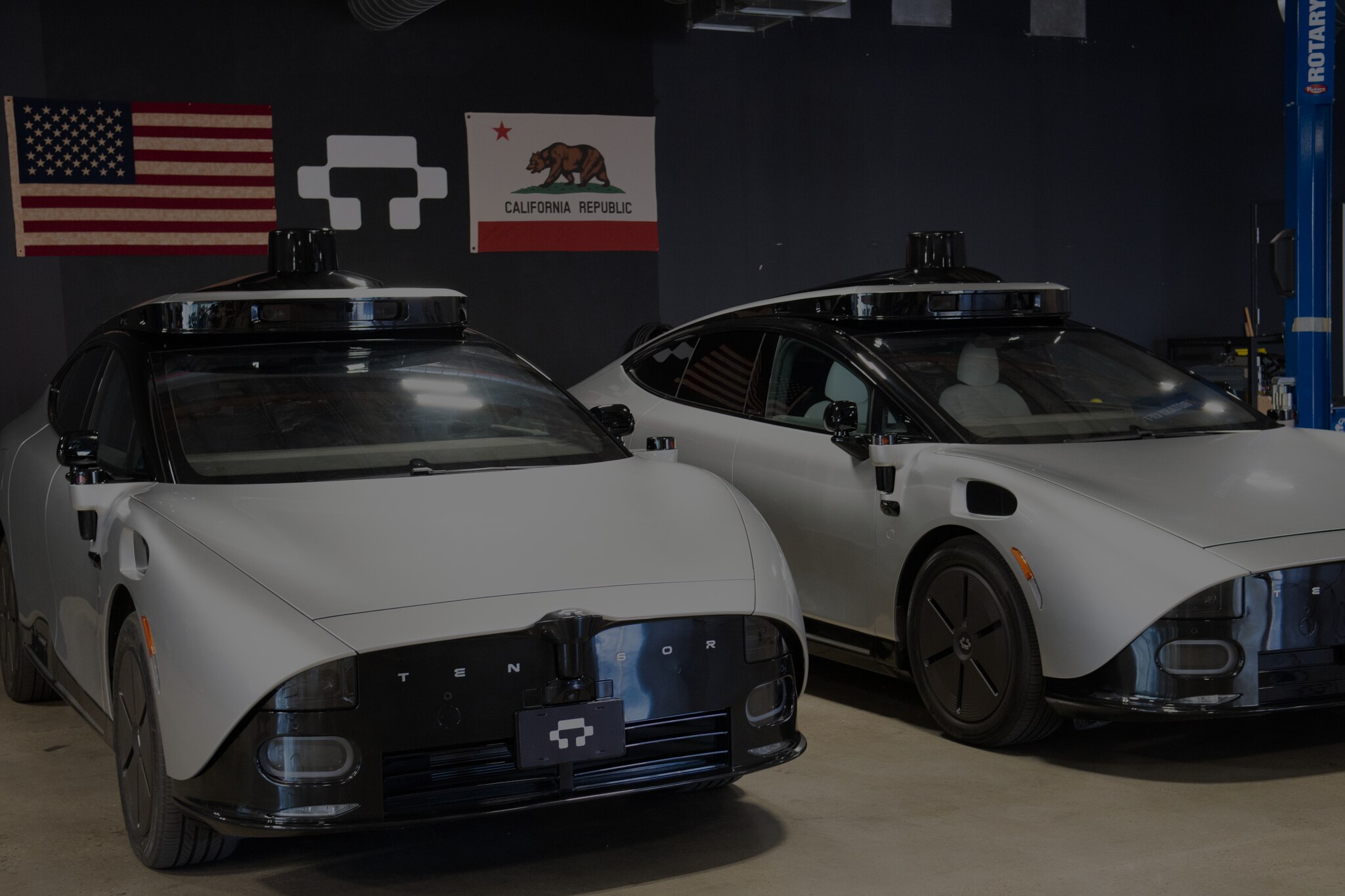
SAN JOSE, Calif. — February 23, 2026 — Tensor and Arm have forged a multi-year strategic collaboration to develop a cutting-edge compute architecture for the world’s first agentic AI personal Robocar, marking a significant milestone in the evolution of autonomous vehicles. Tensor aims to integrate over 400 safety-capable, power-efficient Arm-based cores in each Robocar, the highest concentration of Arm technology in a consumer vehicle to date. As Tensor prepares to scale its fleet for global commercialization later this year, this partnership is set to enable Level 4 autonomous capabilities essential for the next generation of mobility, supported by Arm’s expansive software ecosystem comprising more than 22 million developers.
The shift toward AI in the physical world is redefining autonomous systems that can sense, decide, and act while adhering to stringent power, safety, and reliability standards. Unlike traditional approaches that retrofit autonomy onto existing platforms, Tensor is positioning its vehicle architecture around this embodied intelligence. The Robocar boasts a comprehensive suite of sensors, including 37 cameras, five lidars, 11 radars, 22 microphones, and more, designed to facilitate continuous perception and environmental awareness across varying operational conditions.
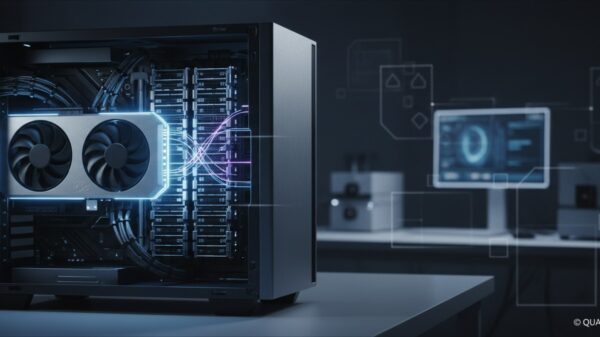
Tensor’s vehicle architecture utilizes Arm’s compute platform to distribute intelligence throughout the vehicle, from its onboard supercomputer to the smallest sensors. Each Robocar incorporates 433 Arm-based cores, featuring Neoverse® AE for high-throughput AI processing, Cortex®-X for system control, and Cortex-A for various functionalities including drive-by-wire and redundancy systems. This setup enables Tensor to deploy AI workloads across diverse computing domains while satisfying the rigorous safety, thermal, and power requirements of the automotive industry, working in conjunction with NVIDIA-accelerated AI processing to support Tensor’s proprietary autonomy stack.
Drew Henry, Executive Vice President of the Physical AI Business Unit at Arm, emphasized the transformative impact of AI on mobility: “Autonomous vehicles are a leading example of how AI is shifting to the physical world, requiring world-class, high-performance, safe and power-efficient compute foundations to transform the future of mobility in meaningful and tangible ways.” He noted that Arm’s solutions, combined with a well-established software ecosystem, are crucial for advancing innovations in physical AI.
Dr. Jewel Li, COO of Tensor, highlighted the complexities of scaling personal autonomous vehicles, stating, “Delivering personal autonomous vehicles at scale requires more than breakthrough AI and autonomy; it demands advanced engineering for safety, redundancy, reliability, and power efficiency.” Tensor’s collaboration with Arm draws on decades of expertise in AI-capable compute, ensuring that the Robocar transitions seamlessly from advanced technology to real-world application.
The AI-native vehicle architecture of the Tensor Robocar is bolstered by a growing network of partners across AI compute, advanced manufacturing, and critical vehicle technologies. The company has aligned with prominent automotive suppliers and semiconductor firms, including Autoliv, ZF, Continental, NVIDIA, AMD, Qualcomm, Samsung, and Oracle to deliver the most advanced personal autonomous vehicle ever mass-produced.
The Tensor Robocar is slated to launch in major markets, including the U.S., EU, and the Middle East, later in 2026, promising to redefine personal transportation and accelerate the adoption of autonomous technologies.
Founded in 2016 in Silicon Valley, Tensor is dedicated to creating agentic products that empower consumers, with its flagship Robocar marking a significant milestone in the automotive industry. Meanwhile, Arm continues to lead in the development of power-efficient compute platforms that are fundamental to unleashing AI’s potential across various sectors.
See also Pentagon Demands Anthropic’s AI for Military Use Under Defense Production Act
 Jack Dorsey Cuts 40% of Block Workforce, Plans to Hire Senior AI Engineers
 Deepak Venkateshappa Transforms Enterprise Decision Systems with AI-Driven Data Platforms