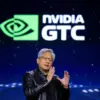
Nvidia CEO Jensen Huang has taken a firm stance against growing investor concerns that artificial intelligence (AI) poses a threat to traditional software companies. In remarks made recently, Huang argued that the market has fundamentally misunderstood AI’s impact on the software landscape, suggesting that it is not a replacement for existing software as a service (SaaS) businesses, but rather an enabler of new opportunities.
This rebuttal comes at a critical time as investors are increasingly worried about the sustainability of spending on AI hardware, which has pushed Nvidia’s valuation past $2 trillion. Questions surrounding whether this surge in demand for AI tools and infrastructure can maintain its momentum have left many in the financial community cautious, fearing that a bubble could be forming.
Huang’s comments also address pressing concerns over how investments in AI infrastructure will affect enterprise software companies. As generative AI tools take center stage, the anxiety belongs to a belief that these innovations might automate functions that traditionally required costly software subscriptions, potentially undermining the business models of established SaaS providers. If AI can perform tasks like writing code or analyzing data independently of traditional software platforms, many question the rationale for continued investment in those platforms.
Investor apprehension has risen sharply over recent months, as chipmakers like Nvidia have seen soaring valuations driven by unprecedented demand for AI hardware. This has led to a dichotomy in the market: while Nvidia thrives on AI hardware sales, investors are left to ponder whether such rapid growth is economically viable in the long term. Huang’s rebuttal directly challenges the emerging consensus that AI could disrupt existing software companies rather than enhance their capabilities.
Huang’s defense of the AI sector reflects broader questions about the future of enterprise software. With generative AI promising to automate various tasks, the implications for traditional software companies could be profound. Investors are observing a shift in the market dynamics and re-evaluating the value propositions of established SaaS platforms in light of AI advancements.
The stakes are high for enterprise software firms, many of which are watching closely as generative AI tools gain traction. Huang’s perspective aims to reshape the narrative around AI’s role, suggesting that rather than cannibalizing existing business models, AI can augment them, creating new pathways for innovation and efficiency.
As the industry grapples with rapid technological changes, Huang’s assertions invite a deeper examination of how AI will influence not only the growth of companies like Nvidia but also the broader software market. The potential for AI to serve as a transformative agent underscores the importance of continued investment in infrastructure to harness these advances effectively.
Looking ahead, the discourse surrounding AI and its implications for enterprise software will likely intensify. If Huang’s vision materializes, the relationship between AI innovations and traditional software could evolve into one of collaboration rather than competition. As investors and companies navigate this shifting landscape, the future of both AI and software will depend on how well they can adapt to the new realities of this technological frontier.
See also Scale Computing Hires Richard Williams as CFO to Drive Growth and Strategic Expansion
 XRSPACE CEO Kurt Liu Discusses AI Avatar Revolution on AI Mennesker Podcast
 Billionaire Stephen Mandel Divests $971M in Meta, Invests in TSMC Amid AI Surge
 Tensor and Arm Unveil AI-Driven Compute for World’s First Personal Robocar with 400+ Arm Cores
 Pentagon Demands Anthropic’s AI for Military Use Under Defense Production Act