
















































On December 15, TeraWulf’s stock (WULF) plummeted over 12% as investors expressed concerns regarding the company’s ability to leverage surging Bitcoin prices in its transition to hyperscalar computing. This decline occurred amid broader market unease about whether substantial investments in artificial intelligence (AI) are generating sustainable cash flows or merely inflating balance sheets ahead of a potential market correction.
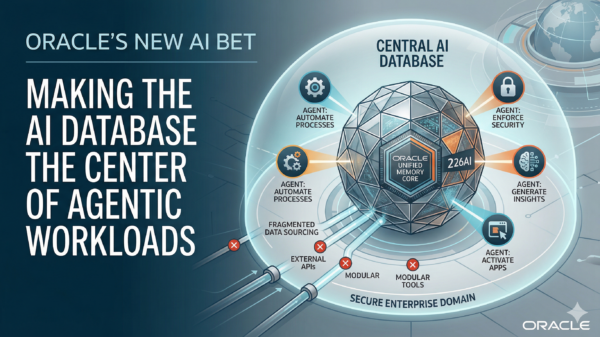
Central to this anxiety is Oracle, which has amassed $108 billion in debt tied to its AI investments. Following a significant drop in Oracle’s shares—down 13%—the tech sector experienced a selloff, according to Reuters.
TeraWulf is currently undergoing a transformation from a Bitcoin mining operation to an AI-focused enterprise, driven by the escalating demand for AI and data center infrastructure. In late October, the company announced a $9.5 billion partnership with Fluidstack, a firm specializing in high-performance computing clusters for major tech companies. This deal is underwritten by a $1.3 billion investment from Google and entails a data center campus with a 250-megawatt capacity in Lake Mariner, New York.
The agreement specifies 168 megawatts of critical IT load, while TeraWulf claims a gross capacity of between 200 and 250 megawatts, with additional capacity likely available for future sale. Google’s initial commitment of $1.3 billion was later increased to $3.2 billion, making it TeraWulf’s largest shareholder with a 14% stake in the company.
On CNBC, Paul Prager, CEO of TeraWulf, stated, “[Google] understands better than anyone that the next era of AI requires large, durable, power-centric infrastructure. That’s what TeraWulf has, and that’s what we deliver. It’s a great partnership.”
While Google’s investment offers a significant vote of confidence, it doesn’t eliminate execution risks. Prager elaborated, “What we’re doing in our partnership with Google is enabling the infrastructure to be ready to go on the timeline they need, with the performance capabilities they’ve specified, so they can compete in what is now a highly competitive market. The key questions are: can you find the sites, do they have the electrons, and can you complete the build on schedule?”
CFO Patrick Fleury noted in an earnings release, “Over the past several months, we have completed more than $5 billion in capital formation, underscoring investor confidence in our business model and growth trajectory.”
Despite this narrative of growth, TeraWulf’s recent financial disclosures paint a less optimistic picture. The company missed third-quarter earnings expectations and reported escalating net losses, causing its stock to drop an additional 5% post-release. While some analysts suggest the stock may represent a buying opportunity, Trefis, a financial analytics platform, has flagged TeraWulf for its high valuation multiples, currently at 37 times its price-to-sales ratio. High-growth tech firms typically do not exceed 10-15 times this ratio until they reach profitability, a milestone TeraWulf has yet to achieve.
The company’s financial health is further underscored by a negative yield compared to the risk-free rate, indicating that investing in TeraWulf is riskier and less profitable than holding a U.S. Treasury bill. Additionally, the firm faces significant short interest, suggesting a greater likelihood of a short squeeze. TeraWulf’s pretax profit margin stands at a staggering -228.4%, with a debt-to-equity ratio of 4.56 and a reported net loss of approximately $455 million.
Recently, the company converted preferred shares into common shares, resulting in dilution for existing shareholders. Fleury described this move as a “key milestone on our journey to simplify TeraWulf’s capital structure going forward, supporting future growth while providing transparency to investors.” While framed as a simplification, this shift also means that the market must absorb the effects of dilution while still evaluating a capital-intensive expansion plan.
The financial instruments required for TeraWulf’s pivot could introduce significant volatility to its profit and loss statements. Currently, the stock is being valued as an AI infrastructure platform, even as the company continues to demonstrate its ability to convert power, land, interconnects, and financing into stable revenue streams. TeraWulf may indeed possess the scalable sites with necessary energy infrastructure that AI customers demand. However, the sharp decline in stock value on December 15 signifies that investors are increasingly skeptical of TeraWulf’s capacity to translate its partnerships and resources into reliable cash flows without resorting to complex financing and shareholder dilution.
The company faces the critical challenge of proving that its AI infrastructure can be developed in a repeatable, financeable, and cash-flow-generating manner at scale.
See also AI’s Integration with IoT and Blockchain Drives 2026 Trends for Enterprise Resilience
 NIST Publishes Draft AI Cybersecurity Framework Open for Review Until January 30
 Yu-Han Tsai Transforms AI Diagnostics, Promising Rapid Oncology Treatments in Under 48 Hours
 Tiiny AI Inc Launches World’s Smallest Mini PC, Running 120 Billion Parameter Model On-Device
 AI Transforms Healthcare Communication: New Strategies for Personalization and Compliance