












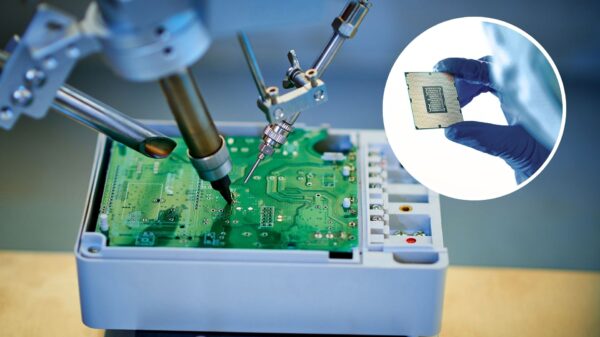





































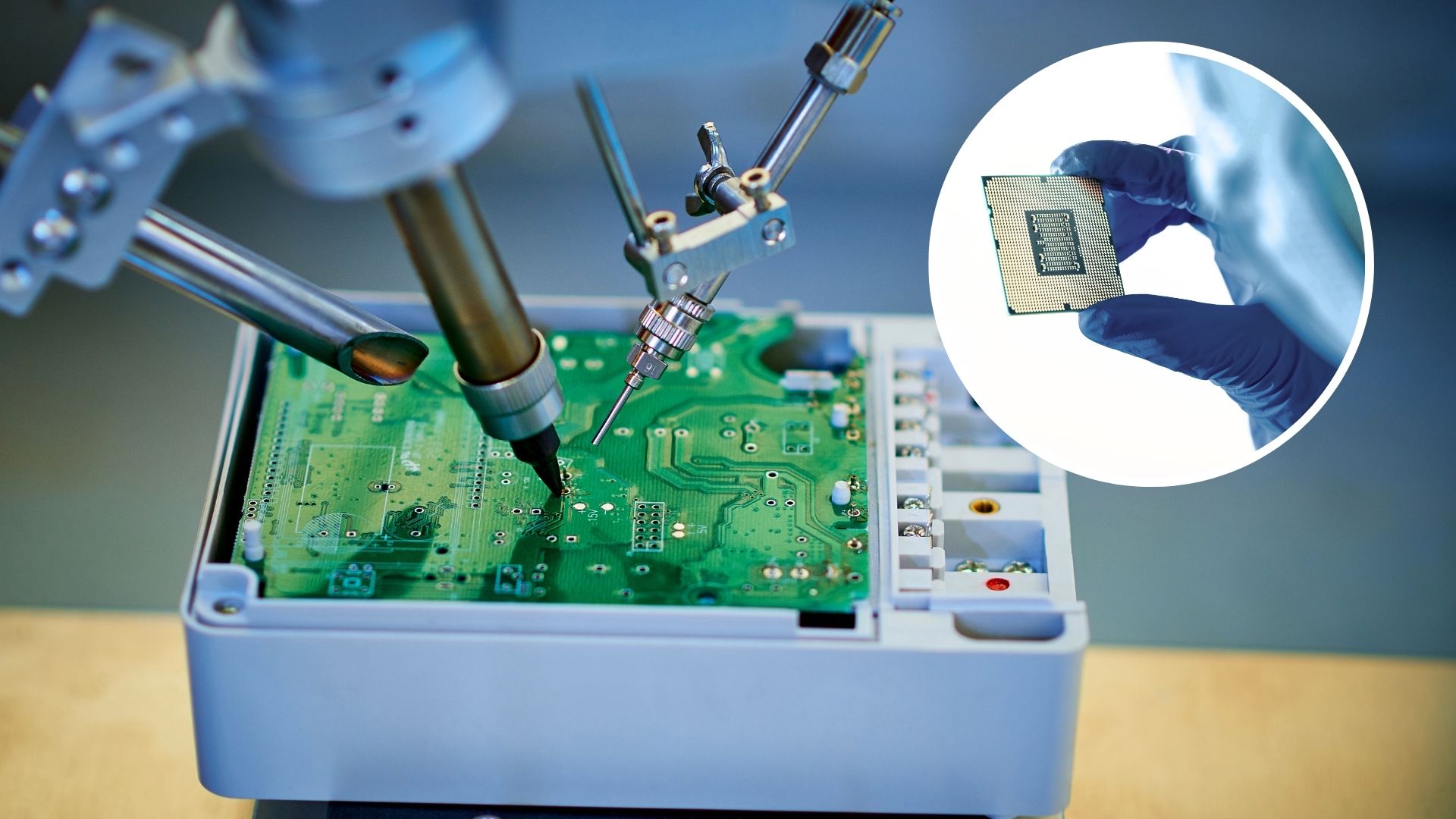
Researchers at Loughborough University in the United Kingdom have developed a groundbreaking computer chip aimed at enhancing the energy efficiency of certain artificial intelligence (AI) systems. This innovative device processes time-dependent data directly in hardware, bypassing the need for traditional software running on standard computers. The team claims that this hardware-based approach can achieve energy savings of up to 2,000 times compared to conventional software methods, although the efficiency gains can vary according to specific applications.
Dr. Pavel Borisov, a Senior Lecturer in Physics and the lead researcher on the project funded by the Engineering and Physical Sciences Research Council (EPSRC), expressed enthusiasm about the implications of their work. “This is exciting because it shows we can rethink how AI systems are built,” he noted. “By using physical processes instead of relying entirely on software, we can dramatically reduce the energy needed for these kinds of tasks.”
The findings, published in the journal Advanced Intelligent Systems, introduce a niobium oxide-based thin film memristor device characterized by intrinsic structural inhomogeneity, which includes random nanopores. This design enabled the device to effectively perform various computational tasks, including XOR operations, image recognition, and predicting and reconstructing time series data.
For the time series prediction task, researchers utilized the complex three-dimensional chaotic Lorenz-63 model, which is linked to the “butterfly effect” in chaos theory, demonstrating how small changes can lead to vastly different outcomes. The researchers applied three distinct temporal voltage waveforms across the device and trained the readout layer using electrical current signals from a three-output physical reservoir. They reported achieving satisfactory prediction and reconstruction accuracy, particularly in comparison to setups that did not employ a reservoir.
The research team highlighted the potential for scalable, on-chip devices utilizing all-oxide reservoir systems, signaling a promising direction for energy-efficient neuromorphic electronics capable of processing time signals. The device successfully identified patterns and made short-term predictions when its output was integrated into a linear computer model.
Testing of the system included various tasks, such as recognizing pixelated images of numbers and executing basic logic operations. The memristor successfully predicted short-term behavior in the chaotic Lorenz system and reconstructed missing data while accurately identifying pixelated digits. These findings demonstrate the versatility of the device in managing a range of computational tasks.
Dr. Borisov elaborated on the innovative design approach, stating, “Inspired by the way the human brain forms very numerous and seemingly random neuronal connections between all its neurons, we created complex, random, physical connections in an artificial neural network by designing pores in nanometre-thin films of niobium oxide as part of a novel electronic device.” He emphasized the significant energy efficiency achieved, noting that the devices can operate with up to two thousand times lower energy consumption than standard software-based solutions.
This development could have profound implications for the future of artificial intelligence and machine learning, particularly as the demand for more energy-efficient computing solutions grows. As AI continues to permeate various sectors, from healthcare to finance, the ability to process data with reduced energy requirements may not only lower operational costs but also contribute to sustainability efforts globally.
See also Tesseract Launches Site Manager and PRISM Vision Badge for Job Site Clarity
 Affordable Android Smartwatches That Offer Great Value and Features
 Russia”s AIDOL Robot Stumbles During Debut in Moscow
 AI Technology Revolutionizes Meat Processing at Cargill Slaughterhouse
 Seagate Unveils Exos 4U100: 3.2PB AI-Ready Storage with Advanced HAMR Tech