

















































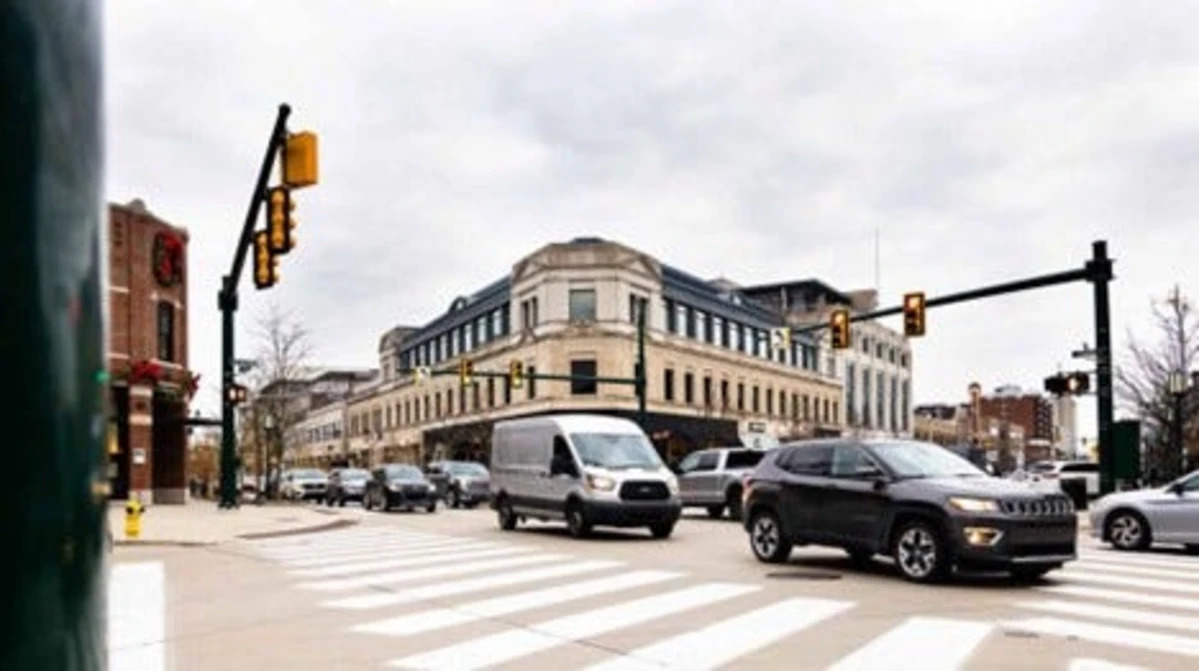
Researchers at the University of Michigan are set to install a new traffic signal timing technology at up to 40 intersections in metro Detroit over the coming months, with the aim of reducing congestion and wait times at red lights. This initiative utilizes artificial intelligence and vehicle Global Positioning System (GPS) data, representing a significant step in the state’s efforts to enhance automotive mobility technology.
If successful in these initial tests, the technology could be deployed at thousands of intersections across the region. Transportation officials believe it will not only improve road safety but could also lead to potential tax savings in the long run. “This will help us identify intersections where there is congestion and delay,” stated Danielle Deneau, the traffic safety department director of the Oakland County Road Commission. She emphasized the ability to correlate congestion data with locations experiencing frequent crashes.
While the University of Michigan is leading the development of its own system, other groups across the nation are pursuing similar technologies. The U-M researchers acknowledge their financial stake in the system’s widespread adoption, as initial tests from a previous program showed promising results. A pilot project conducted in Birmingham, Michigan, over 18 months demonstrated a 20% to 30% decrease in traffic stops when this system was implemented at 34 intersections.
Optimizing traffic signals to adapt to changing traffic flows is not a straightforward task. According to U-M researchers, the process can take between two to six months and cost up to $4,500 per intersection, often leading to outdated signal timings. Many traffic signals currently rely on predefined timing plans based on the time of day, which fail to adapt to real-time conditions.
One of the significant advantages of the new technology is its potential to reduce idle time for vehicles, thereby minimizing energy consumption and lowering carbon emissions—factors that contribute to climate change. The U-M system collects GPS data from 5% to 10% of vehicles, recalibrating signal timings by deriving information directly from these vehicles. This approach allows for more frequent updates without relying solely on traditional infrastructure-based sensors.
Data is gathered from various sources, including roadside assistance and navigation systems, as well as drivers using mobile apps for directions and rideshare services like Lyft and Uber. Importantly, the system is designed to protect user privacy; researchers have stated that it does not track individual trips.
“Vehicle telematics data provides us with opportunities that were previously unavailable to evaluate traffic signal timing performance across entire traffic networks,” noted Zachary Jerome, a postdoctoral research fellow at U-M’s Transportation Research Institute. “It enables us to proactively pinpoint inefficiencies rather than having to install roadside detection systems at every intersection.”
The initial test phase has already seen the installation of the traffic timing system at 13 intersections along 8 Mile and 12 Mile Roads, covering areas from Orchard Lake to Brentwood Street in Farmington Hills and from Vinsetta Boulevard to North Connecticut Avenue in Royal Oak. Funded by a $1.4 million grant from the Department of Transportation, early data has indicated a 30% reduction in delays and a 40% decrease in stops along 8 Mile Road, while 12 Mile Road has experienced a 20% reduction in both delays and stops.
Although adaptive traffic signals have been in use since the 1970s, the costs associated with detecting vehicles at intersections using traditional methods, such as pressure plates and real-time reprogramming, can exceed $50,000 per intersection. In contrast, the U-M technology is projected to improve signal timing at a much lower annual cost of approximately $2,500 per intersection. The subsequent phase of testing aims to expand the system to 4,000 intersections throughout southeast Michigan.
Currently, around 850 of the county’s 1,500 traffic signals are adaptive, but researchers believe that the U-M system could significantly enhance efficiency for a fraction of the cost. While the technology is still in its early stages and not yet capable of detecting potholes or linking vehicles, researchers are optimistic about its future evolution.
In addition to the test in Oakland County, the university plans to commercialize its equipment through a new startup called Connected Traffic Intelligence. While specific financial details remain undisclosed, Jerome emphasized the necessity of establishing a business case for the technology’s success in the industry. “At the end of the day,” he remarked, “in order for research to succeed in the industry or in practice there must be a business case for it.”
See also HPE and AMD Launch Helios AI Rack with 72 GPUs, First Ethernet-Based Switch for 2026
 Mixx Technologies Raises $33M Series A to Revolutionize AI Infrastructure Connectivity
 Apple Appoints Amar Subramanya as VP of AI, Succeeding John Giannandrea
 Young Talent Fuels China’s AI Chip Revolution with 100,000 New Experts Annually
 NVIDIA Invests $2B in Synopsys to Accelerate AI-Driven Engineering Innovations