

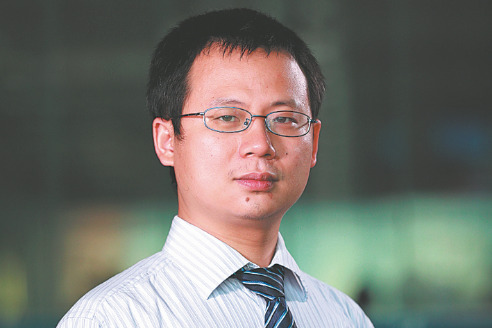
In a significant move to harness the potential of artificial intelligence (AI), China is intensifying its efforts to cultivate a new generation of talent in AI chip research. Chen Yunji, vice-chairman of the All-China Youth Federation and deputy director of the Institute of Computing Technology at the Chinese Academy of Sciences, highlights the vital role young researchers play in this rapidly evolving field. During his recent address at the 14th committee of the All-China Youth Federation, Li Shulei, head of the publicity department of the Communist Party of China (CPC) Central Committee, encouraged youth to channel their creative thinking into becoming pioneers in cutting-edge technology sectors like AI.
This initiative reflects a broader effort by the CPC Central Committee to foster innovation and sustain China’s competitive edge in AI. As advancements in AI technology accelerate, there is a pressing need to support the development of AI hardware, ensuring that hardware innovation keeps pace with its software counterparts. In response to this demand, China launched its first dedicated course on AI hardware and chips in 2020, which systematically covers both the hardware and software technologies that underpin AI systems.
Since the inception of this course, more than 100 universities—among them the University of Chinese Academy of Sciences, Peking University, and Beihang University—have established similar programs focused on intelligent chips. This widespread educational initiative is set to generate a significant influx of skilled professionals, with the potential to nurture hundreds of thousands of experts in AI hardware technologies annually.
China’s connection to the global academic community in AI chip research continues to grow. Recent statistics indicate that research papers produced by Chinese teams have been cited by over 1,000 organizations across 80 countries, with industry giants like Nvidia acknowledging their contributions. This international recognition underscores not only the importance of China’s research output but also the profound impact young Chinese researchers are having on the global academic landscape.
A notable trend has emerged, with increasing numbers of young professionals dedicating their careers to AI chip research. The team behind the Loongson, China’s first independent general-purpose CPU, has reported a surge in postgraduate applications from top-tier universities. Many of these applicants cite a strong sense of national significance as their motivating factor, echoing the commitment of earlier generations of researchers who once viewed the idea of homegrown chips as a distant goal.
Chen Yunji reflects on the transformation within the sector, stating, “Twenty years ago, the idea of homegrown chips was widely regarded as an unattainable goal for China.” Today, this vision is being realized, as an increasing number of young people are inspired by the same nationalistic drive that propelled earlier innovators. Chen advocates for careers that align with national interests and contribute to humanity’s broader good, emphasizing that AI chip research is one such path that can unlock an individual’s full potential.
The current landscape of rapid AI development is transforming chip manufacturing, with AI already being applied to autonomously design CPU chips. This trend is expected to further empower the industry while integrating AI into everyday life. Looking forward, Chen posits that adapting to shifts in production methods will become essential for all, as AI emerges as a core tool across various sectors. Consequently, he encourages every young person to acquire at least some foundational knowledge of AI technology.
Earlier this year, China’s Ministry of Industry and Information Technology, in collaboration with the State Administration for Market Regulation, introduced an action plan aimed at stabilizing growth within the electronic information manufacturing sector through 2026. This plan identifies compatibility testing between AI chips and large models as a central objective, highlighting the need for enhanced integration between industry and education and the importance of talent development in supporting this crucial sector.
See also NVIDIA Invests $2B in Synopsys to Accelerate AI-Driven Engineering Innovations
 Electrokare Launches AI-Driven Sports Tech for Real-Time Fatigue Detection and Recovery Insights
 Alphabet Eyes $2 Trillion AI Cloud Boom as Chipmakers Take a Backseat
 Google Unveils Agentic AI Travel Booking Tools, Partners with Major OTAs
 Datacentrix Reveals How Cloud and AI Convergence Can Transform African Enterprises