











































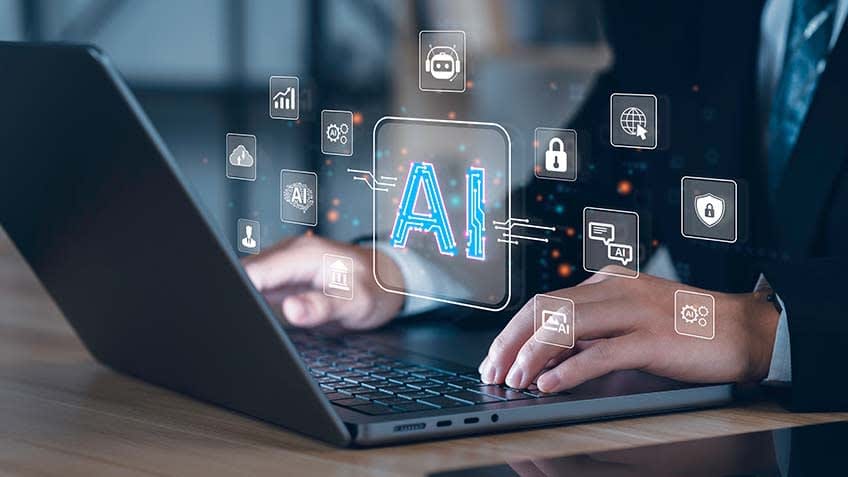
Artificial intelligence (AI) is reshaping various sectors, prompting industry experts to highlight the importance of integrating AI tools into daily workflows rather than fearing job displacement. As the technological landscape evolves, professionals are encouraged to leverage AI’s capabilities to boost productivity and enhance creative processes.
AI tools are designed to automate redundant tasks, freeing up time for more innovative endeavors. From content creation to video editing, a plethora of applications are available to assist users in diverse fields. Understanding the distinct functionalities of these trending tools can help professionals optimize their work and achieve better results.
Among the notable AI applications is Copy.ai, a writing assistant that utilizes natural language processing (NLP) to generate various forms of content, including social media posts and product descriptions. It provides users with creative suggestions and ready-to-use templates, streamlining the writing process.
Another user-friendly solution is Jasper, a voice-activated assistant capable of performing tasks based on voice commands, ranging from scheduling meetings to providing information. Its integration capabilities further enhance productivity by allowing seamless connections with other applications and devices.
For those focused on digital marketing, Surfer serves as a specialized SEO tool that analyzes content factors such as keyword usage and length to improve website rankings. Similarly, WriteSonic excels in crafting engaging content tailored for email campaigns and social media, allowing for customization based on brand identity and audience preferences.
Scalenut stands out by generating content ideas supported by data-driven insights, focusing on search trends and competitor analysis, while Grammarly enhances writing quality with real-time grammar and style suggestions. For refining vocabulary and improving coherence, Wordtune offers alternative phrasing options, catering to users seeking clarity in their writing.
Content readability is further addressed by Hemingway, which simplifies complex sentences for better audience engagement, and Quillbot, a paraphrasing tool that rewords text without altering its original meaning. To ensure originality, Originality.ai detects plagiarism, providing users with a detailed report on text authenticity.
On the visual front, applications like Neural.love and DALL·E 2 are making strides in generating personalized artwork and realistic images from text prompts. Canva Pro enhances design capabilities with a user-friendly platform that offers customizable illustrations and templates for various projects.
AI is also revolutionizing video content creation. Fliki allows users to convert text into video format quickly, while Synthesia specializes in producing realistic videos featuring customizable avatars capable of engaging with audiences in multiple languages. Furthermore, Pictory AI employs advanced algorithms to edit footage, making video production more accessible for users.
In the realm of audio, Play.ht produces human-like voiceovers with extensive customization options, catering to various business and personal needs. Otter provides automated transcription services, enabling users to capture meeting insights effortlessly, while Descript offers comprehensive editing features for audio and video, enhancing collaboration among teams.
Moreover, tools like Bing Chat and Bard AI from Microsoft and Google respectively, are advancing conversational AI, offering capabilities to generate content, summarize information, and assist in coding tasks. ChatGPT continues to be a widely adopted tool, providing interactive responses, although its information is limited to 2021.
For developers, CodeWP serves as a specialized code generator for WordPress, while Gong.io enhances customer interaction through call monitoring and automated insights. In finance, Zest AI aids in identifying potential borrowers and improving lending decisions, thereby driving revenue growth.
The integration of AI continues to expand, with platforms like TensorFlow and Google AI pushing the boundaries of machine learning and innovation across various sectors. As these tools evolve, they are expected to further transform how professionals operate, streamlining processes and enhancing overall productivity.
As the landscape of work evolves with AI at its forefront, embracing these technologies not only mitigates concerns about job loss but also opens new avenues for creativity and efficiency. The future holds significant promise for those willing to adapt and integrate AI into their daily practices.
See also AI Transforms Health Care Workflows, Elevating Patient Care and Outcomes
 Tamil Nadu’s Anbil Mahesh Seeks Exemption for In-Service Teachers from TET Requirements
 Top AI Note-Taking Apps of 2026: Boost Productivity with 95% Accurate Transcriptions
 Machine Learning Tools Transform Materials Discovery, Enhancing Semiconductor Efficiency