

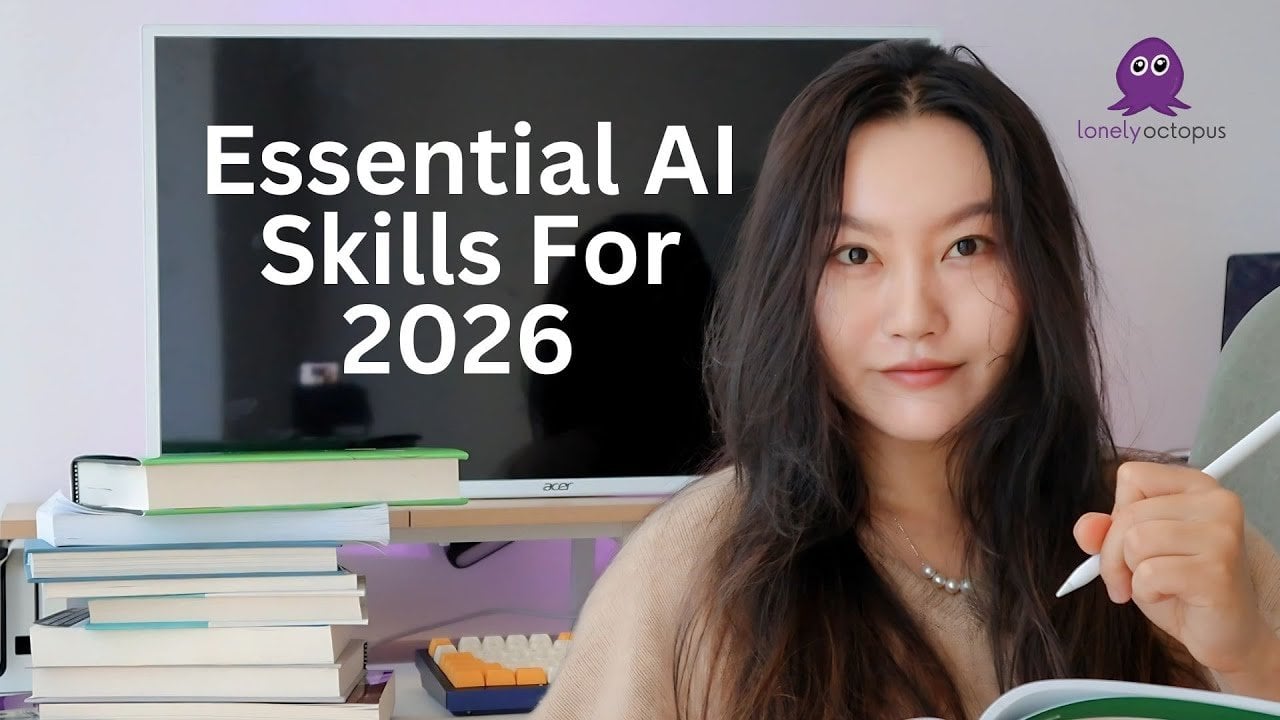
As companies increasingly integrate artificial intelligence (AI) into their operations, the demand for skilled professionals is surging. By 2026, cultivating an ability to communicate effectively with AI systems will be as essential as engaging with human colleagues, according to insights shared by tech expert Tina Huang. In a recent presentation, Huang emphasized that mastering AI skills, including prompt engineering and leveraging open-source solutions, is critical for professionals across various industries to remain competitive.
The workforce landscape is rapidly changing, and understanding how to utilize AI tools effectively can significantly enhance productivity. A recent survey revealed that 81% of business leaders expect deep AI integration within their organizations in the next 12 to 18 months, underscoring the urgency for developing AI proficiency at all professional levels. This proficiency not only automates routine tasks but also enables employees to focus on higher-value, creative work.
Huang’s feature outlines key AI skills that will shape the future workplace, highlighting prompt engineering as a cornerstone of effective AI communication. Crafting precise prompts ensures that AI systems deliver relevant results, enhancing user interaction. Alongside this, familiarity with industry-specific AI tools allows professionals to streamline workflows and improve overall efficiency. Moreover, the deployment of autonomous AI agents is transforming tasks that once required significant human intervention, offering a competitive edge to those who can navigate their integration into existing systems.
Open-source AI solutions have also gained traction, providing businesses with affordable and customizable alternatives to expensive proprietary systems. Platforms like DeepSeek enable organizations to develop tailored AI solutions, promoting flexibility and transparency. As these tools become increasingly accessible, they empower professionals to innovate and adapt AI technologies to meet specific operational needs.
However, technical skills alone are insufficient. Cognitive abilities such as data literacy, critical thinking, and continuous learning are crucial for maximizing AI’s potential. Data literacy allows professionals to interpret and analyze complex datasets, making informed decisions that enhance AI outputs. Critical thinking skills are essential to evaluate AI-generated results for accuracy and bias, ensuring integrity in automated processes. Furthermore, continuous learning is vital, as the AI landscape is constantly evolving with new technologies and methodologies.
The rise of AI is reshaping career trajectories, with professionals who possess AI skills increasingly driving innovation and securing high-value roles. Entrepreneurs and freelancers are leveraging AI to optimize operations and expand market reach, utilizing emerging concepts such as “vibe coding,” which allows non-technical users to engage in software development using natural language.
As industries continue to adopt AI technologies, the ability to harness these tools effectively will distinguish leaders from laggards. AI-assisted platforms are enhancing productivity across various sectors, enabling professionals to redirect their focus towards tasks that demand human creativity and judgment. In this rapidly evolving environment, those who embrace AI’s potential are positioned to lead and innovate.
Looking ahead, the importance of open-source AI cannot be understated. This movement is democratizing access to AI technologies, allowing organizations of all sizes to customize solutions to their unique challenges. Companies worldwide are increasingly recognizing the benefits of open-source models, which provide not only cost-effective alternatives but also foster collaboration and innovation among users.
To prepare for an AI-driven future, professionals are encouraged to take proactive steps in skill development. Engaging with relevant AI tools, participating in industry-specific workshops, and continuously seeking to solve real-world problems through AI can help enhance one’s expertise. Staying informed about emerging trends and best practices will also be crucial in maintaining a competitive edge in the evolving job market.
As we approach 2026, the imperative to build AI skills is clear. By investing time and resources into mastering these competencies, individuals can not only improve their personal performance but also contribute significantly to their organizations’ success in an increasingly AI-centric world.
See also Central Banks Embrace AI to Enhance Financial Stability Amid New Risks
 Al Jazeera Launches ‘The Core’ AI-Integrated News Model with Google Cloud Partnership
 Applied Materials Stock Nears Highs Amid AI Equipment Demand and China Export Curb Concerns
 Python Remains Dominant in Data Science with Key Libraries and Frameworks for 2026
 Lakshmi Triveni Kavuru Reveals Framework for Sustainable AI Project Co-Creation