
































Google LLC has unveiled an updated version of Stitch, an artificial intelligence tool designed to generate user interfaces for websites and mobile applications. This announcement comes as shares of graphic design software maker Figma Inc. dipped over 4%, reflecting concerns that Google’s offering could disrupt the market for UI development, where Figma’s platform is widely utilized.
Creating a user interface involves more than just aesthetic design; it requires translating visual concepts into HTML and CSS code—a process that can be labor-intensive. Developers must define every detail, from font size to spacing, in code manually. Stitch aims to streamline this workflow by utilizing Google’s Gemini series of large language models to automate the conversion of interface designs into code.
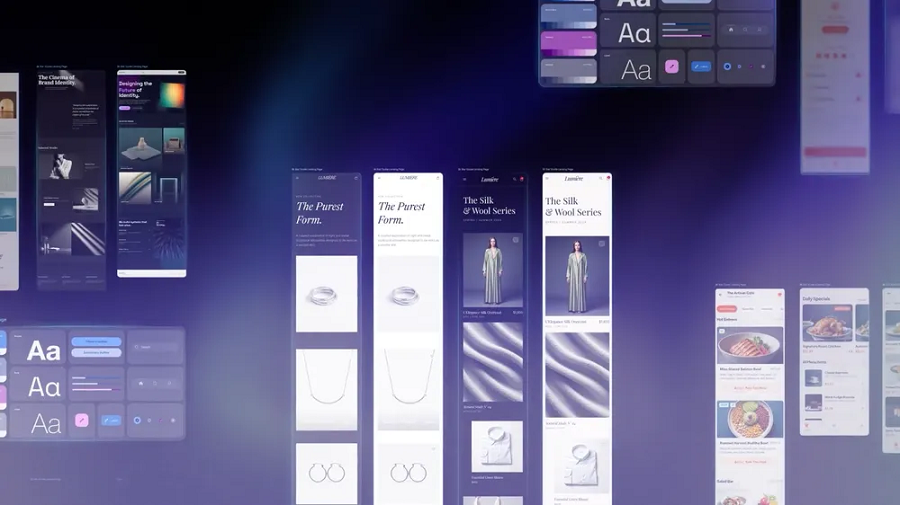
The original version of Stitch was launched last May, but the latest iteration, revealed today, features an “AI-native, infinite canvas” that allows users to view multiple visual assets concurrently. This comprehensive perspective is designed to enhance the user experience during the design process.
With the new version, developers can generate code for several interface sections simultaneously by either uploading a reference image or providing a text description. For instance, if a user instructs Stitch to create a sign-up page for an AI app, the tool can now generate up to five screens at once, in contrast to the single-screen capability of its predecessor. This improvement could benefit developers working on complex projects, such as an e-commerce website, who might need to create a product catalog, checkout page, and purchase confirmation screen all at once. A newly introduced “Play” button allows users to simulate how shoppers could navigate through these screens.
Josh Woodward, vice president of Google Labs, highlighted the tool’s efficiency, stating, “You can ‘Stitch’ screens together in seconds and simply click ‘Play’ to quickly preview your interactive app flow. Stitch can automatically generate logical next screens based on the click, mapping out user journeys effortlessly.”
If the generated interface requires refinement, developers can make adjustments using natural language prompts or voice commands. For example, a developer might request changes to the font size or ask the tool to “emphasize the checkout button,” making the design process more intuitive.
A key feature of the upgraded Stitch is the inclusion of a new AI agent, which enhances the tool’s capabilities. Additionally, developers can employ an MCP tool to connect Stitch with external agents, including Google’s Antigravity coding tool, which can review interface designs and generate variations automatically.
Stitch also facilitates exporting design elements to other tools. Users can save interface design details in a natural language file named DESIGN.md, which aims to maintain consistency across various design projects and tools.
This AI-driven tool is currently available for free through Google Labs, the tech giant’s platform for testing experimental products. As the demand for efficient design solutions grows, Stitch may represent a significant evolution in how user interfaces are created, potentially reshaping industry standards.
See also AI Transforms Health Care Workflows, Elevating Patient Care and Outcomes
 Tamil Nadu’s Anbil Mahesh Seeks Exemption for In-Service Teachers from TET Requirements
 Top AI Note-Taking Apps of 2026: Boost Productivity with 95% Accurate Transcriptions
 Machine Learning Tools Transform Materials Discovery, Enhancing Semiconductor Efficiency