














































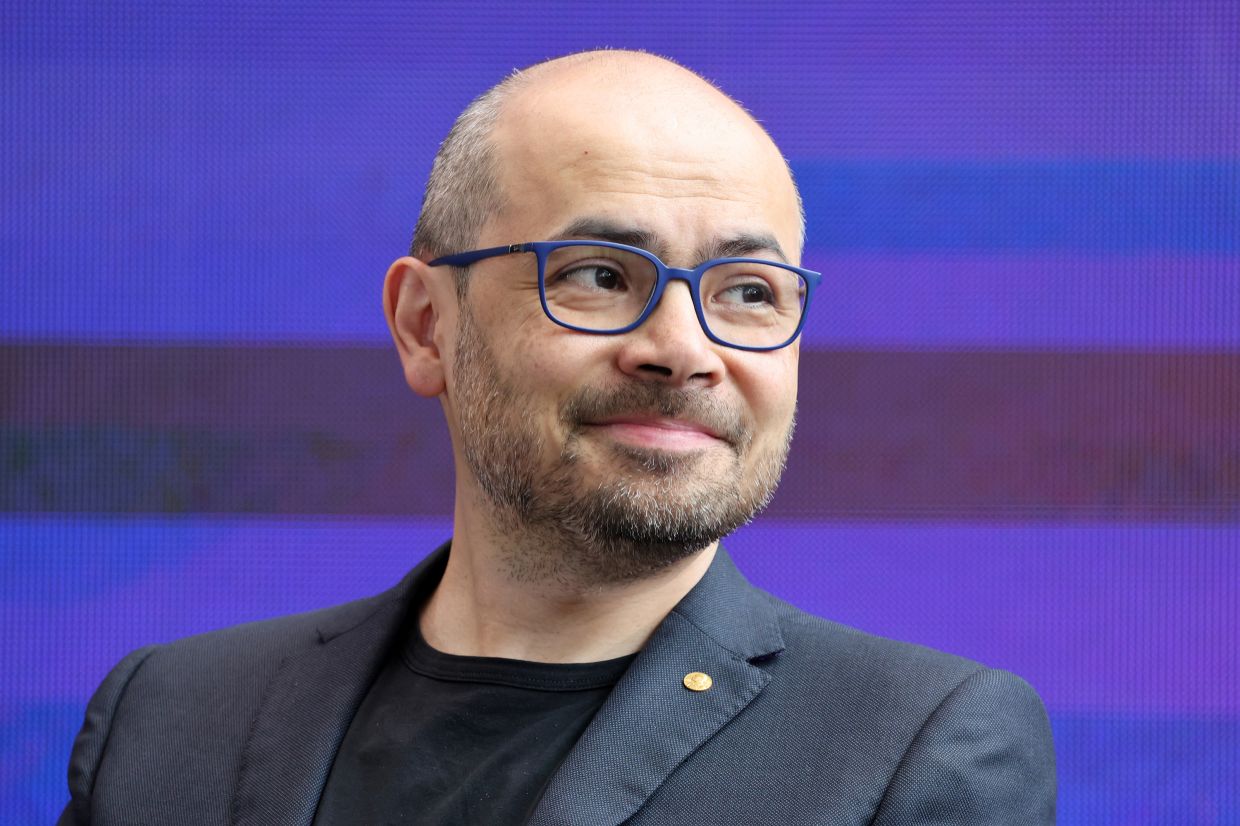
Demis Hassabis, a prominent figure in the AI landscape, has been named one of Time magazine’s “AI architects.” As the head of Google’s AI efforts, he has recently garnered attention for winning a Nobel Prize for using AI technology to predict protein folding. After Google acquired his company, DeepMind, in 2014, Hassabis leveraged the tech giant’s resources to pursue his vision of creating artificial general intelligence.
Since the acquisition, Hassabis has helped elevate Google’s standing in the scientific community through AI systems that have triumphed over world-class Go players and have contributed to significant advancements in chemistry. However, a breakthrough product has remained elusive — at least until now. Google plans to launch AI-powered smart glasses in 2026, aiming to compete with similar offerings from Meta Platforms Inc. This initiative could signify a pivotal moment for Hassabis and Google, particularly following their struggle to keep pace with the rapid rise of ChatGPT three years ago.
The forthcoming smart glasses will incorporate a small in-lens display for functionalities such as navigation and translation, developed in partnership with Samsung Electronics Co. This represents an opportunity for redemption, as the original Google Glasses suffered from poor design and functionality, tarnishing public perception of smart glasses for several years. Successfully launching stylish and functional AI-powered specs could restore the technology’s reputation.
Hassabis has long argued that chatbots are not the sole avenue for developing powerful AI. While OpenAI’s ChatGPT triggered a generative AI boom using large language models trained on expansive datasets, Hassabis advocates for “world models” grounded in real-world simulations as the next step forward. Meta’s AI chief Yann LeCun shared a similar vision but left the company after failing to gain endorsement from CEO Mark Zuckerberg, who favored a chatbot-centric approach. In contrast, Google appears to be diversifying its strategy under Hassabis’ leadership.
In a strategic move earlier this year, Sundar Pichai, CEO of Google parent Alphabet Inc, merged the company’s two AI units under Hassabis, a decision that surprised many who expected Jeff Dean, an established engineering lead, to take charge. Despite refusing to relocate to Silicon Valley, Hassabis has been able to mitigate the transatlantic tensions between the two units, promoting a more collaborative environment.
In August 2024, Google further strengthened its AI capabilities by rehiring Noam Shazeer, a key figure behind the Transformer architecture, which is foundational to modern AI. Shazeer had left Google in 2021 due to the company’s reluctance to launch his chatbot program, which OpenAI eventually rolled out successfully. Upon his return, he was appointed technical co-lead for the Gemini chatbot, reporting directly to Hassabis. Their partnership, which initially seemed improbable, has proven effective as they navigate differing views on AI development.
Despite facing significant competition, particularly from ChatGPT, Google’s latest AI model, Gemini 3, has shown promising results. It topped various performance benchmarks and led to a “code red” at OpenAI, according to CEO Sam Altman. With over 650 million monthly app users and an estimated 2 billion users via AI Overviews on Google Search, Gemini is catching up to its rivals. Shazeer has been credited with enhancing the model’s efficiency, contributing to this resurgence.
Hassabis’ ambition remains ambitious but fraught with challenges. Although he has made strides in the AI field, including the notable AlphaFold project, which aids scientists in protein structure prediction, his work has yet to yield FDA-approved drugs. The stakes are high as Google seeks to monetize AI beyond advertising, and Hassabis requires a transformative product to establish his legacy.
If Google’s upcoming smart glasses succeed, particularly through the application of world models, it could pave the way for the company to discover a “killer app” for AI. Such a development would not only underscore Hassabis’s role as a leading scientist but also potentially define a new era for Google in the competitive tech landscape.
See also AI Platforms Surpass 60% Usage in U.S. as Consumers Shift Toward Digital Commerce
 Nvidia Faces Patent Lawsuit Over Machine Learning Tool Infringement by Health Discovery Corp.
 Z.ai Launches GLM-4.7 Open-Source Model with 87.4 τ²-Bench Score for Developers
 Top 7 AI Note-Taking Apps of 2026: Features, Pricing, and User Insights
 Top AI Tools for Model Interpretability: ELI5, LIME, SHAP, and More Explained