

































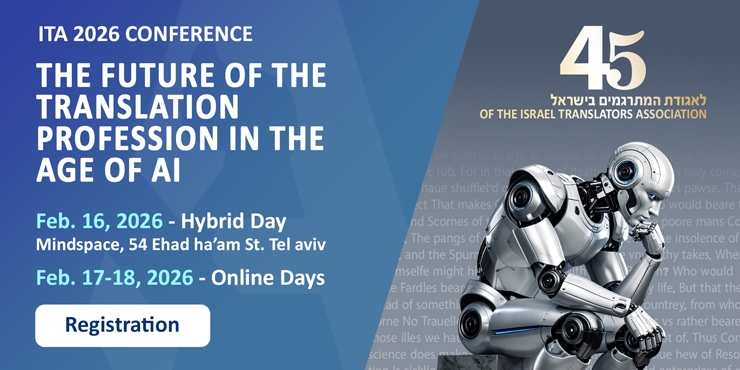
The Israel Translators Association (ITA) will host its annual conference in 2026, focusing on the theme “The Future of the Translation Profession in the Age of Artificial Intelligence.” This event aims to equip translators and language professionals with practical tools and methodologies to effectively integrate AI into their workflows.
Scheduled as a hybrid event, the conference addresses one of the most pressing challenges in the translation industry: the need for actionable knowledge on working responsibly with artificial intelligence. Unlike many discussions surrounding AI, which often remain theoretical, the ITA conference emphasizes practical application, providing attendees with concrete methodologies and case studies relevant to their everyday work.
Conference sessions will delve into various hands-on topics, such as prompt engineering for translation and editing tasks, optimized post-editing strategies, and quality-control methodologies. Participants will also learn about workflow optimization, secure handling of information, and the assessment of professional risks when utilizing automated systems.
Beyond technical skills, the conference will explore the business implications of working in an AI-enhanced environment. Discussions will cover freelance business management, marketing strategies, translator training, and human–AI collaboration models that enhance professional capabilities rather than replace them.
Speakers are expected to present real-world case studies stemming from ongoing translation and localization projects, offering tangible examples of how AI tools can be thoughtfully integrated into professional workflows. This approach aims to encourage informed decision-making rather than blind adoption of technology.
A central theme of the conference posits that technology gains value when combined with professional judgment. Through a series of discussions and practical demonstrations, the event will highlight scenarios where automation can streamline tasks, while emphasizing areas where human expertise remains crucial for accuracy, context, and ethical responsibility.
For translators and interpreters looking to improve efficiency and expand their professional toolkit, this conference presents a unique opportunity to acquire tools and insights that can be applied immediately in their work. Attendees are expected to leave with a more defined strategic framework for leveraging AI, turning technology into an asset rather than a disruptive force.
As the translation profession continues to evolve in the face of advancing technology, conferences like the one organized by the ITA play a critical role in preparing industry professionals to adapt and thrive in this changing landscape. The insights gained at this event will likely influence how translation and localization practices develop in the years to come.
Media inquiries can be directed to Uri Bruck at the Israel Translators Association. For additional information about the conference, including registration details, visit ITA’s official website.
See also Home Depot Expands Google Cloud Partnership to Launch AI Agents for Home Projects
 AI Maturity Gains Momentum: Top Tech Trends for 2026 Highlight Future Growth Foundations
 MuleRun Launches World’s Largest AI Agent Marketplace to Enhance Workflow Automation
 UK Bans Non-Consensual AI-Generated Images as Grok Faces Ofcom Investigation
 TetraScience Partners with Thermo Fisher to Enhance AI-Driven Scientific Workflows