















































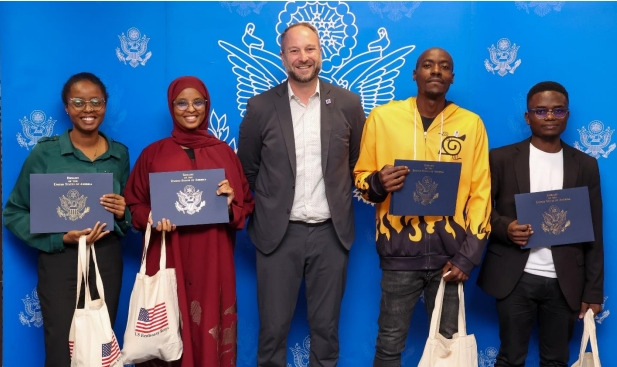
A team of Kenyan students has made headlines after winning the prestigious US–Kenya AI Challenge with an innovative Artificial Intelligence platform aimed at predicting and preventing pregnancy complications in remote and underserved communities. The solution, which outperformed global entries, has garnered international recognition for its potential to dramatically reduce maternal mortality—one of Kenya’s persistent public health challenges.
This victory not only highlights the capabilities of Kenya’s burgeoning tech landscape, often referred to as the “Silicon Savannah,” but also serves as a testament to the impact of locally driven innovation. The winning platform harnesses AI to bridge the gap between rural mothers and timely medical intervention, a critical need in areas where healthcare resources are scarce.
At the core of the technology is a straightforward yet transformative approach: analyzing basic and easily collected data, such as age, medical history, gestational milestones, and reported symptoms. By doing so, the platform can flag high-risk pregnancies early, allowing for early interventions long before emergencies arise. This focus on usability ensures that the system can function effectively in low-resource settings, making it particularly relevant for regions with limited access to specialized care.
“We didn’t just want to write code,” said the team’s lead developer. “We wanted to rewrite the story of maternal health.” This ethos underscores the project’s ambition to not only leverage technology but also to make a meaningful difference in people’s lives.
Despite progress in maternal care, Kenya still grapples with high mortality rates, particularly in marginalized counties such as Mandera, Turkana, and parts of northern Rift Valley. Here, challenges like distance, understaffed facilities, and delayed referrals frequently result in tragic outcomes. Health experts emphasize that early detection is vital in reducing maternal deaths, and the students’ platform could save thousands of lives by identifying high-risk cases and facilitating timely referrals or interventions if deployed on a larger scale.
The recognition from the AI Challenge comes with significant funding aimed at scaling the solution, along with mentorship from leading U.S. technology firms. This support is anticipated to accelerate the platform’s deployment across Kenya and potentially throughout the wider region. For the student team, the acknowledgement extends beyond financial rewards, paving the way for partnerships with health institutions, county governments, and global health organizations seeking practical, data-driven solutions rooted in local realities.
This success story reflects a broader trend: Kenyan youth are not merely participants in the global tech economy; they are actively shaping it. By applying cutting-edge tools to address deeply entrenched African issues, they are setting an example of innovation that resonates globally. As debates about brain drain and youth unemployment continue, this victory presents a counter-narrative—one where talent, purpose, and opportunity converge.
The message from this achievement is clear: the future of African innovation is not a distant prospect. It is already in motion, with tangible solutions emerging from local initiatives that are poised to save lives and improve health outcomes.
See also Google Trends Enhances Explore Page with Gemini for Easier Search Insights
 Grok AI Bypasses Malaysia’s Ban, Remains Accessible Despite Government Restrictions
 Anthropic Warns AI Productivity Gains May Widen Global Wealth Gap Among Nations
 Meta Platforms Shifts Focus to AI Infrastructure, Cuts Metaverse Spending by 5%
 ServiceNow Integrates Biometric Security, Enhancing AI Workflows for 8,400 Contact Centers