



































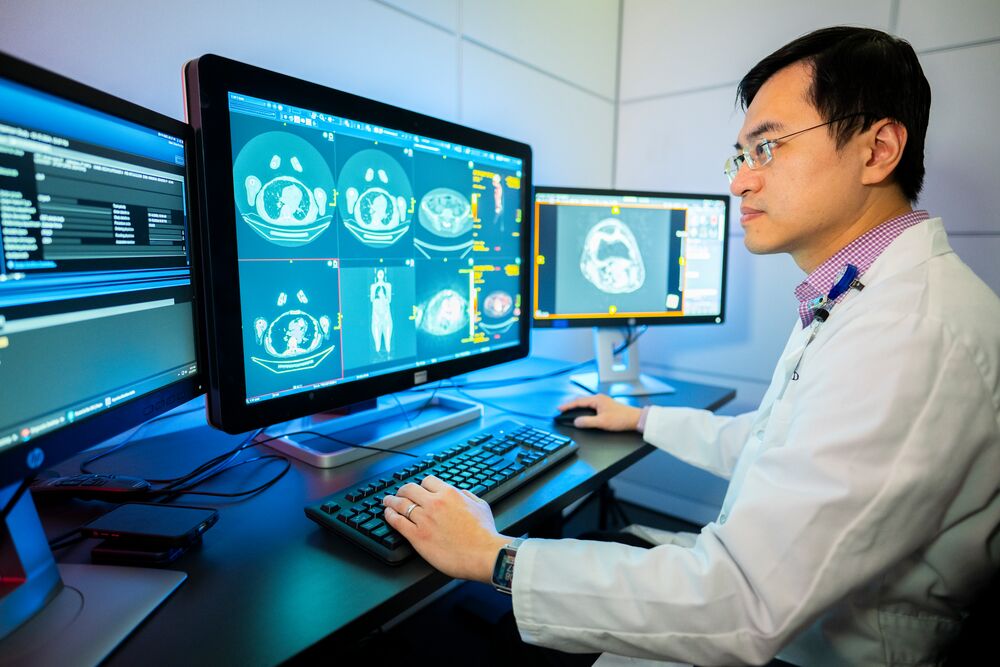
Artificial intelligence-powered medical technology is making significant strides in the health care sector, particularly in Northeast Ohio. Hospitals in the region are increasingly collaborating with technology firms to enhance patient care through customized AI workflows. While AI’s most prevalent application has been in radiology, its use is expanding to include tasks such as summarizing reports and quickly identifying stroke patients in emergency rooms.
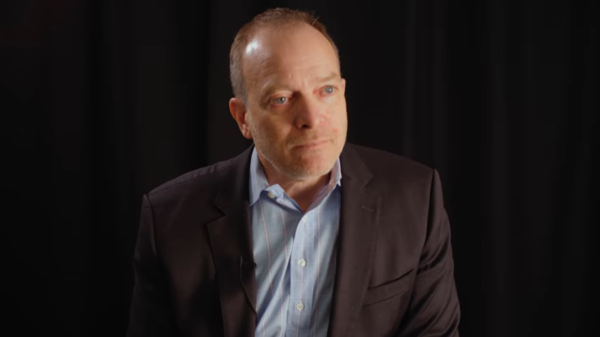
Tom Valent, chief business and marketing officer for Aidoc, a health care technology company, emphasized that the implementation of AI in hospitals cannot follow a one-size-fits-all approach. “What we’ve learned in health care, at least in the U.S., is every hospital, and sometimes even within a hospital, is kind of its own unique creature,” Valent said, explaining that the physician workflow of each technology is highly configurable.
AI algorithms have evolved rapidly in recent years, shifting from a development timeline of years to mere months. They serve as the foundation for intelligent systems that enable machines to learn from data, make decisions, and solve problems. As of February 2026, the Food and Drug Administration has approved more than 1,300 artificial intelligence-enabled medical devices and programs.
At Summa Health, Dr. Brian Bauman, head of pulmonary services, highlighted that their hospital employs AI programs such as Nuance, a natural language software that captures key terms in scan reports to ensure that patients needing follow-up are not missed, and Aidoc’s array of over 35 algorithms designed for diagnostic radiology and patient navigation.
Similarly, at University Hospitals, Dr. Leonardo Kayat Bittencourt noted their use of Aidoc alongside several other AI tools, including Riverain Technologies‘ ClearRead CT, which automates the detection and characterization of lung nodules on CT scans, and Qure.ai, which identifies at-risk patients based on imaging.
At the Cleveland Clinic, Dr. Po-Hao Chen, vice chair for artificial intelligence in the Diagnostics Institute, described using a combination of direct decision support and image generation programs in addition to Riverain’s offerings. The clinic employs tools such as Viz.ai, which identifies patients at high risk for stroke, and RadAI, which helps streamline radiology reporting.
Aidoc’s platform integrates multiple algorithms through an AI operating system, designed to connect a hospital’s existing IT with various algorithms. This system can autonomously identify patients and relevant scans, activating the appropriate algorithm and customizing workflows per hospital requirements. Valent stated that Aidoc is currently in use at over 1,600 hospitals, serving nearly 50% of patients in Ohio.
As AI becomes more integrated into radiology, studies indicate that its performance can match or exceed that of human experts in image-based diagnoses. Steve Worrell, CEO of Riverain Technologies, noted that their ClearRead CT algorithm can analyze a patient’s scan in about four minutes, identifying potentially cancerous lung nodules and alleviating some of the burdens radiologists face due to increasing data volumes.
When implementing new AI tools, it is crucial for physicians to receive comprehensive training on their intended use. Chen emphasized that understanding the limitations of AI is essential. “You need to know what the AI is not going to do for you—that’s still on you,” he remarked. Riverain Technologies also offers virtual training to help doctors understand the algorithm’s capabilities and limitations.
To facilitate the integration of AI into clinical practice, Bittencourt mentioned that University Hospitals is part of a consortium established by Bunkerhill Health, aimed at expediting the transition of algorithms into health care settings. CEO Nishith Khandwala discussed the challenges in moving algorithms developed using data from one hospital into practice at others, as patient populations can vary significantly. The consortium includes 27 academic medical centers, allowing researchers to share data and algorithms, potentially compressing timelines for projects from years to mere months.
Within the Cleveland Clinic, an overarching AI task force supervises the approval of algorithms before they enter clinical practice, ensuring that no AI operates independently of a doctor’s judgment. “The algorithm and AI are just a piece,” Valent concluded, “The other pieces are as important.” As these institutions continue to innovate and adapt, the role of AI in enhancing patient care is poised to expand, potentially reshaping the future of medical practices.
See also AI Transforms Health Care Workflows, Elevating Patient Care and Outcomes
 Tamil Nadu’s Anbil Mahesh Seeks Exemption for In-Service Teachers from TET Requirements
 Top AI Note-Taking Apps of 2026: Boost Productivity with 95% Accurate Transcriptions
 Machine Learning Tools Transform Materials Discovery, Enhancing Semiconductor Efficiency