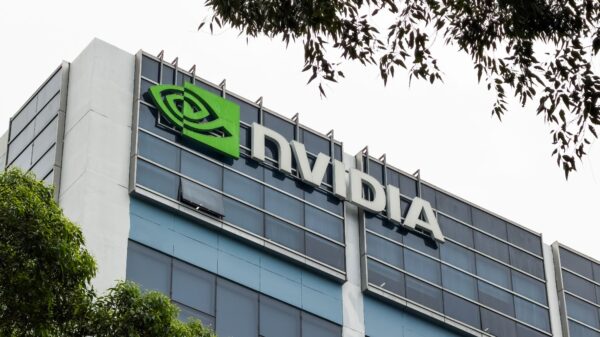























































NVIDIA shares rebounded to $176.12, gaining 0.63% on December 15, 2025, buoyed by recent product updates, demand signals from China, and revised outlooks from Wall Street analysts. This recovery follows weeks of market fluctuations driven by concerns over valuations, export limits, and broader uncertainties in the tech sector.
The stock’s uptick signals renewed investor confidence in NVIDIA’s position within artificial intelligence hardware and software. Key to the rebound was the launch of Nemotron 3, a new software suite, alongside positive early demand for the H200 data center chip. Updated forecasts from analysts suggest ongoing growth in AI-driven computing, reinforcing NVIDIA’s pivotal role in shaping technology and infrastructure for modern AI applications.
One of the major catalysts for the stock’s resurgence was the launch of Nemotron 3, which expands NVIDIA’s portfolio of AI software models tailored for enterprise use. This platform provides open-source AI models designed for various agentic applications. Notable offerings include:
• Nano: 30 billion total parameters, 3 billion active
• Super: about 100 billion
• Ultra: around 500 billion
The hybrid Mixture-of-Experts (MoE) architecture integrates Mamba and Transformer elements, allowing for up to four times more token throughput compared to Nemotron 2 Nano. With a one-million token context window, it generates 60% fewer reasoning tokens, excelling in coding, mathematics, long-context tasks, and multi-agent reasoning, while also reducing inference costs.
Founder and CEO Jensen Huang noted, “Open innovation is the foundation of AI progress. With Nemotron, we’re transforming advanced AI into an open platform that gives developers the transparency and efficiency they need to build agentic systems at scale.” This launch enhances NVIDIA’s transition from being perceived solely as a chipmaker to a comprehensive AI solutions provider, with software increasingly contributing to long-term revenue streams.
Another factor contributing to NVIDIA’s stock increase was the sustained interest in its H200 data center chip, one of the company’s advanced AI accelerators designed for high-performance workloads. Market signals indicate strong demand, especially from Chinese cloud and research clients. Despite U.S. export controls limiting the types of chips NVIDIA can sell to China, modified versions are still finding buyers.
In a notable policy shift, President Trump authorized H200 sales to “approved” Chinese customers, with the U.S. taking a 25% revenue cut. This action reverses Biden-era restrictions following discussions with Xi Jinping, although Senate Democrats have criticized it as a “dangerous” move for national security. The H200 builds on the success of the earlier H100 platform, offering enhanced memory and performance for increasingly complex AI models.
Interest in the H200 underscores a robust global demand for AI infrastructure, with data centers continuing to invest heavily as AI adoption broadens across various industries. This trend supports NVIDIA’s revenue outlook despite prevailing geopolitical risks.
Wall Street analysts also contributed to NVIDIA’s stock rebound by updating their forecasts after a series of pullbacks. While some analysts expressed caution regarding valuations, others emphasized strong earnings visibility and the company’s market leadership. Updated projections indicate that AI spending will remain a priority for major technology firms, governments, and enterprises. McKinsey & Company estimates that AI-related data center demand could hit $8 trillion by 2030, with NVIDIA maintaining its lead in the market for AI accelerators.
Analysts observed that while revenue growth may normalize following years of rapid expansion, NVIDIA is expected to outpace most semiconductor peers. This balanced outlook from Wall Street has helped stabilize investor sentiment, shifting the focus from risks to strong fundamentals and realistic growth expectations.
NVIDIA is central to the global AI infrastructure buildout, powering many of the world’s largest AI models while its software tools support a diverse array of developers, researchers, and enterprises. As AI adoption accelerates across sectors such as healthcare, finance, energy, and manufacturing, the company’s broad demand base mitigates reliance on any single sector, supporting long-term growth even amid potential downturns in consumer technology spending.
However, NVIDIA faces challenges, including increasing competition and tightening government regulations on technology exports. Additionally, the energy consumption of data centers is under scrutiny, prompting a greater emphasis on sustainability and efficiency in NVIDIA’s strategic planning.
In response to its growing technology footprint, NVIDIA has prioritized sustainability. With AI-powered data centers consuming significant energy, the company aims to improve efficiency across its product line. Newer GPUs deliver enhanced performance per watt, allowing customers to run larger workloads with less energy while emphasizing the use of clean electricity. NVIDIA has committed to using 100% renewable energy for its operations, targeting a 50% reduction in Scope 1 and 2 emissions by FY 2030, compared to a FY 2023 baseline.
As NVIDIA continues to innovate, the dual focus on efficiency and emissions aligns with evolving investor priorities. The latest developments indicate that while the company faces significant constraints, it remains a pivotal player in the AI landscape. Strong signals of demand coupled with a commitment to sustainability suggest a robust outlook for NVIDIA as AI reshapes industries worldwide.
See also ByteDance’s Doubao AI Phone Receives Biweekly Updates Amid Ongoing Privacy Concerns
 Meta Launches Edits App with AI Video Effects for Enhanced Creator Production
 Neosapience Launches SSFM v3.0, Revolutionizing AI Voice Synthesis with Emotion Recognition
 AI Tools Double Developer Code Output, But Quality Concerns Arise in Finance Sector
 AI Recruiting Software Revolutionizes Hiring: 12 Essential Tools for 2023