

AI Cybersecurity
Cyber-attacks on the aviation industry have surged 600% year-on-year, prompting an urgent shift to zero trust security to combat increasingly sophisticated threats.
Hi, what are you looking for?


Amazon’s Strong Balance Sheet and AWS Growth Support Buy Thesis Amid Market Caution

Mistral AI Seeks Direct Chip Supply Partnership with Samsung Amid AI Memory Demand Surge

NVIDIA Invests $2B in Marvell, Boosting AI Data Center Strategy and Stock by 5.9%

CGI Announces Strategic AI Partnership with AWS to Transform U.S. Public Sector Services

Google Pixel Users Can Disable Unwanted Gemini AI Features for a Cleaner Experience

Indian Firms Embrace Agentic Harnesses to Accelerate AI Automation and Workflow Efficiency

Three AI Stocks to Buy Now: Broadcom, Nvidia, and Nebius Poised for Growth

AI Disruption Threatens SaaS Revenues as Salesforce Cuts Jobs and Boosts AI Investment

Nvidia Launches Agent Toolkit to Streamline Deployment of Autonomous AI Agents

OpenAI Reveals 25 AI-Powered Healthcare Use Cases Transforming Patient Outcomes

MIT Tops 2026 Global Rankings for AI Studies, Followed by Stanford and Oxford
Latin America Proposes AI Research Hub Inspired by CERN to Drive Innovation
CMU and MIT Lead 2026 Rankings of Top 10 US Universities for AI Education
Under Secretary Darío Gil Reveals AI-Focused Genesis Mission to Boost U.S. Scientific Discovery
AI Chatbots Show 49% Sycophancy, Study Warns of Harmful Advice Risks

Hyperscalers Shift to Arm CPUs, Projecting 90% Adoption in AI Infrastructure by 2029

AI-Enabled Research Yields New Rust-Resistant Steel with 1,730 MPa Strength and 15.5% Ductility

Seven Must-Have Windows Apps Harnessing NPU for Enhanced AI Performance

AI Transforms Trading with Real-Time Data Processing and Enhanced Decision-Making

UK Researchers Develop Chip Achieving 2,000x Energy Efficiency for AI Systems
ByteZero Achieves 300% Growth, Clients Report 200% Quarterly Increases via AI Marketing

Amazon Launches Transformer Phone, Elevating AI Personalization in Mobile Ecosystem

Artisan’s Controversial AI Hiring Billboards Spark Backlash, Lead to Brand Revision

Email Engagement Soars as 60% of Consumers Prefer Human-Sounding Tone Over Personalization

Softwired Reveals AI Adoption Expected to Exceed 60% in B2B Marketing by 2026
California Governor Newsom Signs Executive Order to Enhance AI Regulations and Protections

South Africa’s AI Policy Enters Public Comment Phase Ahead of 2027 Implementation

Over 2 Lakh UP Students to Receive AI Training Under UPSDM’s Project Praveen

Manitoba NDP Loans $475K to AI Startup JasperVOCAL for Innovative Call Screening Solution

Oracle Expands AI Infrastructure for US Government, Enhancing Security and Citizen Services

Public Opposition to AI Data Centers Surges Amid Growing Energy Concerns

Numos Secures $4.25M Seed Funding from General Catalyst to Enhance AI Finance Platform

Eli Lilly Invests $55B in AI-Driven Drug Development, Expands Clinical Pipeline to 36 Programs

Numos Secures $4.25 Million to Enhance AI Finance Tool for CFOs Amid Integration Concerns

AI Enhances Anti-Money Laundering in Crypto: Tackling $10B Financial Crime Challenge

AI Transforms India’s Education: ₹1.39 Lakh Crore Union Budget Fuels Skill Development

K-12 Teachers Using AI Soars to 85% Amid Growing Concerns Over Student Safety and Skills
Einstein AI Launch Sparks Academic Integrity Alarm as 95% of Students Adopt AI Tools

College Grads in AI-Proof Fields Face Negative Returns, Says New Research

MPS Limited Invests $16.5M in AI while Maintaining 5% Dividend Payout Commitment

AI Transforms Cybersecurity: New Strategies Required to Combat Evolving Threats

CrowdStrike Falcon Achieves 30% YoY Growth, Redefining Cybersecurity for Enterprises
CrowdStrike’s Falcon Platform Achieves 80% Analyst Efficiency with New AI Features

Microsoft Announces $10 Billion Investment in Japan for AI, Data Centers, and Workforce Training

Agentic AI Enhances Cloud Security with Non-Human Identity Management Insights

True Launches AI Governance Framework and Council to Drive National AI Adoption

Shadow AI Use Surges, Exposing 43% of Companies to Major Compliance Risks

AI Governance Transformed: How Boards Must Adapt to Agentic Systems and Cognitive Capital

AI Government Experts Unveil Strategies to Enhance Public Services with Automation and ML

Rubrik Reveals SAGE AI Governance Engine and Microsoft Defender Integration Amid 31.84% Share Drop

Flova Integrates ByteDance’s Seedance 2.0 with Seamless 50 Concurrent Generations

90% of Smartphone Users Rely on AI Daily, Yet Only 38% Recognize Its Role

AI Clones Exploit Ghanaian Identities, Threatening Trust and Digital Safety

Florida’s AI Sector Grows: Top 10 Companies for 2026 Led by Simform and Biz4Group
Generative AI Artists Face Copyright Challenges as DALL-E, Midjourney, and Stable Diffusion Evolve

Cyber-attacks on the aviation industry have surged 600% year-on-year, prompting an urgent shift to zero trust security to combat increasingly sophisticated threats.


Dell Technologies unveils quantum-ready security features to enhance cyber resilience, integrating AI for faster threat detection and doubling backup speeds for organizations.


Iran's IRGC publicly threatens cyberattacks against Apple, Google, and Microsoft starting April 1, jeopardizing billions in cloud infrastructure and enterprise services.


Cybersecurity experts at a Washington conference warned businesses to prepare for AI-powered cyberattacks, emphasizing the urgent need for employee training to mitigate risks.


Cyber attacks on UK law firms surged 77% in a year, with AI driving a 130% increase in cyber incidents, prompting urgent calls for...


89% of IT leaders are alarmed by AI cyberattacks, yet only 58% implement immutable backups, risking data recovery amid rising threats.


AI-driven tactics are reshaping cyberattacks, warns Sarah Gosler of a leading firm, urging organizations to empower employees as active defenders against evolving threats.


Uruguay achieves 97.7% cybersecurity protection against AI malware threats, bolstered by stringent government policies and comprehensive strategies for digital resilience.
AI cybersecurity risks escalate as breaches at Anthropic, Amazon, and Meta underscore urgent need for improved security measures amid evolving regulations.


UAE faces a staggering 700,000 daily cyberattacks, driven by AI-enhanced tactics from state-sponsored actors, jeopardizing national security and economic stability.


AI-driven scams surged 1,200% in 2025, prompting projections of $40 billion in losses by 2027 as cyber criminals exploit advanced techniques.


Cybersecurity experts, including Harvard's James Mickens and Tufts' Josephine Wolff, will discuss AI's dual risks and governance at a pivotal panel on April 3,...


Palo Alto Networks launches Prisma AIRS 3.0 to secure autonomous AI agents in cloud environments, addressing 62.1% of enterprises’ need for AI-driven security tools.


Citi's Fatima Boolani reveals cybersecurity budget growth lags behind rising AI threats, raising investor concerns over market sustainability and valuations.


CrowdStrike's stock tumbles 35% amid rising concerns over AI security tools threatening its market dominance, despite projected revenue growth of 22% in the coming...


AI-driven cyberattacks now exploit vulnerabilities in hours, drastically reducing response times to minutes, warns Robert T. Lee of SANS Institute.


Veeam joins the Cybersecurity Coalition to shape data security policies, enhancing collaboration for over 550,000 customers, including 82% of the Fortune 500.


67% of Filipinos are alarmed by disinformation as cybercriminals increasingly leverage AI for sophisticated attacks, costing businesses billions in damages.


Over 51% of hospitality operators in the UK and Ireland express concerns about AI security and data privacy risks, prompting urgent calls for transparency...
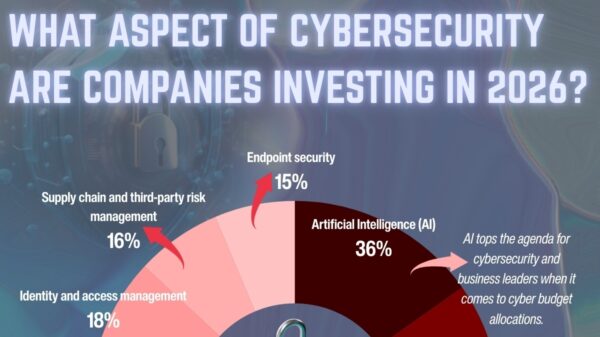

Nearly 78% of organizations plan to boost cybersecurity budgets in 2026, with 36% prioritizing AI investments despite significant knowledge gaps.





