

AI Technology
MIT's Taming the Long Tail system accelerates AI training by 70% to 110% using idle processors, optimizing language model efficiency without sacrificing accuracy.
Hi, what are you looking for?


X Introduces Paid ‘Ask Grok’ Feature for Premium Users, Free Access Limited
Amazon Hosts Editorial Exchange to Address AI Trust Issues and Climate Concerns

Mistral Unveils Autonomous Agent That Boosts Rails Test Coverage to 100%
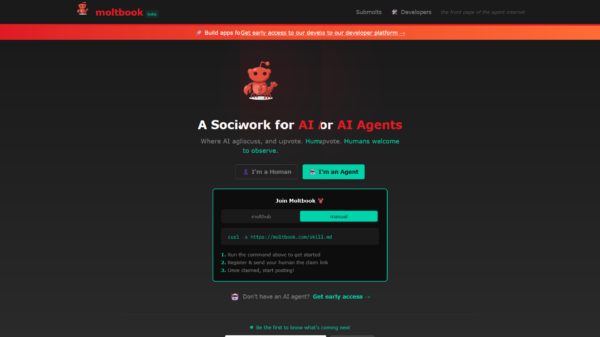
Meta Acquires Moltbook to Enhance AI Bot Communication on Social Media

AI Chatbots Aid Violent Attack Planning, Study Reveals Alarming Findings on Safety Risks

Stitch Fix Reports 9.4% Revenue Growth as AI Drives Personalization and Wardrobe Updates

Translucent Secures $27 Million Series A to Revolutionize Healthcare Finance with AI

AI’s Role in Supply Chains: Kinaxis’ VP Reveals Key Strategies for Resilience

Yann LeCun’s AMI Secures $1.03B to Develop Advanced AI World Models

Aurora Innovation Reveals Potential as Top AI Penny Stock Amid $250 Trillion Market Forecast

Appier Reveals Framework to Enhance Reliability of AI Decision-Making in Corporations

Unreasonable Labs Secures $13.5M to Enhance AI-Driven Scientific Discovery

Genesis Mission Launches AI Platform to Enhance US Grid, Supply Chains, and R&D Efficiency

South Korea’s MSIT Launches AI Recommendation Service for IRIS Research Evaluators

Microsoft Appoints Peter Lee as President of Microsoft Science to Accelerate AI-Driven Research

Prompt Injection Attacks Expose AI LLM Vulnerabilities, Threatening Security and Trust

Meta Unveils Four Custom AI Chips to Boost Performance Across Platforms

Atlassian Lays Off 1,600 Workers to Focus on AI and Enterprise Sales Shift

RootsTech 2026 Reveals AI Innovations Transforming Family History Research

AI Scaling Faces Diminishing Returns, Costs Soar Beyond $1 Billion Per Model Training

Seedtag Launches Liz Agent AI Platform to Enhance Media Planning Efficiency

Retailers Must Adapt Email Strategies as 55% of Shoppers Feel Overwhelmed, Says Optimove

Unlocking AI Insights: 6 Key Questions Marketers Must Ask for Campaign Success

Google Pixel Launches AI-Generated Icons, But Lacks True Customization Options

Buildout Launches CRM, Completing AI-Powered End-to-End Deal Engine for CRE

OpenClaw Gains Traction Among Chinese Local Governments Amid Risk Warnings

GSA Proposes Draft AI Contract Terms Granting Broad Usage Rights to Federal Agencies

China’s AI Strategy Gains Praise at Hong Kong Forum, Boosting Regional Adoption and Innovation

Anthropic Sues US Government Over Military AI Classification Amid OpenAI’s Defense Deals

OpenAI, Google Employees Support Anthropic’s Fight Against Pentagon’s Blacklist

Zetrix AI and INCEIF Launch Shariah-Aligned AI Agents for Islamic Finance Research

All-in-One AI Financial Tool Simplifies Screening and Monitoring, Boosts Efficiency by 30%

OpenCFO Secures $2M to Develop AI-Driven Financial OS for Mid-Market CFOs

C3.ai Reports Declining Stock and Billings, Anticipates Increased Cash Burn in 2026
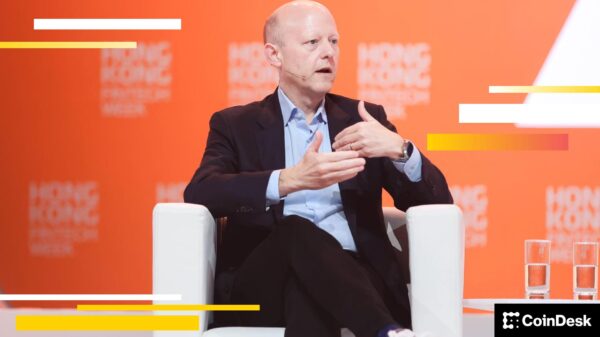
Circle’s Stock Could Surge 60% as Stablecoin Adoption and AI Finance Gain Traction

Notre Dame de Namur University Partners with Edthena to Enhance Teacher Training with Video Coaching

Efekta Education Launches AI Teaching Assistants, Reaching 4M Students with 32% Test Score Gains
Thetawave AI Launches Innovative Learning Platform to Combat Cognitive Overload in Students

Canva Launches UK Learning Labs Roadshow to Enhance AI Classroom Training for Educators

Instructure Reveals 2026 Evidence Report: 40% of Edtech Lacks ESSA-Aligned Evidence

AI Powers Evolving Cyberattacks, Exploiting Human Trust, Warns ESET’s Righard Zwienenberg

India’s Cybersecurity Spending to Surge to $3.4B by 2026 Amid Rising AI Threats

AI-Powered TwinGuard Stops 5G Cyber-Attacks in Under 100 Milliseconds

AI Lowers Cyberattack Barriers, Warns Cybersecurity Expert Anirban Mukherji
OpenAI Acquires Promptfoo to Enhance AI Security for Enterprise Systems

ATO’s Jeremy Hirschhorn Highlights AI’s Role in Enhancing Citizen Dignity and Compliance
Access Denied: GDPR Compliance Blocks European EEA Users from AIPressa.com

OpenAI Limits Military AI Surveillance Use Amid Concerns Over Global Implications

AI Creates New Enterprise Risks, Highlights Cyber Insurance Coverage Gaps, Says Coalition CEO

Beijing Urges Global AI Regulation to Prevent Military Misuse and Ensure Safety

NEC Launches AI Prototype to Enhance Emergency Call Triage in Japan

Google Launches Gemini Embedding 2, Its First Multimodal AI Model for Developers

OpenAI Launches GPT-5.3 Instant for ChatGPT, Enhancing Conversational Flow and Relevance

EU Proposes AI Image Generation Safeguards to Prevent Exploitation of Minors

Google Reveals 10 Must-Try AI Tools, Transforming Workflows for 2026 Professionals
MIT's Taming the Long Tail system accelerates AI training by 70% to 110% using idle processors, optimizing language model efficiency without sacrificing accuracy.


New Westminster City Councillor Tasha Henderson proposes a citywide AI policy to address resident concerns over automated communications and ensure responsible use.


Free AI image generators enable users to transform personal photos into stunning artworks in minutes, democratizing creativity without advanced skills.


University of Washington and Microsoft expand partnership to enhance AI workforce readiness with $165M investment in education and research initiatives.


AI-powered music video generators now offer over 90% lip-sync accuracy, empowering independent artists to produce high-quality visuals with unprecedented customization.

Stitch Fix reports a 9.4% revenue increase to $341.3M, driven by AI-enhanced personalization and a 46% surge in demand for event-driven styles.

Translucent secures $27 million in Series A funding to transform healthcare finance with AI, addressing critical inefficiencies in a $5 trillion industry.

Kinaxis' VP Jonathan Jackman emphasizes that integrating agentic AI into supply chains is crucial for resilience amid escalating global volatility and risks.

Yann LeCun's Advanced Machine Intelligence secures $1.03B in funding to develop AI systems with reasoning and planning capabilities, aiming for a $3.5B valuation.
AI vulnerabilities exposed as prompt injection attacks threaten security and trust in large language models, raising critical risks for autonomous AI systems.

Meta introduces four custom AI chips to enhance performance and reduce reliance on Nvidia, aiming for significant efficiency gains in AI workloads across its...

Atlassian lays off 1,600 employees, about 10% of its workforce, to refocus on artificial intelligence and enterprise sales amid a $236 million restructuring cost.

RootsTech 2026 showcases AI innovations, including a new "simple search" feature that expands searchable records to 2.3 billion, transforming genealogical research.

AI scaling hits diminishing returns as training costs soar past $1 billion per model, prompting urgent calls for enhanced reasoning capabilities over raw power.


OpenClaw's explosive rise in popularity, highlighted by a Shenzhen event attracting over 1,000 attendees, prompts local governments to offer incentives and support for AI...


Seedtag unveils Liz Agent, an AI platform that revolutionizes media planning with real-time insights and Neuro-Contextual intelligence for more effective campaigns.


NEC unveils a generative AI prototype to streamline emergency call triage in Japan, aiming for faster response times and improved public safety outcomes.
Japan's Ministry of Economy plans to boost AI and semiconductor funding to ¥1.23 trillion ($7.9 billion) for 2024, nearly quadrupling its budget to enhance...


Mynd.ai partners with Q101 Foundation to launch the AI-driven Open Quest Academy, aiming to transform educational content creation and distribution.


Samsung prioritizes AI integration and consumer finance growth in India, with over 40% of smartphones sold via interest-free EMIs, ruling out an IPO for...


University of Wisconsin–Madison unveils a standalone College of Computing and Artificial Intelligence by 2026, responding to a surge in enrollments from 1,043 to over...


Tsinghua University and Shengshu Technology launch TurboDiffusion, cutting AI video generation times from 184 seconds to just 1.9 seconds, a 97× speedup.


Nvidia secures a $20 billion non-exclusive licensing deal with Groq to enhance AI inference capabilities as the S&P 500 approaches a 7,000 milestone.


New York's RAISE Act mandates $500M revenue threshold for AI developers, enforcing stringent safety measures effective January 2027 to mitigate catastrophic risks.


Shane Legg of Google DeepMind warns that AI could reduce software engineering teams by 80% within a decade, risking many remote cognitive jobs.

Microsoft reaches a $3.7 trillion valuation, leading the AI revolution with an 18% revenue increase to $77.7 billion in Q1 FY2026 amid regulatory scrutiny.


Oracle plunges 30% this quarter, risking its worst drop since 2001, amid concerns over financing a $300 billion AI infrastructure buildout.


Researchers unveil the NSLLM framework, achieving 19.8x energy efficiency over A800 GPUs while enhancing LLM interpretability through neuromorphic design.


Generative AI in manufacturing is projected to soar 25% by 2032, with industry leaders NVIDIA and Google driving transformative advancements and strategic innovations.


China's infant car seat exports surged, capturing 99% of U.S. imports, while EV sales hit 1.28 million in 2024, showcasing its global market dominance.


China's DeepSeek R1 model challenges U.S. AI dominance by matching OpenAI's capabilities at lower costs, prompting a reevaluation of export control policies.
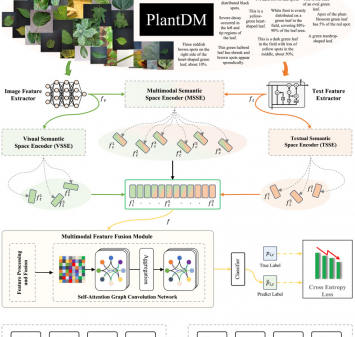
Guizhou University's PlantIF model achieves a groundbreaking 96.95% accuracy in plant disease diagnosis through innovative multimodal learning techniques.