

















































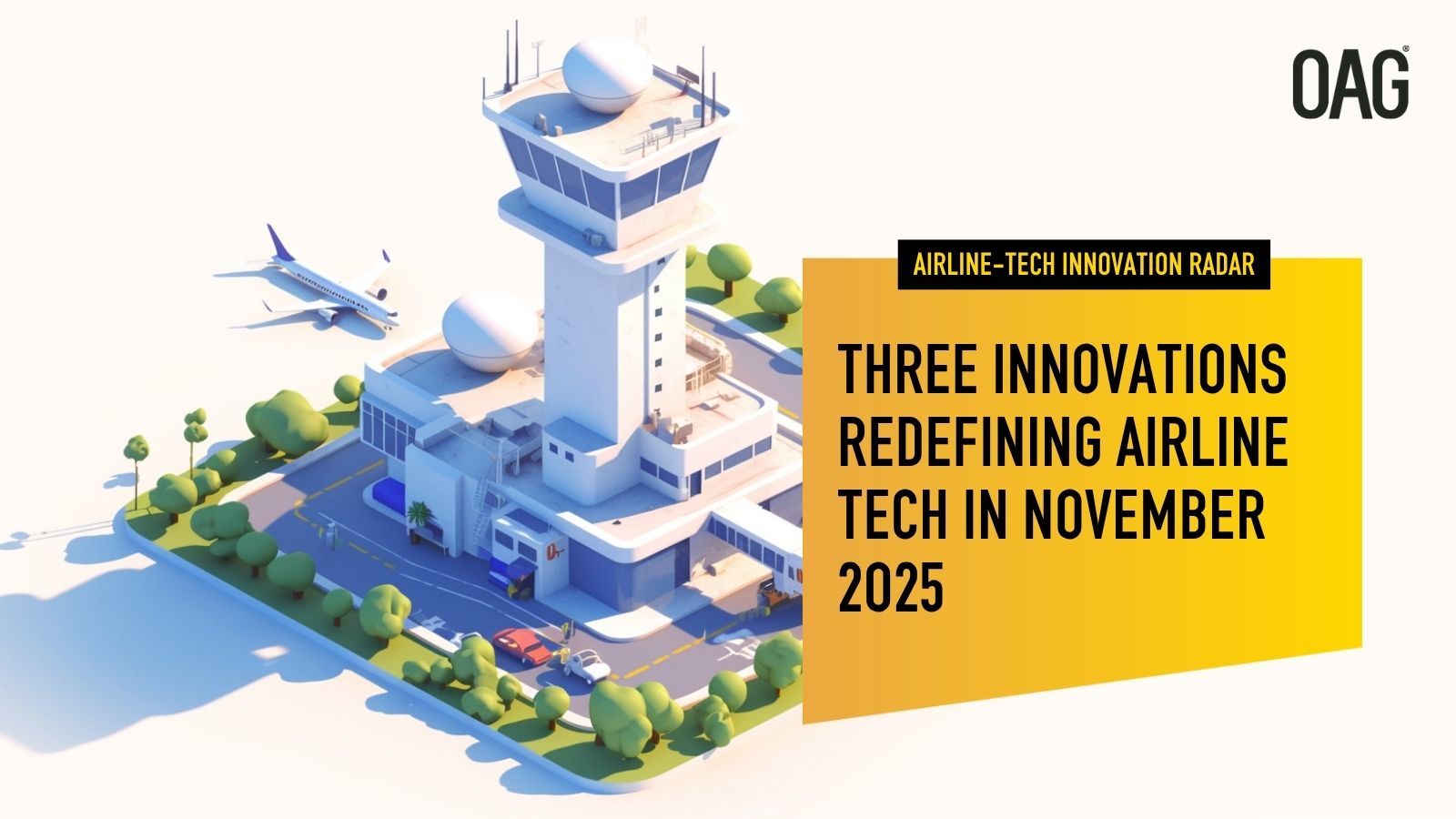
In our October edition, we took a moment to shift focus from the incessant stream of AI news to explore some quieter innovations in aviation. However, as we hinted at the time, AI’s resurgence was imminent and it has returned in full force this November. The current landscape reveals a diverse range of players—airlines, airports, and Online Travel Agencies (OTAs)—all vying to stake their claim in the AI-driven future of travel.
One standout example of this trend is Expedia, which is actively integrating new AI tools into its offerings. This includes building APIs for partners, embedding its app within ChatGPT, and collaborating with Perplexity on its new AI-powered browser, COMET. These moves signify the extensive reach of AI transformation within the travel industry.
While AI is taking center stage once again, not every innovation hinges on complex algorithms. Below, we present an essential overview of both AI-powered and traditional innovations reshaping airline technology this month.
Key Innovations in November
- Aeroporti di Roma has launched a new AI Virtual Assistant designed to support travelers in real time through WhatsApp and the airport’s website.
- EasyJet plans to implement the SITA Agent app, empowering ground staff to assist passengers throughout the airport terminal.
- Sabre has introduced a major upgrade to its continuous pricing engine, now enhanced with advanced AI to provide real-time, personalized price recommendations.
Aeroporti di Roma’s AI Virtual Assistant: A New Era in Traveler Support
Starting at the airport front, Aeroporti di Roma (ADR), which operates Rome’s Fiumicino and Ciampino airports, has taken the AI chatbot concept to a new level. Developed in partnership with AWS and Storm Reply, this new AI Virtual Assistant aims to provide real-time support and personalized guidance to travelers.
How it Works
The chatbot is designed to accompany travelers throughout their journey, offering services that include:
- Parking information before departure, transit options to the terminal, and recommendations for restaurants or shops within the airport.
- Status updates on baggage, assistance for connecting flights, and multilingual support to cater to Rome’s diverse traveler demographic.
This initiative stands out for two key reasons. Firstly, integrating pre-journey touchpoints enhances traveler engagement, a feature often overlooked by airports. Secondly, its multilingual capabilities cater to the roughly 50 million passengers that pass through Rome annually, making accessibility a priority.
Adoption Challenges
Historically, passengers have relied on airlines or booking platforms for travel updates, with airports playing a secondary role. If ADR can shift this perception, it could redefine airport-passenger interactions.
Empowering Ground Staff: SITA and EasyJet’s Mobile Solution
Moving to ground operations, SITA and EasyJet are redefining how airport staff function. Their SITA Agent app allows ground crew to assist passengers from anywhere within the terminal—effectively freeing them from traditional check-in counters.
During a successful year-long trial at Gatwick and four other UK airports, over 1,000 staff members utilized the app to print boarding passes and check in passengers, totaling over five million travelers.
Significance of Flexibility
This initiative marks a shift from fixed to flexible airport operations. By equipping staff with mobile devices linked to essential systems, they can engage with travelers where they are most needed—leading to a more personalized experience.
Dynamic Pricing Revolution: Sabre’s AI-Enhanced Engine
Turning to airline revenue management, Sabre has announced a significant upgrade to its continuous pricing engine, now empowered by AI. This new system processes live booking data and broader market trends to offer real-time, personalized fare recommendations.
How it Functions
- Sabre’s AI engine continuously analyzes traveler search and booking patterns to adjust prices dynamically.
- Instead of using static fare classes, it leverages data to generate prices that reflect current market demand.
Early adopters of this AI-enhanced pricing engine have reported revenue increases of 3% to 6% in competitive markets by aligning fares more closely with real-time demand and customer segments.
Industry Implications
This evolution signifies a departure from the rigid fare structures of the past, paving the way for a more responsive, data-driven approach to airline pricing. The rise of Shopping Data—real-time traveler search signals—further enhances this shift, allowing airlines to craft offers with unprecedented accuracy.
This month underscores a pivotal moment for AI in the aviation industry. As we look ahead, the integration of AI technologies promises to reshape not just airline operations but the entire travel experience. Stay tuned for our December edition, where we will wrap up the year with further insights into the innovations driving aviation and airline technology into 2025.
 Nvidia CEO Warns of No-Win Scenario Amid AI Bubble Fears Despite Record Earnings
 Microsoft Expands Foundry Agent Service with Anthropic, DeepSeek, and Meta AI Models
 States Advance AI Protections Amid Federal Challenges, Enact 252 New Legislative Measures
 AWS Launches Fully Managed EKS MCP Server for Simplified Kubernetes Management
 NexGen Cloud Integrates Hugging Face Models into Hyperstack AI Studio for Faster AI Development