AI’s Role in Creative Industries Discussed at Hong Kong Festival
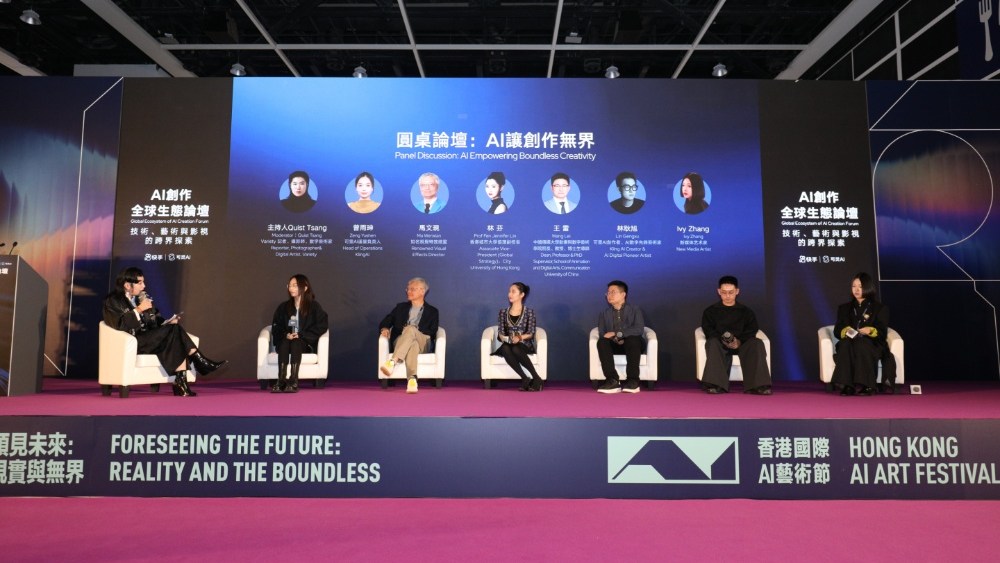
As artificial intelligence (AI) continues to lower technical barriers in creating images, films, and animations, the Hong Kong International AI Art Festival hosted a panel discussion focused on the crucial role of human judgment in the creative process. Titled “AI Empowering Boundless Creativity,” the discussion emphasized the distinction between meaningful creation and effortless generation.
Moderated by Quist Tsang, a photographer and visual artist based in Hong Kong, the panel explored how AI is reshaping creative work, education, and professional decision-making. It featured a diverse group of panelists, including Zeng Yushen, head of operations at Kling AI; Jennifer Lin, associate VP for global strategy at City University of Hong Kong; Wang Lei, dean and professor at the School of Animation and Digital Arts at Communication University of China; veteran visual effects supervisor Ma Wenxian; Lin Gengxu, creator and digital artist at Kling AI; and HKUST master’s student and digital artist Ivy Zhang.
Throughout the discussion, panelists reiterated the notion that while AI accelerates production and lowers entry barriers, it cannot replace the necessity for taste, responsibility, and decision-making. Zeng emphasized that AI tools allow small teams to achieve more, but the quality of the outcome still hinges on how clearly creators define their goals.
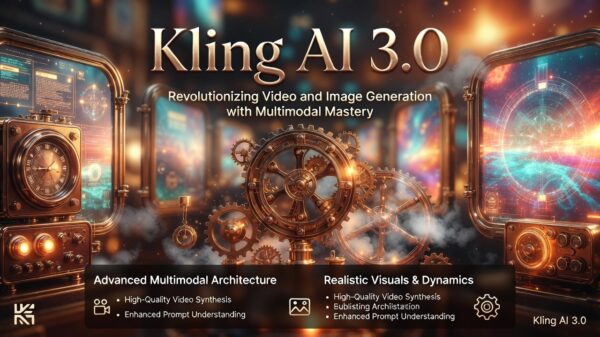
Zeng also mentioned recent updates to Kling AI’s models, noting that these changes are part of an evolving effort to enhance human-machine collaboration. He specifically highlighted the launch of Kling O1, which offers a unified multimodal workflow integrating generation, editing, and understanding, as well as the Video 2.6 model, which improves audio generation and synchronization for a seamless creative process.
From an academic perspective, Wang posited that artistic standards remain unchanged, asserting that art continues to serve as a form of emotional communication. He argued that without this emotional resonance, technological sophistication alone lacks meaning. While AI may democratize access to creative tools, he stressed the importance of sustained training in aesthetics and judgment.
Ma, with decades of industry experience, offered a more cautious perspective. He acknowledged that AI can expedite image generation but cautioned that maintaining narrative continuity and fulfilling a director’s vision remains challenging. In professional settings, control and precision are still prioritized over novelty.
Younger creators on the panel framed AI as a collaborative tool rather than a shortcut. Lin Gengxu described using AI in both personal and commercial projects to explore previously unattainable ideas, provided the creator maintains a clear direction. Zhang noted that AI enables artists to navigate various media more fluidly, facilitating the visualization of abstract concepts without requiring extensive technical expertise.
Education emerged as a critical theme during the discussion. Lin countered suggestions that humanities and social sciences are losing relevance in the AI age, arguing instead that judgment, ethics, and aesthetic sensitivity are increasingly vital as technological capabilities grow. Wang echoed this sentiment, stating that while AI may automate many skill-based tasks, the inherently human qualities of curiosity, experience, and tacit knowledge remain irreplaceable.
The conversation was part of a broader forum organized by Kling AI, examining how generative tools are transforming creative practices in art, education, and the screen industries. These initiatives have included collaborations with established filmmakers and artists, such as Academy Award-winning production designer Tim Yip, whose work with the platform has been previously highlighted by Variety.
Looking ahead, panelists presented varied predictions about the evolution of AI-native art forms over the next three to five years. Ma suggested introducing AI tools earlier in education to allow younger students to explore the medium without preconceived notions. Lin Gengxu anticipated a rise in niche, community-driven content as creative tools become more accessible, while Zhang pointed to the potential for interactive formats that could enable audience participation in narrative development.
Wang cautioned against assuming that today’s dominant AI aesthetics—often dreamlike and fragmented—will persist. He characterized these styles as reflections of current technical limitations rather than established artistic languages, predicting a future marked by diversity rather than uniformity.
In closing, Tsang underscored the panel’s central theme: while AI continues to push the boundaries of creation, the realms of meaning, judgment, and responsibility remain firmly in human hands.
See also Microsoft Reports $35B Capex Surge Amid AI Demand, Faces Regulatory Pressures
 Italian Producer Launches AI-Directed Film “The Sweet Idleness,” Teaser Revealed
 Global AI Regulation: Navigating GDPR, CCPA, and Emerging Challenges in 2024
 Adobe Partners with Runway AI to Offer Early Access to Gen-4.5 Model in Firefly
 Zimbabwe’s AI Strategy Empowers Local Skills, Aligns with National Development Goals