
















































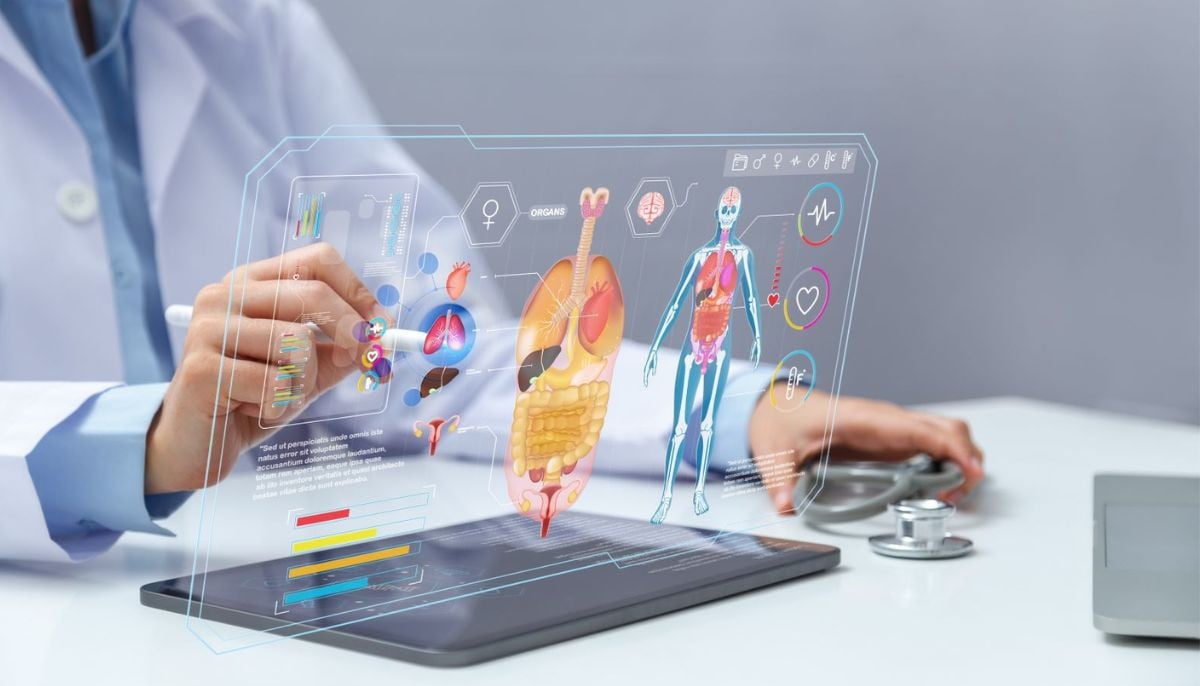
In a significant advancement, researchers have developed an innovative method for examining cancer biopsies using artificial intelligence (AI), potentially allowing colorectal cancer patients to avoid unnecessary chemotherapy. The breakthrough comes from DoMore Diagnostics, a Norwegian start-up focused on transforming cancer detection practices.
Colorectal cancer ranks as the third most prevalent and the second deadliest cancer worldwide, according to the World Health Organization (WHO). In 2022, Europe recorded approximately 2.74 million new cases related to colon cancer, as reported by the European Cancer Information System (ECIS).
CEO Torbjørn Furuseth of DoMore Diagnostics highlighted the role of AI in personalizing cancer treatment. “With AI and large data, thousands of slides, we have super-specialised an algorithm,” Furuseth stated. The company’s technology analyzes tissue samples with unprecedented precision, having been trained on thousands of images to identify cancer-related risks accurately.
Research director Andreas Kleppe from Oslo University Hospital Research affirmed that the AI-powered system significantly improves accuracy in assessing the likelihood of cancer recurrence and patient mortality. “When we develop the AI solutions, we feed in these images directly, and then the outcome of the patients several years after surgery. And then we make the computer see the relationship between those,” Kleppe explained.
Unlike traditional methods that depend heavily on pathologists’ evaluations, this AI system draws insights solely from patient outcomes, enhancing the understanding of cancer aggressiveness. Kleppe noted that while the AI captures many features identified by pathologists, it also integrates additional data, offering insights that may elude human evaluation.
The prognostic analysis conducted post-surgery is critical for assessing the risk of cancer recurrence. Historically, this uncertainty has led many patients to undergo chemotherapy, often unnecessarily, to mitigate perceived risks, exposing them to long-term side effects. “Exactly understanding what represents high risk of metastasis and low risk is difficult for a human to judge because it’s so complex,” Furuseth added, suggesting that AI could provide a clearer understanding of these risks.
Currently, DoMore Diagnostics’ colorectal cancer test is being implemented in hospitals across Europe, the United States, Japan, and Mexico to validate its prognostic capabilities. The ongoing trials represent a pivotal step not only in cancer treatment but also in the broader application of AI in medicine.
This groundbreaking approach could redefine the treatment landscape for colorectal cancer, potentially reducing the number of patients subjected to aggressive therapies without sufficient justification. As AI continues to advance, its integration into healthcare settings promises to enhance diagnostic accuracy, improve patient outcomes, and ultimately change the way cancer is treated worldwide.
See also Microsoft AI Chief Mustafa Suleyman Calls Elon Musk a ‘Bulldozer,’ Praises Sam Altman’s Courage
 Vanguard Projects AI Boom to Boost US Economy, But Cautions on Stock Returns
 AI Spending Surges to $350B, Fueling US Economic Growth Amid Rising Energy Costs
 European AI Startups Embrace Forward Deployed Engineers to Secure Top Talent Amid Competition
 Lunit and Daiichi Sankyo Join Forces to Accelerate AI-Driven Biomarker Discovery in Oncology