













































In a decisive Supreme Court election, Wisconsin voters elected liberal Justice-elect Chris Taylor, securing a 5-2 majority for liberals on the state’s highest court. Taylor’s victory comes amid an innovative campaign tactic that employed artificial intelligence to engage with voters.
As the election approached, an AI-powered virtual assistant began texting residents, offering to answer questions about Taylor’s judicial record. “Got any questions about (Chris Taylor’s) record and why it matters?” read one message. “I’m a virtual assistant standing by to answer your questions any time before you head to the polls on Tuesday. Just reply.”
The initiative was spearheaded by the organizations Defend Our Courts and Convos, aiming to help voters make informed decisions. Previously, Defend Our Courts raised $5 million for the 2025 Pennsylvania Supreme Court race, successfully supporting three Democratic-aligned justices. In this instance, the AI assistant targeted undecided voters across Wisconsin, sending messages that promoted Taylor’s candidacy. Over 1.1 million individuals received texts, with more than 10,000 responding, according to Defend Our Courts.
The deployment of AI in electoral campaigns has raised eyebrows, particularly following reports of AI robocalls in the 2024 presidential cycle, which used a voice mimicking then-President Joe Biden to misleadingly advise New Hampshire residents to skip their Democratic primary. This incident led the Federal Communications Commission to outlaw AI-generated voice calls.
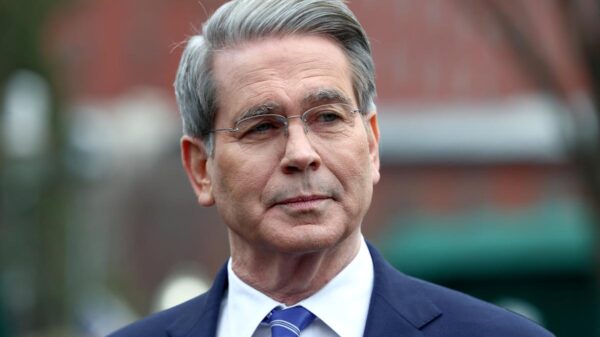
Dietram Scheufele, a professor at the University of Wisconsin-Madison who studies the impact of emerging technologies on communication, highlighted the potential risks of utilizing AI in political campaigns. “We really are potentially entering uncharted territory,” Scheufele stated. “In the past, it was possible to spread misinformation, but until AI, it was very difficult to do this at scale and in a way that almost responds in real time to events.”
A spokesperson for Taylor’s campaign remarked that they could not control the actions of outside groups but encouraged voters to “independently examine” candidates. Joe Bachman, co-founder of Defend Our Courts, noted that the partnership with Convos was inspired by the observation that many residents were still unsure of their voting preferences less than two months before the election. “This technology allows us to reach out to (voters) and invite them to a conversation, to try to give them the information they need to educate them,” Bachman said.
Convos co-founder Tom Carroll emphasized that their virtual assistant differs from common generative AI chatbots like Google Gemini and OpenAI’s ChatGPT, which generate new content based on large language models. Instead, Convos relies on data sourced exclusively from Defend Our Courts, positioning it as a modern tool for grassroots organizing. “We’re doing something that grassroots organizations always wanted to do but at a scale that just has not been possible,” Carroll said.
Looking ahead, Carroll expressed intentions to continue collaborating with organizations in future elections, suggesting that their AI capabilities could play a significant role in upcoming races across the country. Scheufele echoed this sentiment, predicting that AI will become increasingly integrated into electoral processes, including Wisconsin’s forthcoming gubernatorial race. “It’ll take a lot of catching up for all of us to do to really adjust to this new normal of campaigning,” he noted.
The integration of AI technologies into political campaigns raises critical questions about the future of electoral engagement and the balance between informed voting and the potential for misinformation. As campaigns evolve, the implications of AI’s role in shaping voter perceptions are likely to become a focal point in discussions about democratic practices.
See also Germany”s National Team Prepares for World Cup Qualifiers with Disco Atmosphere
 95% of AI Projects Fail in Companies According to MIT
 AI in Food & Beverages Market to Surge from $11.08B to $263.80B by 2032
 Satya Nadella Supports OpenAI’s $100B Revenue Goal, Highlights AI Funding Needs
 Wall Street Recovers from Early Loss as Nvidia Surges 1.8% Amid Market Volatility