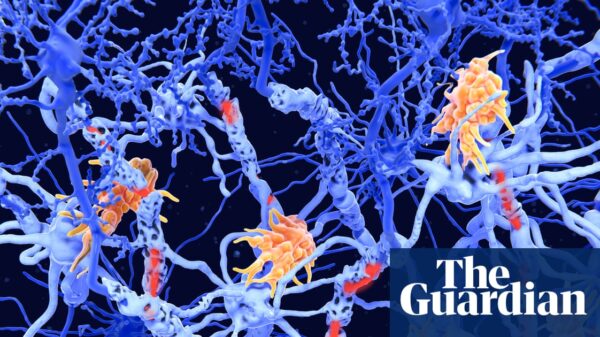

















































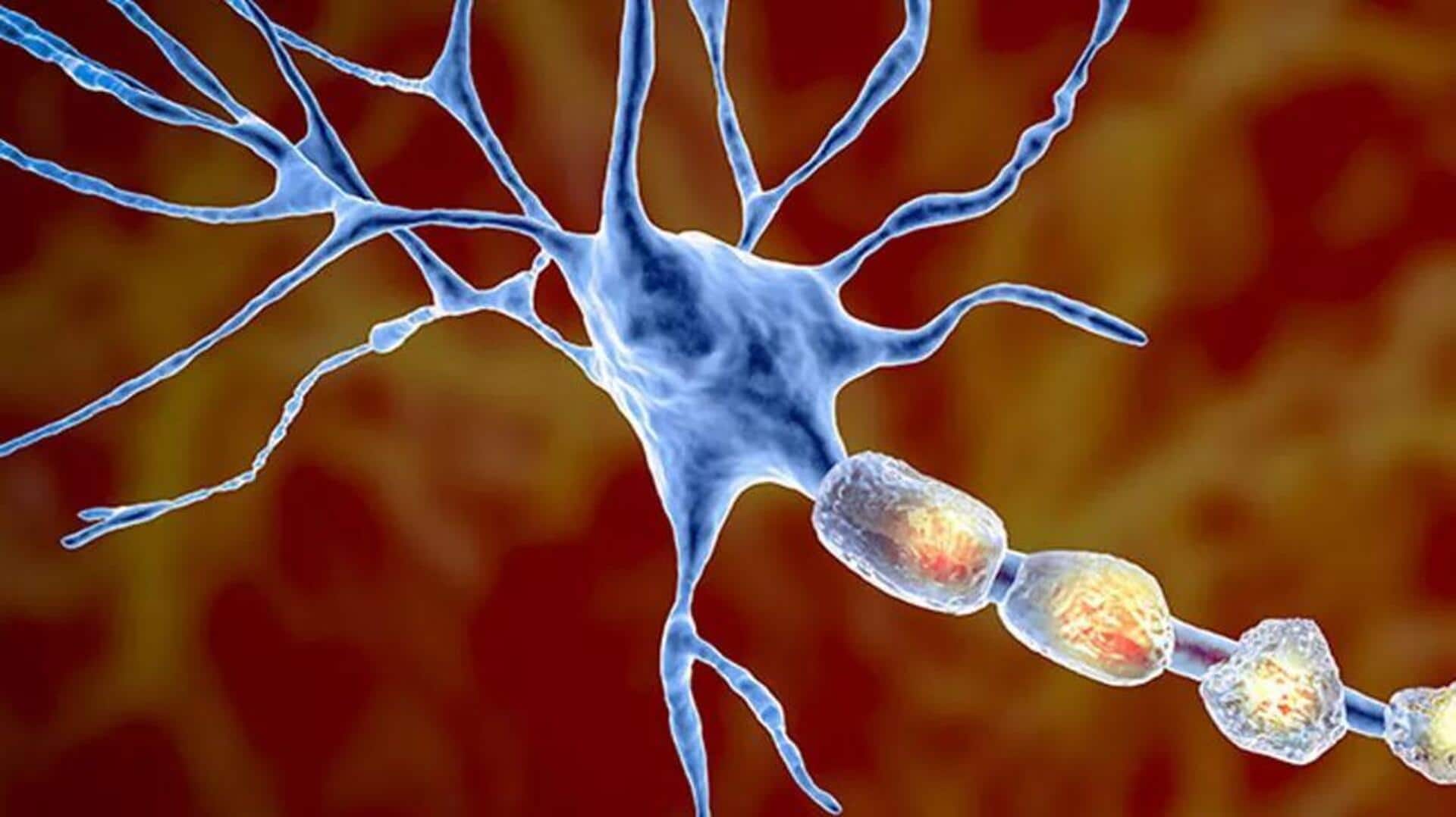
In a significant advancement in the field of neurology, scientists at University College London (UCL) and Queen Square Analytics have utilized artificial intelligence (AI) to identify two distinct subtypes of multiple sclerosis (MS). This breakthrough could enhance treatment personalization and improve patient outcomes, according to findings published in the medical journal Brain. The research involved a comprehensive analysis of blood samples from 600 patients, specifically focusing on the levels of a protein known as serum neurofilament light chain (sNfL).
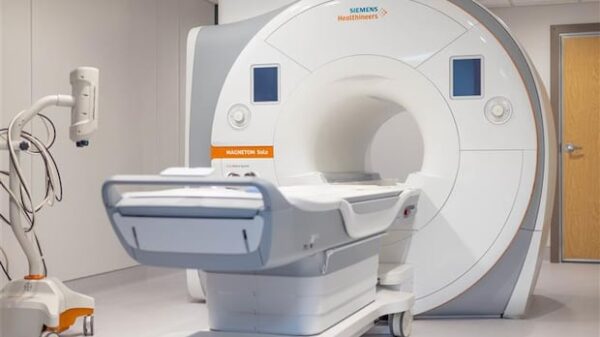
The sNfL protein serves as a vital biomarker for nerve cell damage and disease activity. Employing a machine learning model called SuStaIn, the research team analyzed the sNfL levels alongside MRI scans of patients’ brains. Their investigations culminated in the identification of two subtypes of MS: early sNfL and late sNfL, each exhibiting distinct characteristics and progression patterns.
The early sNfL subtype is marked by elevated sNfL levels in the initial stages of disease progression, coupled with observable damage in the corpus callosum region of the brain. Patients falling into this category typically experience rapid development of brain lesions. Conversely, the late sNfL subtype is characterized by brain shrinkage in areas such as the limbic cortex and deep gray matter before any significant rise in sNfL levels. This subtype tends to progress at a slower rate, with overt damage manifesting later in the disease timeline.
The implications of this discovery are profound, as the identification of these two MS subtypes through AI and a straightforward blood test could revolutionize treatment methodologies globally. By improving the understanding of which patients are at elevated risk for various complications, healthcare providers can tailor their approaches to offer more personalized care. Dr. Arman Eshaghi, the lead author of the study from UCL, emphasized that “MS is not one disease” and criticized current classifications for failing to adequately describe the underlying tissue changes that are crucial for effective treatment.
Looking forward, the potential applications of this research are promising. An AI tool could designate a patient as having early sNfL MS, making them suitable for higher-efficacy treatments and enhanced monitoring. For those diagnosed with late sNfL, alternative treatment options, such as personalized therapies aimed at protecting brain cells, may become available. Caitlin Astbury from the MS Society described the research as an “exciting development,” highlighting its contribution to a deeper understanding of MS and its inherent complexities.
This groundbreaking work underscores the transformative role of AI in healthcare, particularly in neurological disorders. As researchers continue to unravel the complexities of MS through technology, the promise of more effective, tailored treatment regimens appears within reach, potentially improving the lives of millions affected by this challenging condition.
For more information on multiple sclerosis research, visit the MS Society or University College London.
See also Grok’s X Profile Overrun with AI-Generated Explicit Images, Experts Warn Users to Avoid
 India Surges to 3rd on Global AI Vibrancy Index as Talent Pool Soars 252%
 Wall Street’s 2026 AI Stock Picks: Microsoft, Apple, Tesla Lead, NVIDIA Omitted
 Samsung Enhances Bixby with Perplexity AI in One UI 8.5 Beta for Contextual Responses
 McKinsey Launches ‘Ask McKinsey’ AI Chatbot for Streamlined Research Access