















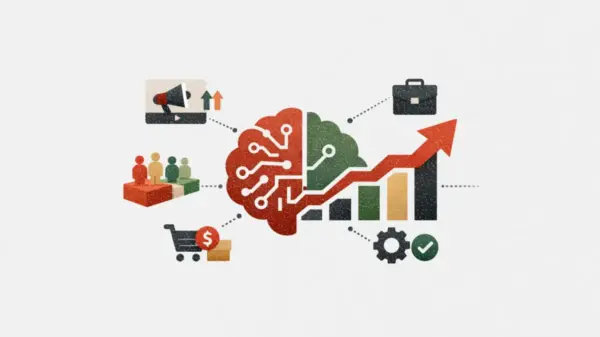




























As New Delhi gears up to host the India AI Impact Summit 2026 next month, a study by the Yale Budget Lab, released in October 2025, reveals that the labor market has not been significantly disrupted since the launch of OpenAI’s ChatGPT in 2022. Titled “Evaluating the Impact of AI on the Labor Market: Current State of Affairs,” the study counters prevailing fears that AI-driven automation is diminishing demand for cognitive labor across the U.S. economy.
In Latin America and Africa, AI-powered platforms are enhancing informal work opportunities through multilingual tools, gig matching, and verified work histories. In Asia, countries such as Singapore and Japan are advocating for AI-driven lifelong learning initiatives. India is exploring targeted reskilling programs to reduce displacement risks. In Europe and North America, the adoption of AI is prevalent in skilled roles, with Europe utilizing generative AI (GenAI) to address labor shortages and foster co-intelligent enterprises, where humans and AI collaborate in virtual simulation environments.
The inaugural AI Safety Summit held at Bletchley Park in Britain in November 2023 focused primarily on frontier AI risks, including preventing misuse and guarding against existential threats. While the summit attracted attention with Elon Musk’s provocative vision of AI transforming human labor, the Bletchley Declaration lacked any concrete measures regarding workforce impact, concentrating instead on governance of frontier models.
The second AI summit, set for Seoul in May 2024, is expected to broaden the agenda to include not only safety but also innovation and inclusivity. There, discussions will likely emphasize the necessity of reinforcing social safety nets as the AI economy continues to evolve. The summit aims to utilize AI in critical industries, such as manufacturing and logistics, to enhance productivity by alleviating employee burdens while safeguarding rights and safety. The need for workforce development will be central to ministerial statements, which will emphasize research and development (R&D) and intellectual property protection for the trustworthy deployment of AI.
As the dialogue shifted to Paris in February 2025, a more substantive engagement on workforce transitions emerged, leading to the formation of a dedicated working group focused on the “Future of Work.” France’s ambassador for digital affairs, Henri Verdier, outlined the group’s mission to assess AI’s impact on employment and vocational training. An observatory network on AI’s impact on work was launched, featuring 11 participating countries—including India, Australia, France, Japan, and Britain—and coordinated by the International Labour Organization (ILO) and the Organisation for Economic Co-operation and Development (OECD).
During this summit, companies pledged to promote “Trustworthy AI in the World of Work,” focusing on social dialogue, investment in human capital, and ensuring workplace safety and dignity. Indian Prime Minister Narendra Modi urged the global community in Paris to “prepare for workforce transition,” highlighting the need for proactive measures as AI technology matures.
As part of India’s presidency at the AI Summit, the theme of human capital has the potential to advance an equitable workforce transition agenda in the AI era. India’s national AI mission has emphasized the importance of talent, bolstered by findings in the Stanford AI Index report, which places India second only to the U.S. in AI skill penetration and contributions to open-source AI projects on GitHub. Since 2016, India’s AI talent pool has expanded by over 250%, the highest rate among the countries measured.
The AI Impact Summit provides a critical opportunity to assess three key levers: adaptability, readiness, and collaboration. Adaptability is evident in the shift from rule-based, one-time training to role-based, competency-driven learning frameworks. India’s Mission Karmayogi, a national capacity-building initiative, aims to empower 30 million civil servants to become future-ready.
The observatory network from the Paris Summit could set the stage for voluntary obligations on companies to measure AI’s impact on the labor force, sharing aggregate data with governments. This could lead to evidence-based policy measures that incorporate role mapping and skills adjacency modeling informed by detailed insights.
India’s Digital Public Infrastructure (DPI) strategy has included systems like digital identity (Aadhaar), payments, and data exchange networks. This framework can be leveraged to develop a micro-credentialing platform that certifies transferable skills and connects workers with real-time labor market intelligence, effectively addressing information asymmetries.
As governments, labor organizations, and other stakeholders recognize both the benefits and challenges posed by AI, India’s AI Summit offers a pivotal opportunity to embed equitable frameworks into AI deployment. This initiative aims to protect vulnerable workers and extend social protections in a rapidly evolving labor landscape.
See also Yann LeCun Critiques Alexandr Wang’s Leadership at Meta, Calls for AI Research Reforms
 Meta Invests $2B in AI Startup Manus Amid Shareholder Concerns and Insider Sales
 El Salvador Commits $XXX Million to Bitcoin and AI Investments Through 2026
 China’s AI Surge: DeepSeek Models Challenge US Dominance, Targeting 2027 Leadership