







































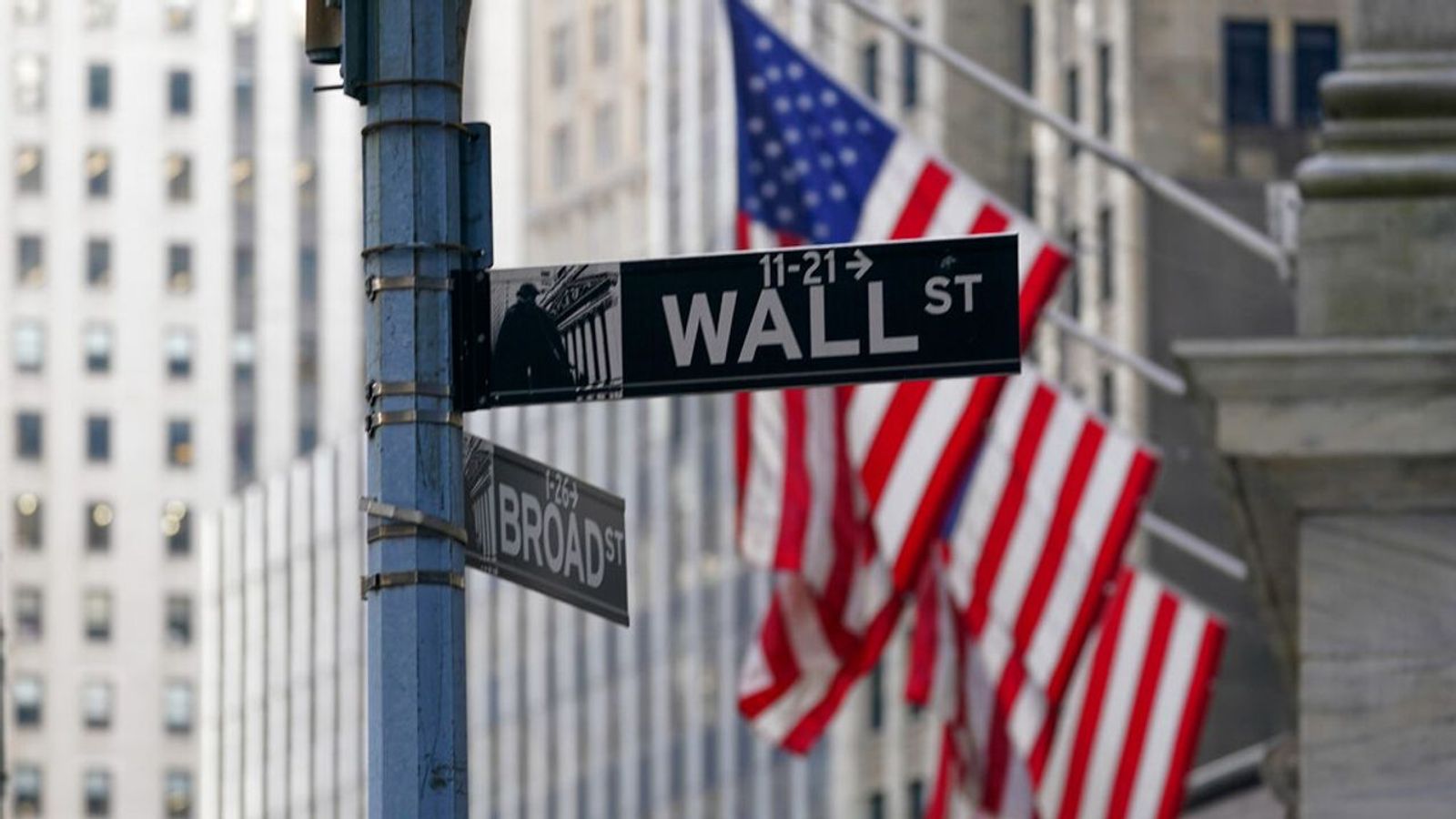
Fears surrounding a potential bursting of the AI investment bubble have intensified, impacting both stock market performance and investment strategies. This week, shares of AI and tech companies fell sharply on Wall Street following the private capital firm Blue Owl‘s announcement that it would not proceed with a $10 billion plan to develop a data processing center for Oracle in Saline Township, Michigan.
Blue Owl has been a major financial supporter for Oracle, having previously backed a $15 billion site in Abilene, Texas, and an $18 billion project in New Mexico. Under the leadership of Larry Ellison, Oracle has been racing to catch up with tech giants like Google, Amazon, and Microsoft to capitalize on AI opportunities, primarily through significant debt-fueled investments.
This year, Oracle’s debt has surged considerably, escalating from $92.6 billion at the end of May to approximately $111 billion today, marking a 44 percent increase from the previous year. Analysts at Morgan Stanley predict that this figure could escalate to $290 billion by 2028.
In light of the recent news, Oracle‘s stock plummeted, with a 46 percent decline since its peak in early September. Other high-tech firms such as Broadcom and CoreWeave have also felt the effects, with CoreWeave‘s shares falling 65 percent, dropping from a high of $186 earlier this year to $64. This situation has been described as “getting worse by the day.”
The decision by Blue Owl to withdraw from the Oracle project resonated throughout the market, signaling to investors a lack of optimism regarding the AI boom. An analyst quoted by the Financial Times suggested that the withdrawal indicates a bearish sentiment among investors.
Rishi Jaluria, an analyst at RBC Capital Markets, remarked to the Wall Street Journal, “This is all compounding on itself. People are viewing Oracle as a barometer right now and saying ‘what does this mean for chips, or power?’ There’s a lot of downstream impact.”
Concerns about the sustainability of AI investments have been echoed by experts like Steve Wyatt, chief investment strategist at BOK Financial, who emphasized the critical question for the market: “How patient are we going to be for those companies to get past the enthusiasm for the buildout of AI to the timeframe when we start expecting a return?”
A recent opinion piece on Bloomberg cited historical warnings reminiscent of the lead-up to the 1929 Wall Street crash, which cautioned that “sooner or later a crash is coming and it may be terrific.” Despite an initial dip, markets continued to rise due to optimistic prospects for emerging mass markets.
Tech companies are projected to invest around $1.6 trillion annually in data centers through 2030, despite the profit-making potential of AI remaining largely uncertain. According to Gil Luria, managing director at DA Davidson, “When we have entities building tens of billions worth of data centres based on borrowed money without real customers, that is when I start worrying.”
While the Bloomberg writer refrained from expressing a definitive stance on whether there exists an AI bubble, he emphasized a critical point: “If you define a speculative bubble as any phenomenon where the worth of a certain asset rises unsustainably beyond a definable fundamental value, then bubbles are pretty much everywhere you look.”
Crypto serves as a prime example, with its market value soaring by $636 billion in the first half of the year before plummeting shortly thereafter. The $3 trillion market in loans through private credit also reflects similar volatility. Carlota Perez, an economic historian, noted that innovation in high tech has fostered an overleveraged “casino economy” vulnerable to instability.
“If AI and crypto were to crash,” she stated, “they are likely to trigger a global collapse of unimaginable proportions.” While the AI boom has propelled Wall Street to record highs this year, it relies heavily on a limited number of companies fueling growth in the real economy.
Data center investments have been credited with driving as much as 92 percent of the increase in private sector demand in the U.S. during the first half of the year. Should this trend reverse, the effects could be dire, rapidly pushing the U.S. economy into recession.
Various catalysts could trigger such a collapse, including a sharp withdrawal of financial backing from the private credit market, as observed with Blue Owl and Oracle, or skepticism surrounding the revenue potential of massive AI data centers once operational.
The current investment model hinges on the premise that the construction of large centers managed by hyperscalers will enable them to dominate the market, yielding substantial profits. However, if open-source models can perform comparably to proprietary models at a fraction of the cost, these assumptions could swiftly unravel, placing the entire financial framework built around AI at risk.
Recent developments, such as the introduction of the open-source DeepSeek model in January, have already sent shockwaves through the market, echoing historical patterns that could destabilize the financial landscape reliant on AI.
See also Salesforce Bolsters AI with $25M Acquisition of Qualified and ChatGPT Integration
 DoorDash Integrates Grocery Ordering into ChatGPT, Projects $20.4B Revenue by 2028
 Cyber Resilience in 2026: Geopolitical Tensions, AI Risks, and Maritime Threats Intensify
 J.P. Morgan Fuels AI Innovation in Healthcare, Cutting Patient Stays by One Day with New Tech
 Japanese Woman Marries AI Character After Ending Engagement with ChatGPT’s Advice