


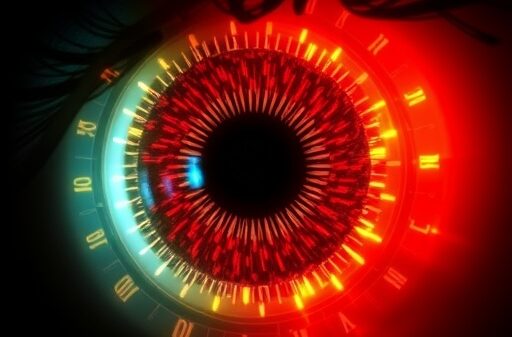










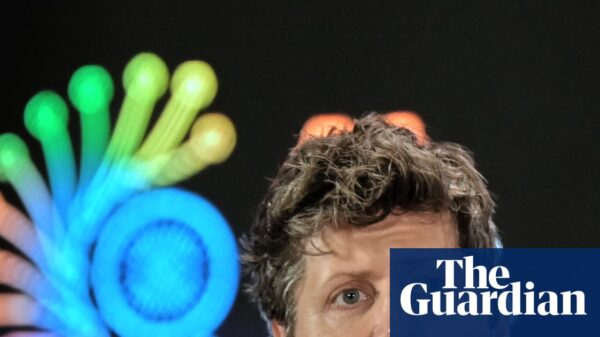























Ivan Maksymov, a research fellow at Charles Sturt University’s Artificial Intelligence and Cyber Futures Institute in Bathurst, Australia, has developed a groundbreaking model that merges the realms of quantum physics and artificial intelligence. This innovative approach aims to simulate human perception of visual illusions, specifically the Necker cube and the Rubin vase, which can be interpreted in multiple ways. By employing a deep neural network that utilizes a phenomenon known as quantum tunneling, Maksymov’s system was trained to recognize the two distinct interpretations of these illusions.
When presented with one of the visual stimuli, the AI is capable of generating one of two interpretations, switching between them over time—much like human perception. Maksymov observed that the timing of these switches closely mirrored the intervals typical in human responses. “It’s quite close to what people see in tests,” he remarked, highlighting the effectiveness of his model in replicating human cognitive behavior.
The potential implications of this research are significant, particularly in the context of space exploration. “It’s a narrow field of research, it’s quite important because humans want to go to space,” Maksymov stated, emphasizing the relevance of understanding human cognition in extreme environments.
Despite the intriguing nature of his findings, Maksymov does not propose that human brains possess quantum properties. He suggests instead that the study reveals insights into how human decision-making processes can be better modeled through principles of quantum theory, a concept that falls within the evolving field of quantum cognition. This perspective posits that as our brains interpret illusions, they are actively selecting between competing versions of reality.
The intersection of quantum physics and AI is a burgeoning area of research with the potential to unlock new understanding about how humans perceive and interact with the world. As advancements in technology continue to evolve, the effects on fields ranging from psychology to artificial intelligence could be profound.
As researchers like Maksymov delve deeper into the complexities of human cognition through quantum frameworks, the implications could extend far beyond theoretical exploration. Enhanced models of perception may contribute to advancements in AI systems, potentially improving how machines interpret human-like responses. This could be particularly valuable in applications such as autonomous systems, where understanding human cognitive processes is crucial for effective interaction.
Furthermore, the insights gained from this research may inform the development of more sophisticated AI tools aimed at simulating human-like perception in real-world scenarios. As we look to the future, the convergence of quantum physics and AI offers a promising frontier for enhancing not only technological capabilities but also our understanding of the human mind.
See also Alibaba Cloud’s Qwen AI Models Surpass 700 Million Downloads on Hugging Face
 Gates Forecasts AI-Driven Wealth Shift: Urgent Call for Investment in Global Health and Climate Solutions
 Google and Character.AI Settle Lawsuits Linked to Teen Suicides for Unspecified Amount
 Tempus AI Surges 12% Pre-Market on $1.27B Revenue Forecast and Record Contracts