
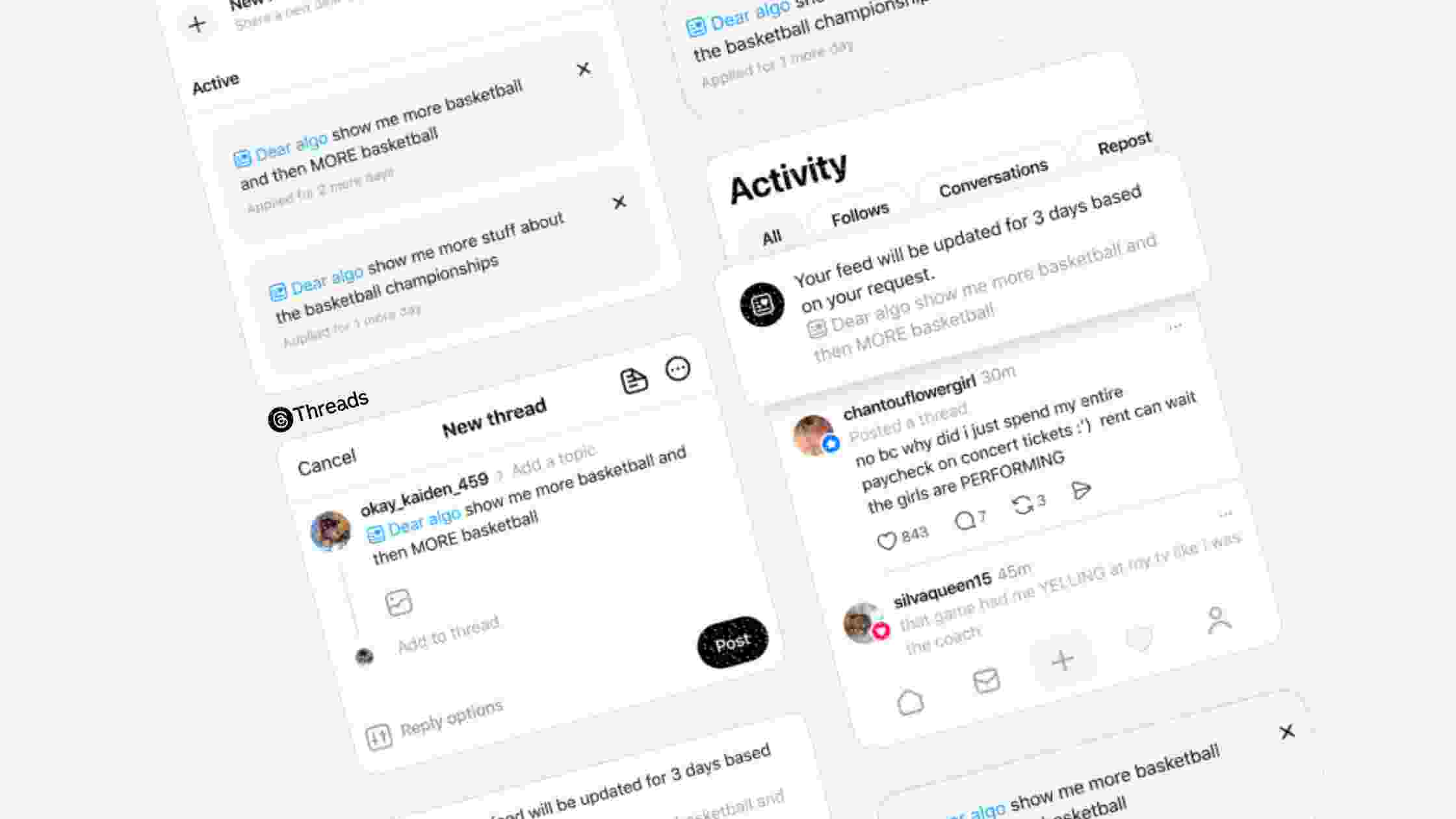
Meta’s Threads platform has unveiled a new feature, “Dear Algo,” that allows users to customize their feeds by posting specific requests. This move marks a departure from traditional content curation methods, enabling real-time engagement without requiring navigating through menus or settings. With this functionality, users can simply type “Dear Algo,” followed by their preferences—such as “Dear Algo, show me more posts about NBA games.” Once posted, the AI adjusts the user’s feed for three days, making the requests public and allowing others to engage with and replicate the preferences.
Available initially in the US, UK, Australia, and New Zealand, “Dear Algo” provides a dynamic way for users to express their content interests, especially during real-time events. Unlike passive personalization options offered by most social media platforms, Threads encourages users to actively engage with their feeds in a public forum. This feature is designed not only as a personalization tool but also as a community-driven discovery layer that can spur viral engagement around trending topics.
Meta’s strategy with “Dear Algo” comes at a time when Threads has reportedly surpassed X (formerly Twitter) in mobile daily active users, with 141.5 million users logged in as of January 2026, compared to X’s 125 million. While X maintains a lead in web usage, Threads is capturing a growing segment of the audience, influenced in part by features like “Dear Algo.” This functionality aims to reflect current user interests more accurately than traditional algorithms, which often rely on historical data.
The introduction of “Dear Algo” highlights a potential shift in how social media platforms facilitate user engagement and content discovery. As users post requests, they create visible demand signals for emerging topics, which marketers can leverage to adjust their strategies in real time. For example, if users begin asking for more content related to a specific event, brands can quickly adapt their messaging and campaigns to align with those interests.
Moreover, the public nature of these requests allows for a unique form of engagement; users may feel inspired to repost each other’s requests, further amplifying their reach. However, this public approach may deter users who prefer to keep their preferences private, introducing a tradeoff between personalization and community engagement. Currently, the feature is opt-in and public by design, prompting users to consider how they wish to interact with their feeds.
As marketers look ahead, “Dear Algo” serves as both a tool for engagement and a signal source for understanding audience intent. The visible aspect of these requests can inform brands of trending topics, enabling them to adjust content, influencer partnerships, and promotional strategies accordingly. Additionally, the temporary nature of the adjustments—lasting only three days—may necessitate quicker responses from marketers, presenting challenges as well as opportunities in content strategy.
Threads’ innovative approach with “Dear Algo” reflects a broader industry shift from static algorithmic feeds to more participatory, user-directed personalization. This feature could set a precedent for how social media platforms evolve in facilitating community-driven content curation. As Threads continues to develop this tool, it may redefine the landscape of social media engagement, making real-time user interaction a key component of digital marketing strategies.
See also RocketReach Launches AI Tool ‘Sequences’ for Enhanced Email Prospecting Automation
 AI Product Photography Revolutionizes Visual Marketing: Boosts Speed by 80% and Cuts Costs
 Media87 Achieves Top Digital Marketing Agency Status for 2026, Excels in Local SEO
 AI Marketing Revolution: Cognitive Personalization Enhances Real-Time Consumer Engagement
 Text-to-Video AI Market Projected to Reach $685.8M by 2026; Key Trends Revealed