


















































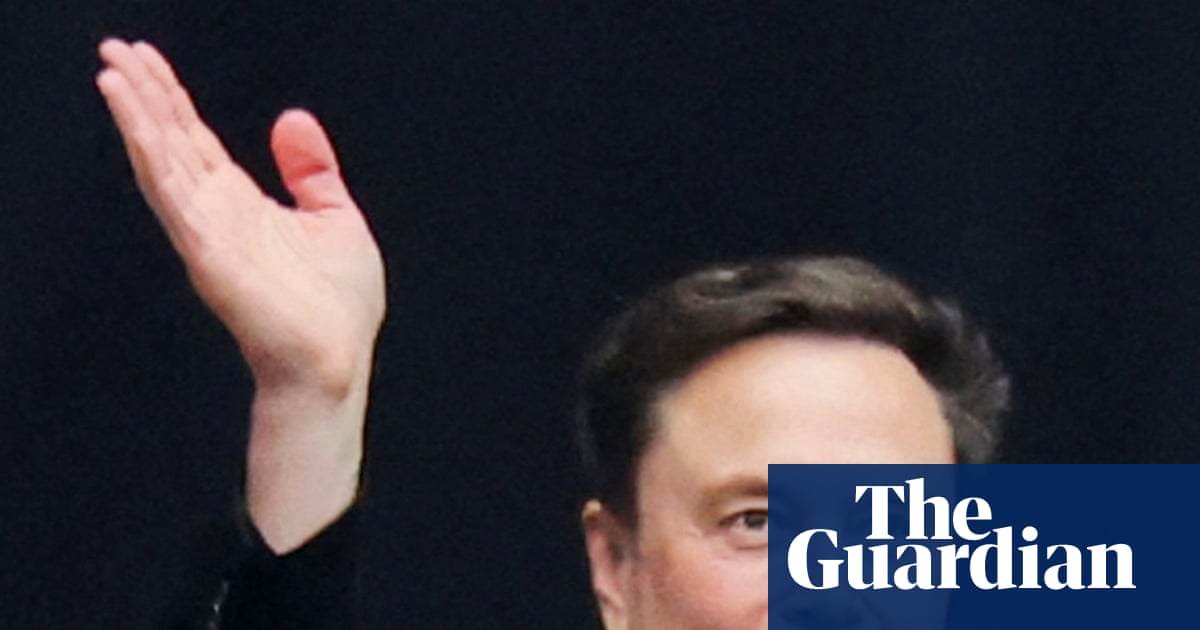
A stock market boom in artificial intelligence companies has added more than half a trillion dollars to the wealth of America’s tech barons over the past year. The top ten US founders and executives of some of the world’s largest technology firms have seen their collective net worth swell to nearly $2.5 trillion, up from $1.9 trillion, as of Christmas Eve, according to data from Bloomberg.
Among the biggest beneficiaries is Elon Musk, who has further solidified his position as the world’s richest man. The ongoing AI gold rush has propelled US stock markets to record highs, contributing to an almost 50% year-on-year increase in Musk’s net worth, which now stands at $645 billion. Musk, who is also at the helm of xAI, an artificial intelligence firm, became the first individual to surpass a net worth of $500 billion in October 2023, sparking speculation that he could soon become the world’s first trillionaire if targets set by Tesla, the electric vehicle company he operates, are met.
Musk currently ranks above Larry Page, co-founder of Google, and Jeff Bezos, founder of Amazon, in the global billionaire standings. Page is estimated to have a net worth of $270 billion, while Bezos stands at $255 billion.
The growing concentration of wealth among a small elite has ignited discussions on how to better balance economies, with some advocating for more effective wealth taxation.
Jensen Huang, the chief executive of Nvidia, has also emerged as a significant gainer, with his investments and assets increasing by $41.8 billion to bring his fortune to $159 billion. This places Huang ninth in the Bloomberg Billionaire Index and eighth among the top ten US tech billionaires, as noted in a separate report by the Financial Times. Huang capitalized on Nvidia’s rising stock price, selling nearly $1 billion worth of shares this year. Nvidia’s advanced computer chips have become critical for enhancing processing capabilities essential for AI, and the company became the world’s first $5 trillion entity in October 2023.
The wealth of both Page and his co-founder Sergey Brin surged, with Page adding around $102 billion and Brin $92 billion to their fortunes, buoyed by investor confidence in Google’s AI advancements, particularly its development of Tensor Processing Units.
Despite the exuberance surrounding AI investments, the Bank of England has cautioned about a possible “sudden correction” in global markets should investor confidence falter. In October, central bank policymakers remarked that “on a number of measures, equity market valuations appear stretched, particularly for technology companies focused on artificial intelligence,” suggesting that markets are “particularly exposed should expectations around the impact of AI become less optimistic.”
While the technology sector dominates the billionaire rankings, other familiar names have also made significant gains. Bernard Arnault, the French chair of LVMH, which includes luxury brands like Louis Vuitton and Dom Perignon, saw his wealth rise by $28.5 billion over the past year, driven by increasing consumer spending in North America. Meanwhile, Amancio Ortega, who owns 59% of Inditex, the parent company of Zara, gained $34.3 billion following a record dividend of €3.1 billion from the retail group.
The current market dynamics highlight both the potential and peril inherent in the rapid ascent of AI technology. As investors continue to pour capital into AI-driven ventures, the implications for wealth distribution and economic stability will likely remain a focal point for policymakers and economists alike.
See also Getty Images Wins Trademark Claim Against Stability AI, Loses Copyright Infringement Case
 IMSS Launches Advanced Hemodynamics Unit, Elevates Cardiac Care Amid Ethical AI Governance
 Biometrics Market Sees 50 Acquisitions in 2025 as AI Fraud Fuels Urgent Consolidation
 CrowdStrike Surges with Strong Q4 Guidance Amid AI Drive and AWS Partnerships; Risks Loom