

































Artificial intelligence has reached a significant milestone in the ongoing debate over machine creativity, according to findings from the largest study ever conducted comparing the creative capabilities of generative AI systems to human creativity. The research, led by the Université de Montréal and published in Scientific Reports, involved more than 100,000 human participants and examined the creative performance of leading AI models.
The study concentrated on large language models such as ChatGPT, Claude, and Gemini, assessing their ability to generate original ideas through methods also applied to human participants. The results indicated that certain advanced AI systems, such as GPT-4, have surpassed the average human score on specific measures of linguistic creativity.
Previously, AI creativity was deemed inferior to that of humans. However, this new evidence suggests a significant shift, indicating that AI has now crossed a threshold once thought unique to human capability, at least in structured tasks.
Despite these advancements, the study highlights a remaining gap in creativity. While AI models performed remarkably well, the most creative half of human participants outperformed every tested AI system. Notably, the top 10% of individuals demonstrated particularly impressive advantages, suggesting that while AI can meet or exceed average performance, exceptional creativity remains predominantly human. This outcome emphasizes that creativity exists on a spectrum, with machines clustering in the middle and humans excelling at the higher end.
To facilitate equitable comparisons, researchers employed the Divergent Association Task (DAT), a psychological assessment designed to gauge divergent thinking. Participants were tasked with generating ten words that are as unrelated as possible, fostering originality and conceptual distance over vocabulary size. The DAT is widely recognized in creativity research for correlating with results on more complex creative assessments, which include writing, problem-solving, and idea generation. Its quick completion time makes it suitable for large-scale studies involving both humans and AI.
In addition to the DAT, researchers evaluated the creative writing abilities of both humans and machines through tasks such as composing haikus, short stories, and film plot summaries. While AI occasionally outperformed the average human in these more complex tasks, it consistently fell short compared to highly creative individuals.
The study also examined whether AI creativity could be influenced through technical settings and instructions. Researchers discovered that altering a model’s temperature significantly impacted output creativity. A higher temperature prompted more varied and unexpected responses, while a lower temperature resulted in safer, more predictable outputs. Furthermore, the design of instructions was crucial; prompts encouraging models to explore word origins or unconventional associations led to higher creativity scores. This indicates that AI creativity is not static but highly dependent on human guidance.
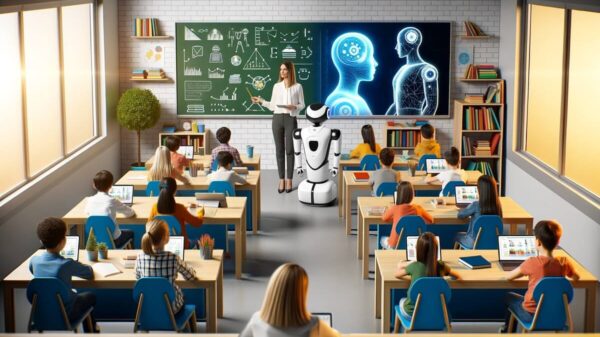
Rather than suggesting an impending end to human creativity, the study posits that AI is evolving into a valuable creative tool that can assist in exploration, ideation, and experimentation, particularly in early-stage creative processes. While the pinnacle of originality remains distinctly human, the research implies that the future of creativity will likely be characterized by collaboration between humans and machines, where AI enhances the creative landscape without displacing the individuals who shape it.
As the role of AI in creativity continues to evolve, this study underscores the potential for enhanced collaboration and innovation in various creative domains. By harnessing AI’s capabilities, human creators can push the boundaries of their craft, fostering a new era of creative synergy.