

















































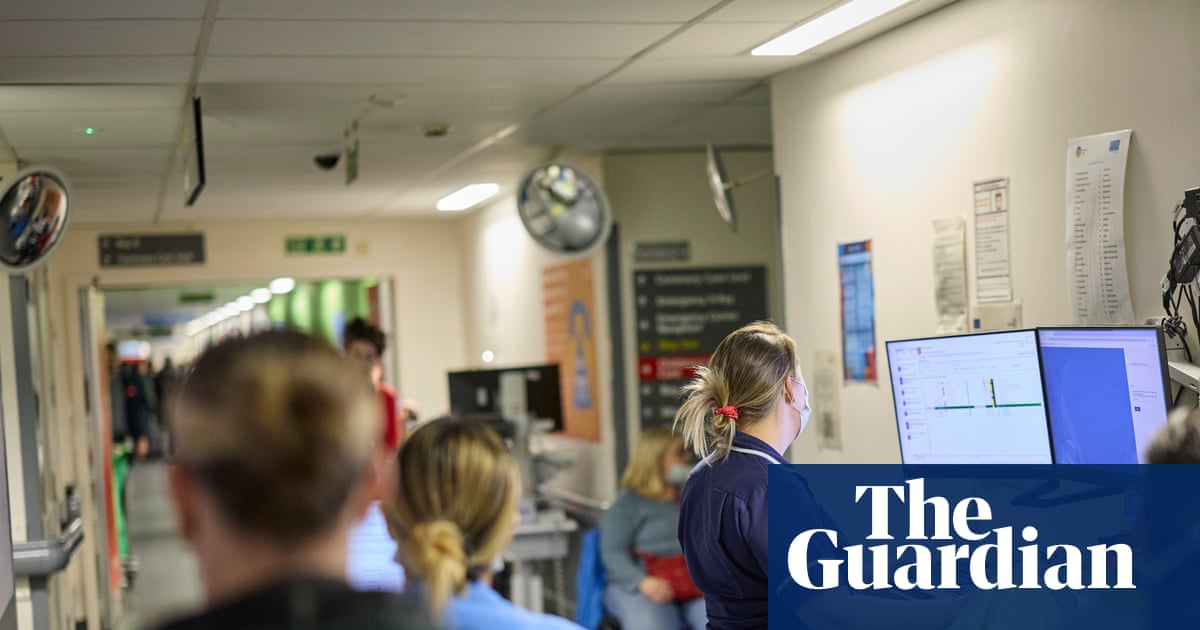
Hospitals in England are leveraging artificial intelligence to alleviate waiting times in emergency departments this winter. The introduction of an A&E forecasting tool aims to predict peak demand periods, enabling healthcare trusts to optimize staffing and bed availability.
The prediction algorithm utilizes historical data, factoring in weather trends, school holidays, and flu and Covid infection rates, to estimate patient visits to A&E. This technological advancement is seen as a means to streamline operations, allowing healthcare staff to focus on clinical care rather than administrative burdens.
According to Ian Murray, the minister for digital government and data, the A&E department serves as the “front door” of the NHS, where understanding potential visitor numbers is crucial. He noted that while certain patterns, such as busier nights on Saturdays compared to Tuesdays, can be anticipated, the AI tool enhances the ability to predict overall demand based on seasonal trends.
Murray emphasized that the tool enables hospitals to better deploy resources, stating, “If you put that into context and see seasonal trends, along with how busy days are going to be, you can then put your resources in the right place.” This foresight allows for the strategic placement of more consultants in specific specialties and additional nursing staff where they are likely to be needed most.
Furthermore, the forecasting tool facilitates earlier discharges, potentially freeing up hospital beds by enabling staff to plan more effectively. Murray mentioned the importance of not only managing immediate demand but also ensuring that resources are utilized efficiently across the healthcare system.
The A&E forecasting tool is available to all NHS trusts in England, with approximately 50 organizations already using it and reporting positive outcomes. “It’s about modernising the NHS, using the tools to allow clinicians and professionals to do the things that they’re trained to do,” Murray added, reflecting the broader goal of reducing bureaucratic inefficiencies.
This initiative is part of Keir Starmer’s AI Exemplars programme. Earlier this year, the Prime Minister asserted that artificial intelligence would “drive incredible change in our country,” highlighting the government’s commitment to incorporating advanced technologies into public services.
Prof Julian Redhead, the national clinical director for urgent and emergency care at NHS England, reiterated the importance of early planning in managing busy periods. He stated, “New tech like the AI tool has the potential to make a real difference to the way we manage care for patients,” indicating a shift towards more proactive healthcare delivery.
As hospitals face increasing pressures, particularly during winter months, the integration of AI technologies promises to enhance operational efficiency and patient care. The ongoing adoption of such innovations may herald a significant transformation in the NHS, aligning with the broader movement towards digital health solutions.
For more information on NHS initiatives, visit the UK Government’s NHS page. For details about AI applications in healthcare, see IBM Watson Health and Microsoft Healthcare AI.
See also OpenAI Offers $555,000 Salary for Head of AI Safety Amid Rising Concerns
 Geopolitics and AI Transform Corporate Strategy: Cybersecurity Risks Surge to $9.5 Trillion by 2024
 Alphabet Poised to Surpass Nvidia in AI Growth: Key Innovations Set for 2026
 AI Platforms Analyze Shell Dispute: Grok, Copilot, and Google AI Mode Offer Insights
 OpenAI Hires ‘Head of Preparedness’ to Tackle AI Risks to Mental Health and Cybersecurity